
How Many Valence Electrons Does Iodine Have
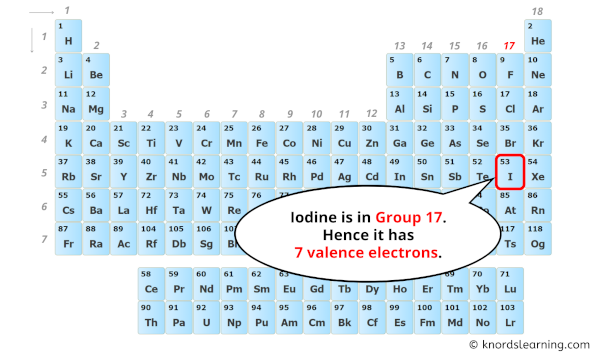
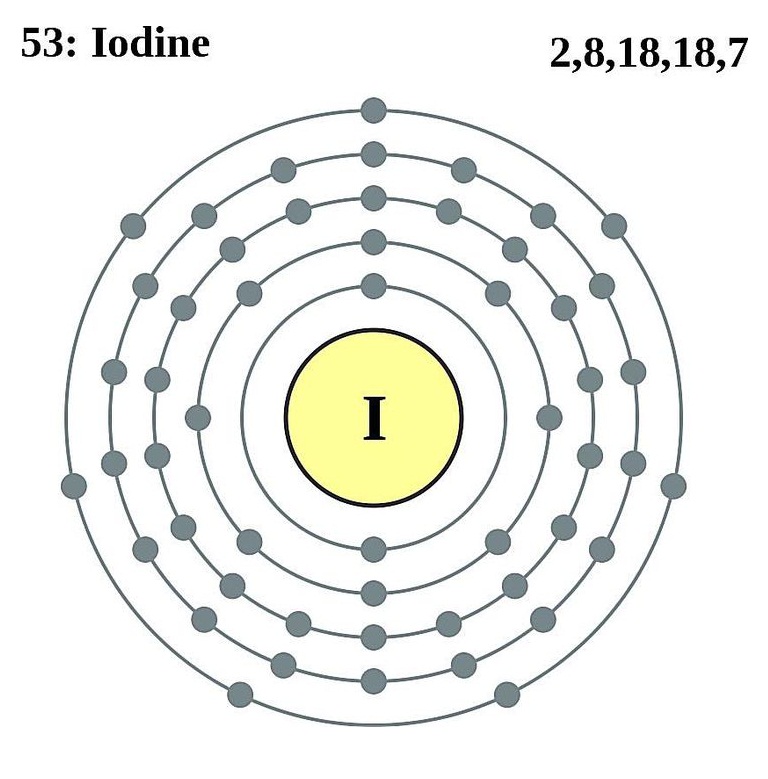
Alright, gather 'round, folks! Let's talk iodine. Not the stuff you put on cuts – although, that is iodine. We're talking about the atom, the element, the sometimes-purple-smelling goodness that is Iodine! And today's burning question, the one that keeps chemists up at night (okay, maybe not, but it sounds dramatic): How many valence electrons does this bad boy have?
Now, before your eyes glaze over like a donut, let's quickly recap what valence electrons are. Imagine an atom as a grumpy little socialite. The protons and neutrons are huddled in the nucleus, like the socialite's bodyguard. The electrons are the socialite's entourage, buzzing around in different "energy levels" or "shells."
Think of these shells as VIP sections in a club. The valence electrons? They're the ones in the outermost, most exclusive VIP section. They’re the ones doing all the interacting, deciding whether to bond (aka, dance) with other atoms. And that's why they're so important!
Must Read
So, how do we figure out how many of these VIP-access electrons iodine has? Well, we could just look it up. But where's the fun in that? Let's be detectives, shall we?
The Periodic Table: Your Detective Toolkit
Our trusty sidekick in this investigation is the Periodic Table of Elements. I know, I know, it sounds scary, like something from high school chemistry. But trust me, it's just a giant cheat sheet disguised as a well-organized chart. Seriously, it's the chemist's version of Google.
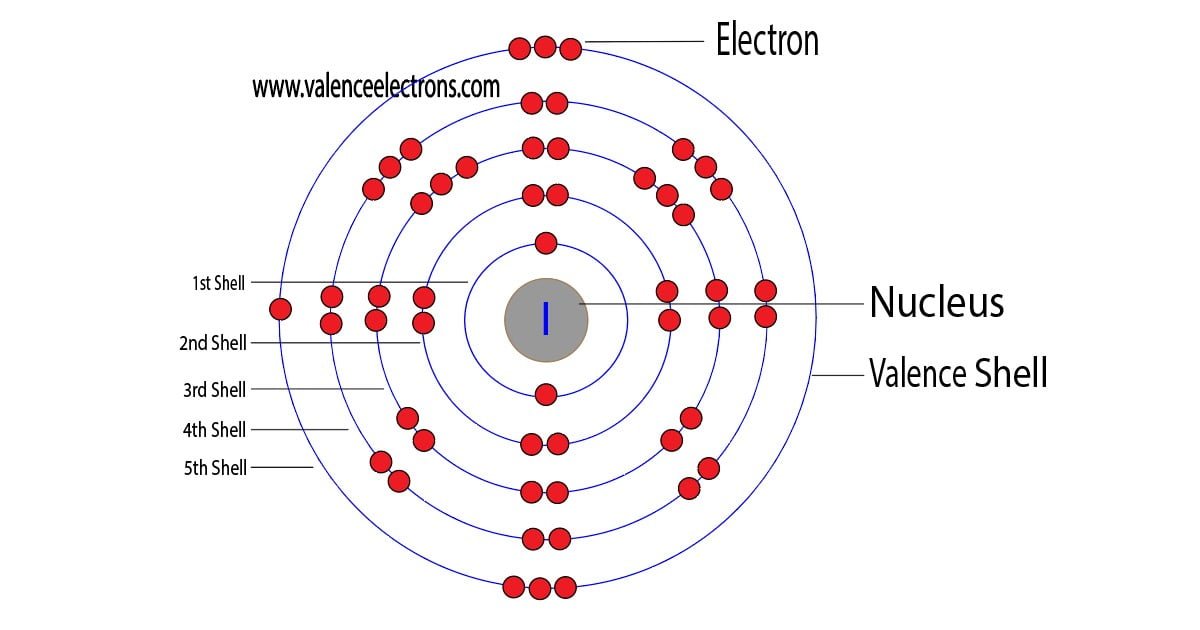
Iodine (symbol I) is in Group 17, also known as the halogens. This is key. The group number (for most main group elements, which iodine is) tells us the number of valence electrons. Ta-da!
Therefore, iodine has… wait for it… seven valence electrons! Boom! Case closed! We should get badges. And maybe pizza.
Think of it this way: all the halogens are desperate to be like the noble gases (Group 18). The noble gases have a full outer shell of electrons – eight, except for helium, which is already happy with two. These noble gases are the cool kids who don't need anyone else. They're stable, unreactive, and probably sipping tiny umbrellas out of their drinks.
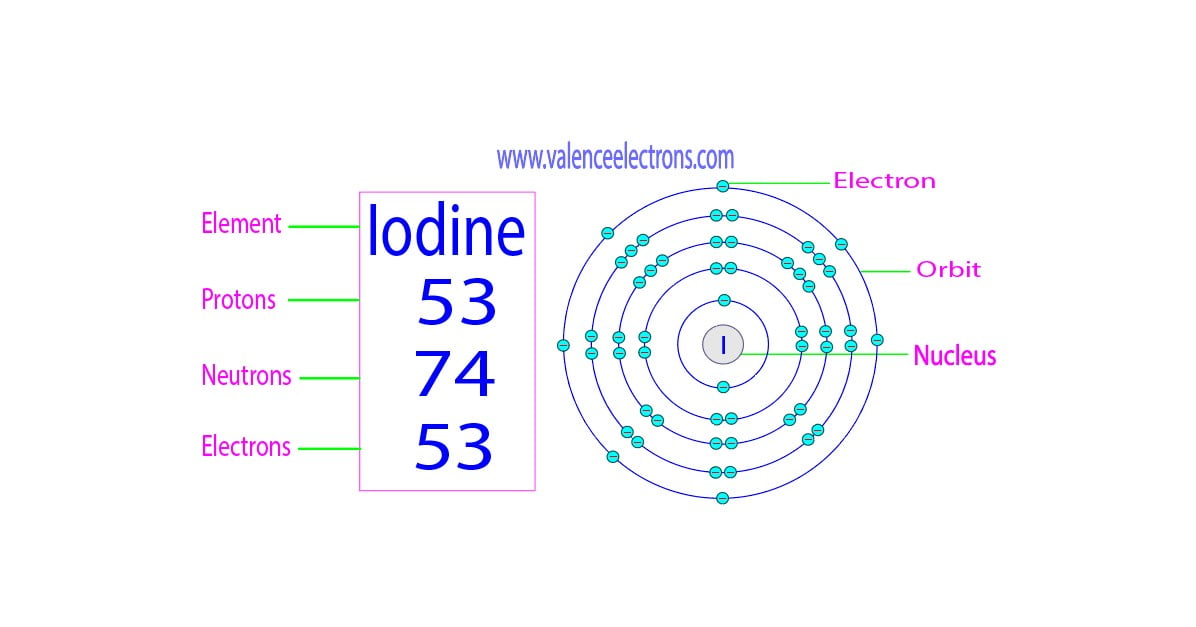
The halogens, poor things, are just one electron short of that blissful noble gas status. They're like the friend who’s always trying to borrow a dollar. They're incredibly reactive because they really want to gain that extra electron.
Why Seven? Why Not Eight? Or Zero?
Okay, smarty-pants, I see your hand raised in the back. Why seven? Why not some other random number? Well, it has to do with the electronic configuration of iodine.
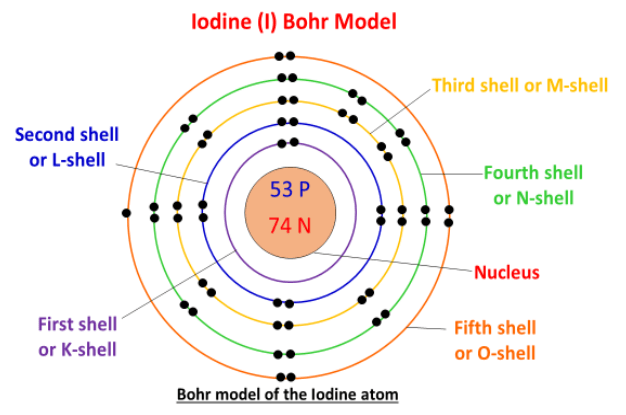
The full electronic configuration of iodine is a mouthful: 1s² 2s² 2p⁶ 3s² 3p⁶ 4s² 3d¹⁰ 4p⁶ 5s² 4d¹⁰ 5p⁵. (Don't worry, you don't need to memorize that.)
But if we focus on the outermost shell, the 5th shell (represented by 5s² 5p⁵), we see that it contains two electrons in the 5s orbital and five electrons in the 5p orbital. Add those together, and guess what? 2 + 5 = 7. Magic! (Okay, not magic, but cool electron math.)
Basically, the filling of the electron orbitals follows certain rules, and iodine just happens to end up with seven electrons in its outermost shell when all is said and done. It’s all about the Aufbau principle and Hund's rule... but we won't bore you with those details right now. We'll save that for the sequel, "Iodine: The Electron Orbital Years."
Iodine's Electronegativity Shenanigans
Because iodine has seven valence electrons, it's highly electronegative. That means it really, really wants to attract electrons to itself when it forms a chemical bond. It’s like that friend who always steals the fries off your plate. You let them, because, well, you kinda like them anyway.
This eagerness to grab electrons is why iodine is a good oxidizing agent. It happily accepts electrons from other substances, causing them to become oxidized. And that’s important in various chemical reactions and biological processes.
So, to recap: Iodine has seven valence electrons, it's a halogen, it’s desperate to be a noble gas, and it’s a fry thief in the world of chemical bonds. Now you're equipped with some iodine knowledge that's sure to impress at your next cocktail party. Or, at least, it will make you seem slightly less clueless when the chemistry teacher asks a question in class. You’re welcome!