
How Many Pages Is 12000 Words Double Spaced

Alright, buckle up, buttercup, because we're about to tackle a question that has plagued writers since the dawn of the word processor: How many pages is 12,000 words, double-spaced?
Fear not! We're not going to get bogged down in font sizes, margins, or the existential dread of staring at a blinking cursor. We're going to make this fun (yes, fun!) and, dare I say, enlightening.
The Great Page Count Prediction Game
Imagine you're planning a road trip. You know you need to drive 12,000 miles. Now, how many tanks of gas is that? It depends on your car, doesn't it? A monster truck is gonna guzzle way more than a tiny electric car.
Must Read
Words are the same! Some words are short and sweet (like "the" or "a"). Others are long and dramatic (like "onomatopoeia"). Think of it like stacking LEGO bricks. Twelve thousand little LEGO dots will cover a much smaller area than 12,000 big, chunky bricks.
The Magical Number (Give or Take a Dragon's Breath)
Okay, enough with the metaphors! Let's get down to brass tacks. Generally, 12,000 words double-spaced will land you somewhere in the neighborhood of 40 to 50 pages.
Yes, I know, I know. That's a range. It's not a precise number carved in stone by ancient word-counting deities. But it's a really good estimate.
Think of it as a weather forecast. "Chance of sunshine: 40-50%." You know you might need an umbrella, but you probably won't need a snowsuit.
Factors That Can Make Your Page Count Go Wild
Now, before you start measuring your manuscript with a ruler and declaring me a charlatan, let's talk about the things that can throw this estimate into a tailspin.

These are the plot twists in our page-counting adventure!
The Font Fiasco
Font matters! A lot. Think of it like this: Courier New is like wearing bulky snow boots. It takes up a ton of space. Times New Roman is more like sleek sneakers – efficient and streamlined.
And then there's Arial, lurking in the shadows, trying to be helpful but ultimately adding a little bit of extra width. Most of the time, your instructor or editor will want Times New Roman or Arial, 12-point font.
A smaller font size, like 10-point, will cram more words onto a page, shrinking your overall page count.
The Margin Mayhem
Margins are the blank spaces around the edges of your page. They're like the frame around a painting.
Standard margins are usually 1 inch all around. But if you have super-wide margins, you're essentially giving your words less room to breathe, which means you'll need more pages.
Think of it like arranging furniture in a room. If you leave a lot of empty space around the furniture, it will take up more of the room. Less empty space, less room.
The Header & Footer Fandango
Headers and footers are those little bits of text that appear at the top and bottom of each page, often containing page numbers, titles, or your name. They add a little extra to each page!
While they don't directly affect the word count per page, they do add to the overall length of your document. It's like adding a cherry on top of your sundae. Delicious, but it makes the sundae a little taller.
The Quote Quandary
Long quotes are usually single-spaced and indented. This means they take up less vertical space than regular double-spaced text. Which can, in turn, throw off our magical page count.
Imagine fitting more sardines into a can by stacking them carefully. That's what single-spacing does to your words.
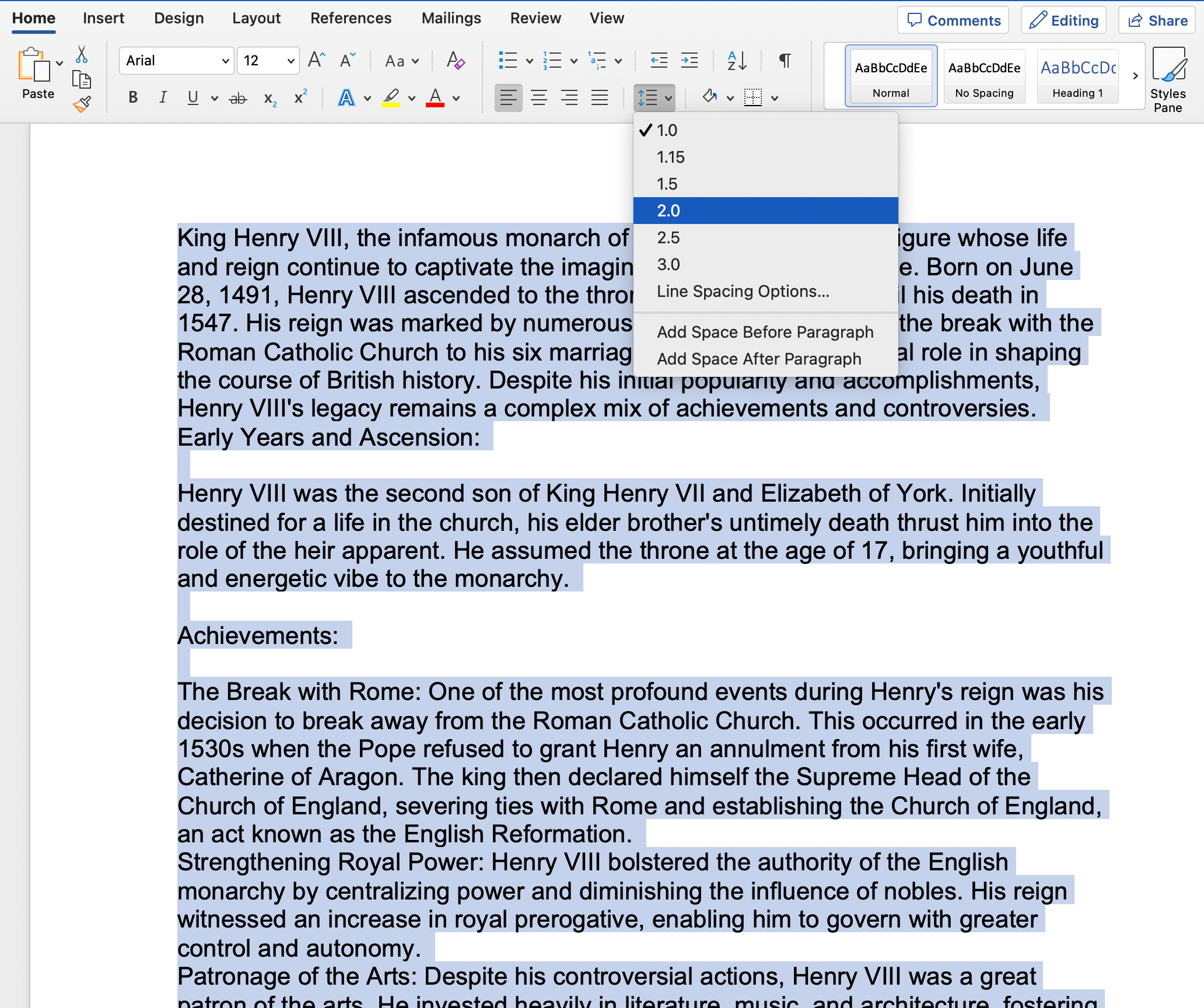
So, if your 12,000-word masterpiece is crammed with lengthy quotations from Shakespeare or Einstein, expect your page count to be a bit lower.
The Ultimate Page-Counting Cheat Sheet (Sort Of)
Okay, let's recap. Here's a super-simplified, slightly-exaggerated cheat sheet for estimating page count:
- Standard Font (Times New Roman or Arial, 12pt), Standard Margins (1 inch), Double-Spaced: ~40-50 pages
- Tiny Font (10pt or smaller), Standard Margins, Double-Spaced: Probably closer to 50 pages.
- Wide Margins, Standard Font, Double-Spaced: Could creep up to 50+ pages.
- Lots of Long Quotes: Might dip below 40 pages.
Remember, these are just estimates. Don't bet your house on them.
The Real Secret to Page Counting Success
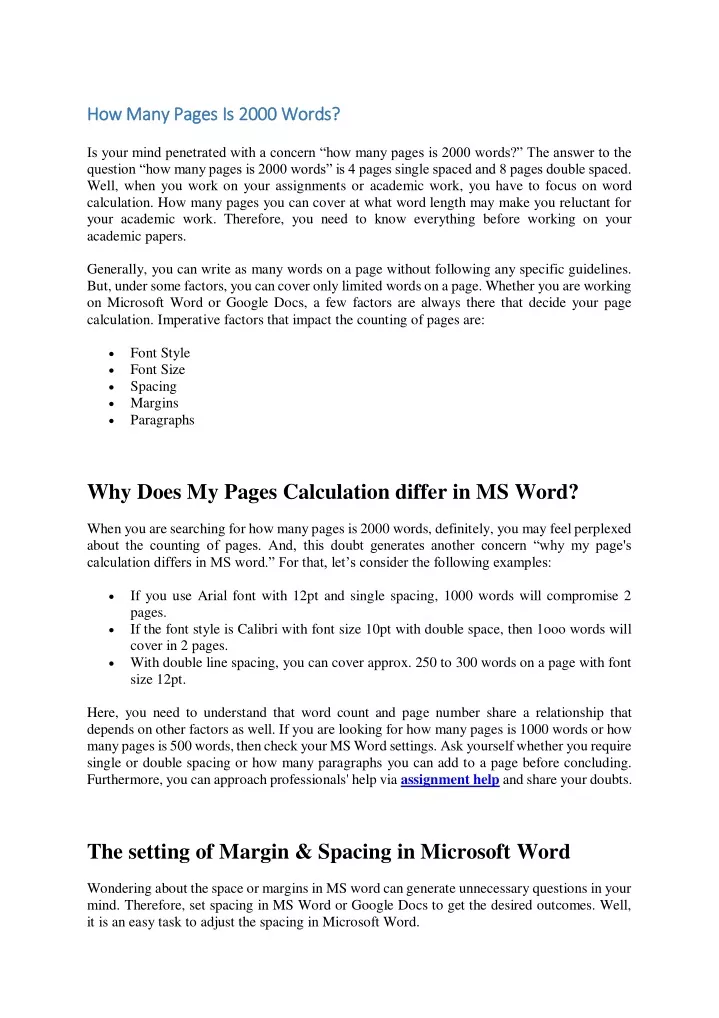
The absolute, foolproof, guaranteed-to-work method for knowing exactly how many pages your 12,000-word document will be? Use your word processor!
Seriously. Open up Microsoft Word, Google Docs, or whatever writing tool you prefer. Paste in your text, format it the way you want it (double-spaced, correct font, etc.), and look at the page count at the bottom of the screen.
It's like using a GPS instead of trying to navigate with a tattered old map. Much more accurate and a lot less frustrating. Embrace the technology!
Don't Stress the Page Count!
Ultimately, the exact page count of your document is rarely the most important thing. What is important is that you've written something amazing, insightful, and engaging.
Focus on crafting compelling content, polishing your prose, and getting your message across clearly. If your professor or editor requires a specific page range, that's one thing, but don't let the pursuit of a perfect page number distract you from the joy of writing.
So go forth, my friend, and write! And don't worry too much about whether it's 42 pages or 48. Just make it awesome!
After all, as Dr. Seuss once said (probably while pondering the perfect page count for "Green Eggs and Ham"): "The more that you read, the more things you will know. The more that you learn, the more places you'll go." (Though, technically, that doesn't apply here, but the sentiment is nice, right?)
Happy writing!