
How Many Milliliters Are In A Foot

Hey there, measurement maestros! Ever wondered how many milliliters are chilling inside a foot? Yeah, I know, sounds like a riddle wrapped in an enigma, dipped in a perplexing sauce. But trust me, it’s a fun little thought experiment. Buckle up!
Wait, What Exactly Are We Talking About?
First, let’s get this straight. We’re not talking about your actual foot, the one you use to walk around. We're talking about the unit of length: the good ol' foot (ft). And milliliters (mL) are units of volume. Think tiny water droplets. So, connecting length and volume... that’s the real head-scratcher!
It's like asking how many apples fit into a song. Doesn't quite compute, right?
Must Read
So, Can We Even Do This?
Technically, no. A foot measures distance, a milliliter measures volume. They're apples and oranges, cats and dogs, spreadsheets and interpretive dance. You can't directly convert one to the other. But, that doesn't mean we can't have some fun playing with the idea!
Think of it this way: Imagine you have a really, really, REALLY thin straw that's exactly one foot long. It has some volume, right? That's the direction we're going!
Let's Get Hypothetical!
Okay, so we can’t directly convert feet to milliliters. But what if we invent a scenario? This is where things get interesting.
Scenario 1: The Foot-Long Cube.
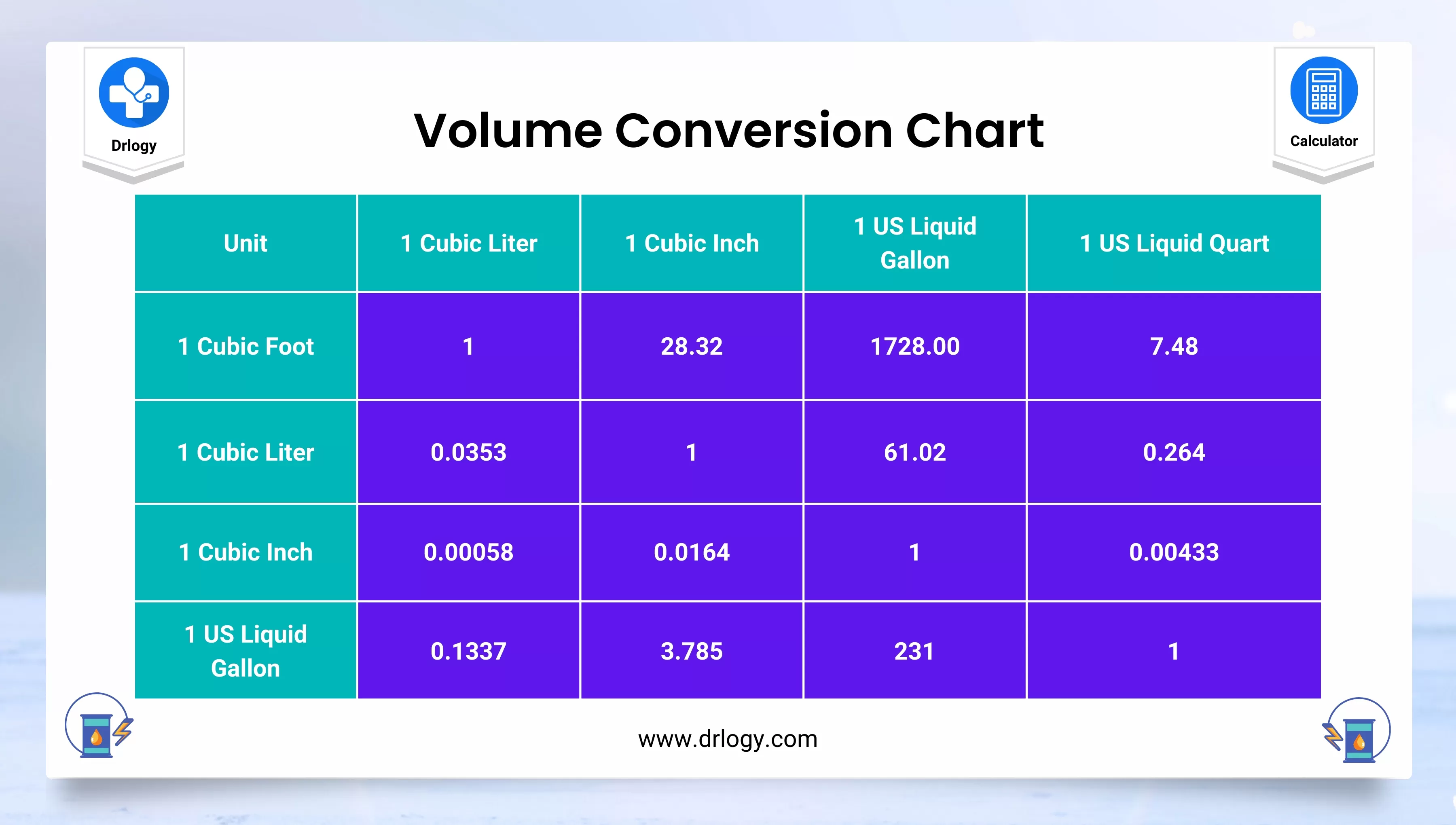
Imagine a cube. Each side is exactly one foot long. Now, let's fill that cube with water. The volume of that cube is one cubic foot. Got it? Good!
Now for the conversion! One cubic foot is equal to approximately 28,316.8 milliliters! Whoa! That’s a lot of tiny liquid units.
Visualise that: It’s like trying to fit almost 30,000 little eyedroppers full of water into that foot-long cube.
Scenario 2: The Foot-Long Cylinder
Alright, cube's cool, but let's get cylindrical! Picture a cylinder, one foot tall. Now, let’s say its base has a tiny area - let’s pretend it’s so thin, that the cylinder can hold, let's say, 1 mL per millimeter square of base area.
This requires a specific width in cylinder base size relative to the height (one foot), and it gets complicated FAST. Point is, if you define the area of the cylinder base, and its height, you could calculate its volume in mL.
Why Is This Even Fun?
Because it’s delightfully absurd! It's about taking two seemingly unrelated concepts and smashing them together to see what kind of sparks fly. It’s about flexing your brain muscles and embracing the sheer weirdness of units of measurement.
Think about it: you can ask all sorts of equally silly questions: How many seconds are in a rainbow? How many kilograms does happiness weigh? How many pixels are in a dream?
The point is not to find a real answer, but to spark curiosity and get you thinking outside the box. To realise that the world is full of strange connections and unexpected possibilities.
So, What’s the Takeaway?
There's no direct conversion from feet to milliliters. They measure different things. End of story? Nope! The fun is in the journey, not the destination. In dreaming up scenarios, playing with numbers, and generally embracing the beautiful absurdity of it all.
Don't be afraid to ask the silly questions! They often lead to the most interesting discoveries.
And next time someone asks you how many milliliters are in a foot, you can confidently say, "It depends! Let me tell you about my cube..."
Just remember, stay curious!