
How Many Gallons Do I Need In A Water Heater
Alright, picture this: It's a crisp Monday morning. Your alarm barely registered, but the promise of that first, steamy shower is pulling you out of bed. You step in, turn the knob, and for a glorious 30 seconds, it's pure bliss. Then, without warning, the water shifts. Not just cool, but arctic. Your hopeful morning transforms into a frantic dance of dodging icy jets, questioning all your life choices, and mostly, screaming internally, "WHY?!"
Sound familiar? If you've ever had a shower ambush you with cold water, you've experienced the brutal reality of an undersized water heater. Or maybe you're just looking at your old, trusty (or not-so-trusty) tank and wondering, "How many gallons does this thing even need?"
Why Does The Number of Gallons Even Matter?
Okay, let's get down to brass tacks. Your water heater isn't just a big metal cylinder; it's the heart of your home's hot water supply. And the number of gallons it holds? That's its capacity, its hot water reservoir. When you turn on a hot tap, you're pulling from that stored, already-heated water. Once it's gone, your heater needs to refill and reheat, and that, my friends, takes time. Time during which you might be shivering.
Must Read
Choosing the right size is like picking the perfect coffee mug. Too small, and you're constantly refilling. Too big, and you're heating more coffee than you'll ever drink, which is just wasteful. We're looking for that sweet spot.
Who Are You? And How Thirsty Are You For Hot Water?
This isn't just about how many people live under your roof; it's about their hot water habits. Let's break it down:

1. The Solo Act or The Dynamic Duo (1-2 People)
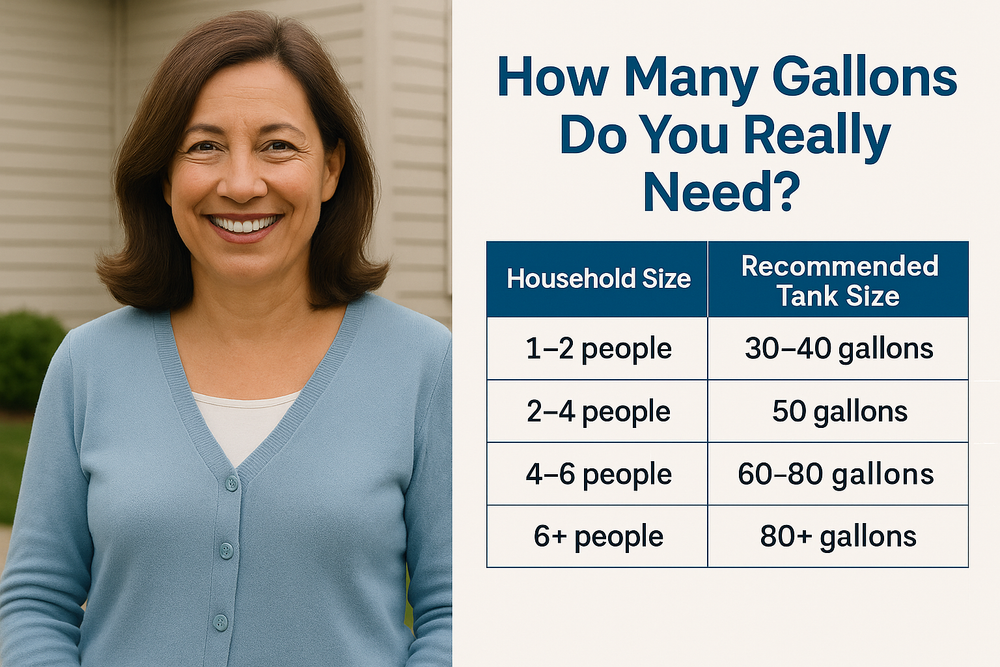
If you're living alone or with a partner and your hot water demands aren't exactly epic — think daily showers, maybe a dishwasher, but not all at once — you might be comfortable with a smaller tank. A 30-40 gallon water heater is often a good starting point here. It's efficient for lower usage and won't take up too much space. (No simultaneous bathtub soaks, though, unless you like surprises!)
2. The Small Crew (2-3 People)
Add another person into the mix, or perhaps you just like slightly longer showers. Maybe someone wants to run the dishwasher while another person is showering. For this scenario, you're likely looking at a 40-50 gallon water heater. This offers a bit more buffer, reducing the chance of those unwelcome cold blasts. It's a solid all-rounder for many smaller families or couples with guests.
![How Many Gallons Of Water Do Koi Need? [2025 Guide] - Gold Koi Fish](https://goldkoifish.com/wp-content/uploads/2022/06/How-Many-Gallons-Of-Water-Do-Koi-Need.jpg)
3. The Family Fiesta (3-4 People)
Now we're talking about multiple daily showers, regular laundry cycles (hello, soccer uniforms!), and perhaps a dishwasher running every night. Here, a 50-60 gallon water heater becomes almost essential. This capacity is designed to handle those higher, overlapping demands without turning your morning routine into a race against the clock. (Because nobody likes being told their shower time is "up"!)
4. The Hot Water Army (5+ People)
If your home is a bustling hub of activity with 5 or more people, or if you have multiple bathrooms, a large soaking tub, and appliances constantly needing hot water, you need to go big or go home (and take a cold shower!). A 60-80 gallon water heater is your minimum here. You might even want to consider some of the more advanced options like tankless water heaters (which provide on-demand hot water) if your usage is consistently high. But for a traditional tank, 60-80 gallons gives you the best fighting chance against hot water deprivation. (Think of it as your household's personal hot water fortress.)
Beyond Just Bodies: Other Thirsty Factors
It's not just about the number of people. Consider these:
- Do you love baths? A standard bathtub can use 20-30 gallons per fill. If you're a bath person, you need a larger tank.
- How many hot water appliances do you have? Dishwashers, washing machines, even certain types of radiant floor heating can tap into your hot water supply.
- Simultaneous usage: Does everyone shower in the morning? Do you run the washing machine and dishwasher at the same time? Overlapping demands put a serious strain on your tank.
- Future plans: Are you planning to grow your family? Add a bathroom? Don't just think about today, think about tomorrow! (Being prepared is half the battle, right?)
The Takeaway: Don't Guess, Assess!
While these are general guidelines, the best way to figure out your ideal water heater size is to really observe your household's hot water habits. Pay attention for a week: how many showers, baths, laundry loads, and dishwashing cycles happen? Are there peak times when everyone needs hot water at once?
Choosing the right gallon capacity for your water heater is about more than just a number; it's about ensuring comfort, convenience, and efficiency. An undersized tank means cold showers and frustration. An oversized tank means you're heating water you don't really need, wasting energy and money. Find that just right balance, and you'll be singing in the shower for years to come (with consistently hot water, of course!).
