
How Many Chromosomes Does A White Potato Plant Have
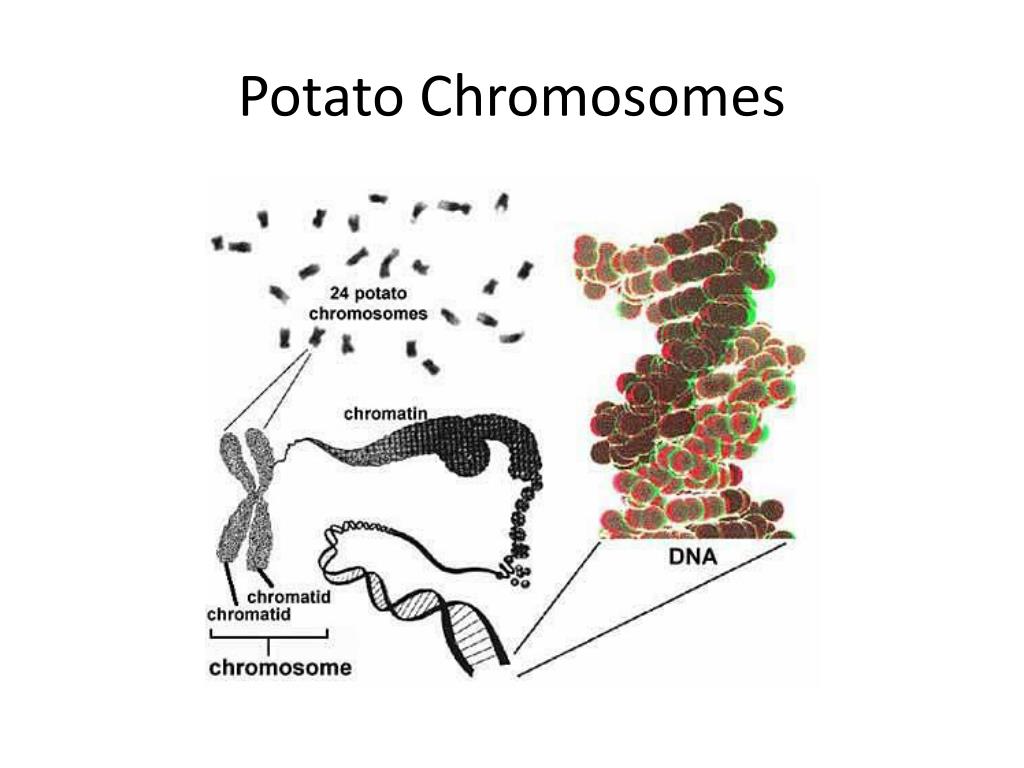
Ever wondered about the secret lives of your favorite mashed potatoes? Or maybe you're just curious about the building blocks of plants? Let's dive into the world of the white potato and its super-sized genetic blueprint!
The Great Chromosome Count: Potato Edition
So, how many chromosomes does a white potato, scientifically known as Solanum tuberosum, have? Get ready for a surprise!
The answer is 48! Yes, you read that right. A whopping 48 chromosomes.
Must Read
But wait, there's more! This isn't your average number.
What's So Special About 48?
Most living things have their chromosomes in pairs. Think of it like socks. One from mom, one from dad.
Humans, for example, have 23 pairs, totaling 46 chromosomes.
Potatoes, however, are a bit different.
They're tetraploid. Say what?!
Tetraploid simply means they have four sets of chromosomes instead of the usual two (diploid). It is like having four copies of each sock!
So, instead of two sets of 12 chromosomes, they have four.
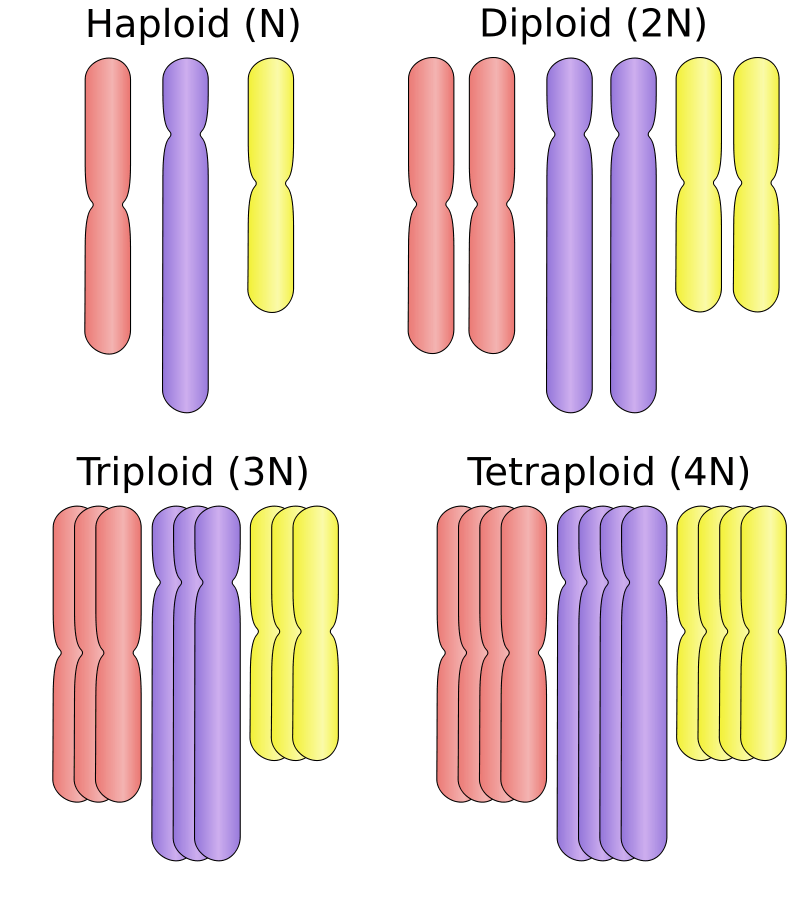
That's 4 x 12 = 48!
Pretty cool, right?
Why are Potatoes Tetraploid?
That's a great question! The tetraploid nature of potatoes is mostly due to their history of hybridization.
Over time, through natural processes and, later, human intervention, different potato varieties crossed.
This crossing sometimes resulted in offspring with double the usual chromosome count.
This can lead to increased size, better disease resistance, or other desirable traits.
Basically, it is how we get better potatoes for fries, chips or mash.

Chromosome Numbers and Plant Breeding
Understanding chromosome numbers is super important for plant breeders. These are the scientists who work to create new and improved potato varieties.
Knowing that potatoes are tetraploid helps them predict how traits will be inherited from one generation to the next.
It also guides them in making crosses between different potato types to get specific characteristics.
Want a potato that's perfect for baking? Chromosome knowledge helps!
Need a variety that can resist a certain disease? Chromosome counts are key!
So, What's the Big Deal?
Why should you care that a potato has 48 chromosomes?
Well, it highlights the incredible diversity and complexity of the plant kingdom!
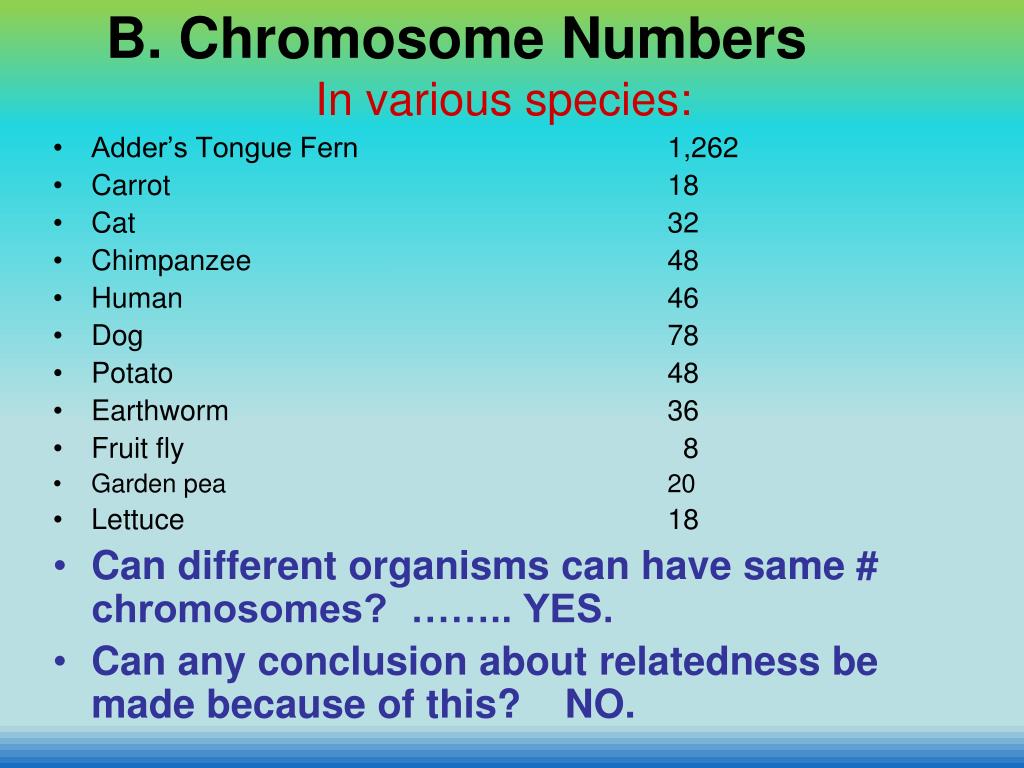
It also demonstrates how understanding genetics can lead to improvements in our food supply. Think about all those perfect potatoes, thanks to some chromosome counting.
Next time you're enjoying some mashed potatoes, remember those 48 chromosomes working hard!
It might even spark some interesting conversations around the dinner table. "Hey, did you know potatoes have more chromosomes than we do?"
More Fun Facts About Potato Genetics
Did you know that potato breeding is really challenging?
Because of the four sets of chromosomes, predicting the traits of offspring can be tricky. It can be a bit like playing a complex genetic lottery!
That's why breeders often have to grow many generations of potatoes to get the exact combination of characteristics they're looking for.
Also, wild relatives of the potato have different chromosome numbers.

Some have two sets (diploid), some have more than four!
Breeders sometimes use these wild potatoes to introduce new traits, like disease resistance, into cultivated varieties.
Working with different chromosome numbers can make things even more interesting.
Potatoes are fascinating from the plate to their DNA.
So next time you are enjoying your favorite potato dish remember the complexity of Solanum tuberosum.
Maybe this article inspired you to learn more about plants.
Consider checking your local library or botanical garden.
You may find it an exciting adventure.