
How Many Amps Does A 1000 Watt Microwave Use
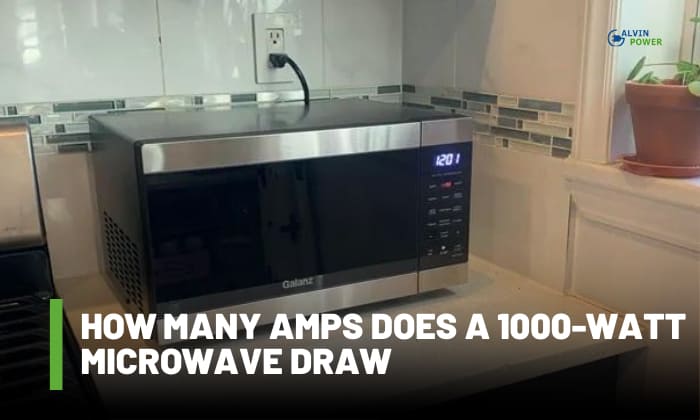
Hey, so you're wondering about your microwave, huh? Specifically, how many amps that 1000-watt beast is sucking down? Good question! It's one of those things we never really think about until, like, the lights flicker when you're heating up that late-night burrito. Trust me, we've all been there.
Let's dive in, shall we? No need to get all technical and boring, though. We'll keep it simple. Think of it as figuring out how much "oomph" your microwave needs to do its thing. And by "oomph", I mean electricity, of course!
The Basic Formula (Don't Panic!)
Okay, okay, there's a tiny bit of math involved. But promise me you won't run away screaming. It’s actually pretty easy. Remember the formula: Watts = Volts x Amps? Yeah, that one. You probably haven't thought about that since, uh, high school physics? No worries, we got this.
Must Read
We're trying to find Amps, right? So we can rearrange the formula to: Amps = Watts / Volts. See? Already less scary. So, with a 1000-watt microwave, we need to know the voltage.
Voltage: The Wall's Personality
In most homes in the US (and some other places), the standard voltage is around 120 volts. That's what your wall outlets are happily pumping out. It's like the wall's personality – always giving 120 volts of… something! In Europe, it's more like 220V or 240V, so keep that in mind. This whole calculation changes a bit depending on where you are!
Putting It All Together (Finally!)
Now for the grand finale! We know the watts (1000) and we know the volts (around 120). Let’s plug those numbers into our magic formula:
Amps = 1000 / 120
Drumroll please… (imagine some suspenseful music here)…

Amps = Approximately 8.33
So, there you have it! A 1000-watt microwave typically uses around 8.33 amps. Give or take a little, you know. Microwaves are like people, each one is a little different.

Wait! There's a Catch (Of Course!)
Here's the thing. That 8.33 amps? That's while it's actively microwaving. But microwaves, sneaky little appliances that they are, can draw more power when they initially start up. This is called "inrush current," and it's like the microwave taking a big gulp of power to get going. This could be a bit higher, momentarily. Don't be surprised if it spikes a little! That’s normal.
Also, some microwaves, depending on their age and efficiency, might be slightly different. Older models might be a tad less efficient, requiring a smidge more power. It's like comparing a gas-guzzling vintage car to a shiny new hybrid. They both get you there, but one uses way more fuel (electricity).
Why Does This Matter Anyway?
Why should you even care about amps? Well, understanding amperage is super helpful for a few reasons. For starters, it helps you avoid tripping your circuit breaker! If you've got a bunch of appliances running on the same circuit, and they collectively draw more amps than the circuit can handle, BAM, lights out! No one wants that. It's also important for figuring out generator sizes if you're, say, prepping for a zombie apocalypse (or just a camping trip, whatever).

Also, it's good to know your appliances and how much they need to operate. It’s like knowing how much gas your car needs, right?
The Bottom Line
So, to recap: a 1000-watt microwave generally uses around 8.33 amps on a standard 120-volt circuit. But remember, it might spike a bit during startup, and older models might be a little less efficient. Keep that in mind when plugging in other stuff! And now you're armed with the knowledge to conquer the kitchen and avoid those dreaded circuit breaker trips. Go forth and microwave responsibly!
And hey, if you really want to be precise, check the sticker on the back of your specific microwave. It'll usually list the actual amperage. Consider this our little ballpark estimate, okay?