How Long Does A Edible Stay In Your System

So, you've dipped your toe (or maybe taken a full cannonball) into the world of edibles. Welcome! Now you're probably wondering, "How long is this groovy feeling going to, well, feel groovy? And more importantly, when will it be out of my system?" It’s a valid question, and the answer, like most things cannabis-related, isn't a simple black and white. Think more tie-dye than a tax form.
The Great Edible Escape: Understanding the Timeline
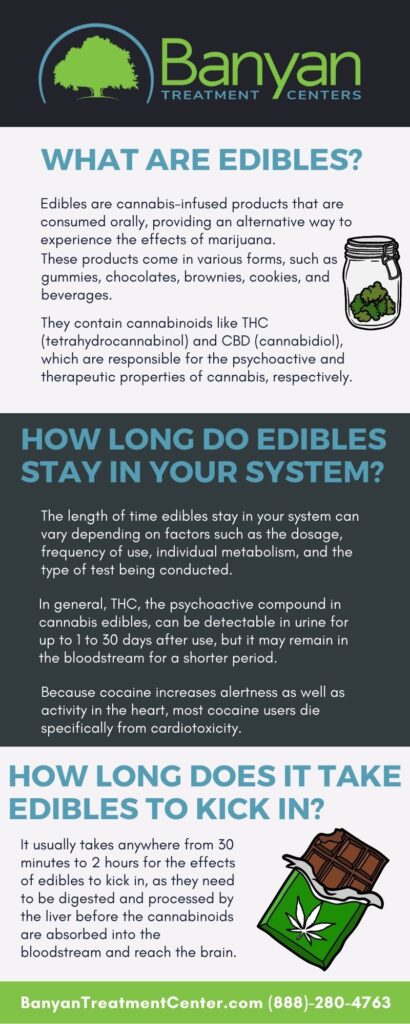
First, let’s get one thing straight: We're talking about THC, the primary psychoactive compound in cannabis. When you smoke or vape, THC enters your bloodstream relatively quickly. But with edibles, things are a bit more…scenic. Your digestive system gets involved, and that's where the magic (and the delay) happens. The THC is processed by the liver, converting it to 11-hydroxy-THC, a more potent and longer-lasting compound.
This process means the effects of edibles take longer to kick in – usually between 30 minutes to 2 hours. It also means they can last longer. Here's a rough breakdown:
Must Read
- The Peak: Expect the strongest effects to last for 2-4 hours.
- The Plateau: A gradual decline over the next 2-4 hours.
- The Fade: Lingering effects that can last for several more hours, up to 12 or even 24 in some cases.
But remember, that's just a general guideline. Several factors play a role in how long an edible stays in your system.
The Usual Suspects: Factors Affecting Edible Duration
Think of it like a carefully crafted cocktail. Many ingredients influence the final flavor, and the same goes for how your body processes edibles:

- Dosage: This is the most obvious. A higher dose means a longer ride. Start low and go slow, as the saying goes. Like, really slow.
- Metabolism: Everyone's metabolism is different. Some people process THC quickly, while others take their sweet time. Are you a finely tuned race car, or a reliable, albeit slower, minivan?
- Body Weight and Composition: Generally, people with higher body fat percentages may store THC for longer periods.
- Frequency of Use: Regular cannabis users tend to process THC faster than infrequent users. Your body becomes more efficient at clearing it out.
- Food Intake: Eating before or with your edible can slow down absorption, leading to a more gradual and potentially longer-lasting experience.
- Individual Sensitivity: Some people are just more sensitive to the effects of THC than others. It's like how some people can handle spicy food while others break into a sweat at the mere mention of chili peppers.
The Science Stuff: How Long Can Tests Detect THC?
Okay, let's get real. This is often the part people are really interested in. Drug tests detect THC metabolites, not THC itself. The detection window varies depending on the type of test:
- Urine Test: The most common test. For occasional users, THC can be detectable for 3-15 days. For frequent users, it can be detectable for 30 days or even longer.
- Blood Test: Detects THC for a shorter period, typically 1-7 days.
- Saliva Test: Detects THC for 1-3 days.
- Hair Follicle Test: Has the longest detection window, up to 90 days. However, hair tests are less common and can be prone to false positives.
Important: These are estimates. There's no guaranteed way to speed up the process. Hydration, exercise, and a healthy diet can help support your body's natural detoxification processes, but they won't magically erase THC from your system.

Practical Tips for a Smoother Edible Experience
* Start with a low dose: Seriously. 2.5-5mg is a good starting point for beginners. * Be patient: Don't take more if you don't feel anything right away. Wait at least two hours before considering a second dose. * Stay hydrated: Drink plenty of water. * Have a plan: Make sure you're in a comfortable and safe environment. Have snacks, drinks, and entertainment ready. * Don't mix with alcohol or other substances: This can amplify the effects and lead to unwanted side effects. * Know your source: Only purchase edibles from reputable sources that provide accurate dosage information. * CBD can help: Some users report that CBD can help mitigate some of the negative side effects of THC, such as anxiety. * Remember to breathe: If you start to feel overwhelmed, take slow, deep breaths. Remind yourself that the effects are temporary.Edibles in Daily Life
Ultimately, understanding how edibles affect you is about knowing your own body and respecting the substance. It's about mindful consumption, much like enjoying a fine wine or a well-crafted meal. Just like you wouldn't chug a bottle of Merlot before a big presentation, you wouldn't want to overdo it with edibles before a crucial meeting or a family gathering.
The key takeaway? Be informed, be responsible, and be kind to yourself. Edibles can be a fun and enjoyable experience, but it's essential to approach them with awareness and respect. After all, it's about enhancing life, not derailing it.