How Is Wind Energy Converted Into Electricity

Alright, settle in folks, grab your lattes (or that suspiciously strong iced tea – no judgement!), because we're about to unravel the mystery of how those giant, majestic windmills – I mean, wind turbines – whip up electricity. It's not witchcraft, I promise. Though, sometimes when I see them spinning, I do wonder if a tiny wizard is hiding inside, furiously pedaling a bicycle generator.
Basically, think of it like this: you're blowing on a pinwheel. Remember those? Pure joy! The wind turbines are just super-sized, industrial-strength pinwheels. Except instead of making you giggle (though, seeing a field of them is pretty awe-inspiring), they're making electricity. And trust me, a lot more than a single pinwheel could generate. We're talking power for houses, schools, and even that electric car your neighbor keeps bragging about.
Blades of Glory (and Electricity)
The first key player is, obviously, the blades. These aren't your grandma's knitting needles, folks. These are massive, aerodynamic sculptures designed to catch as much wind as possible. They’re shaped like airplane wings, which is no accident! The wind flows around the blade, creating lift on one side and lower pressure on the other. This pressure difference is what makes the blades rotate.
Must Read
Think of it like sailing. Ever wondered why sailboats can sail against the wind? It's the same principle! Bernoulli’s principle if you want to impress your friends at the next pub quiz (and simultaneously bore them into a coma).
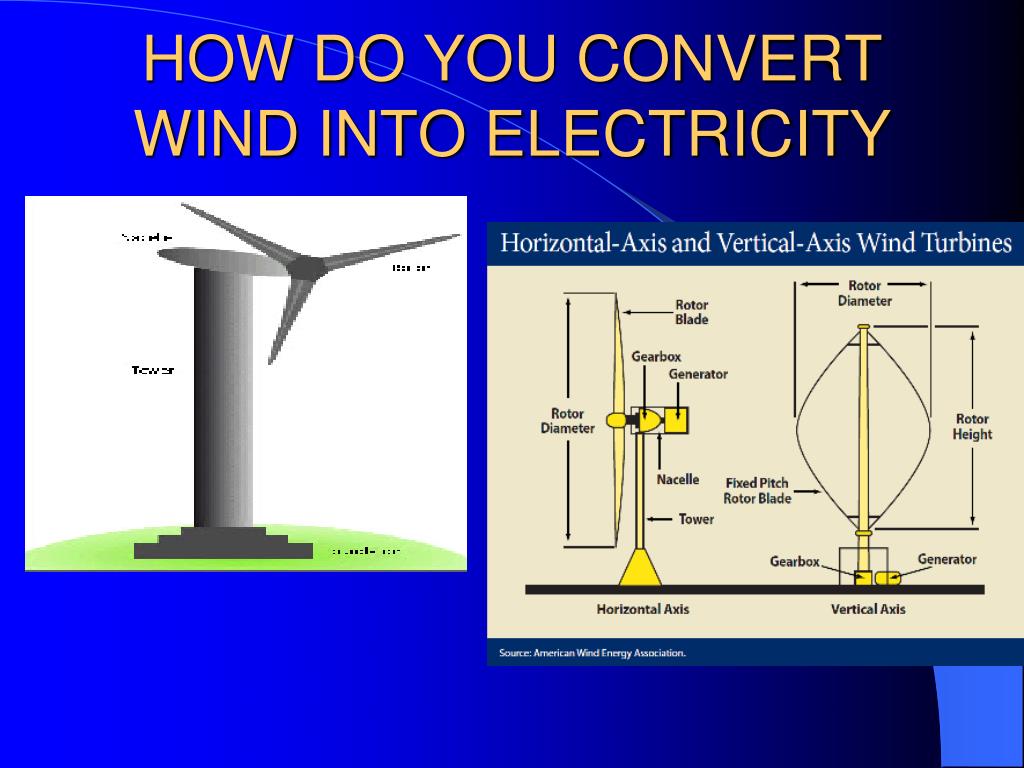
Now, these blades are attached to a central hub, which is connected to… drumroll please… the gearbox! This is where things get a little less breezy (pun intended!) and a little more…mechanical.
Gear Up for Some Power!
Imagine trying to ride a bicycle uphill in the highest gear. Brutal, right? You’re pedaling like a hamster on a caffeine bender, but barely moving. The gearbox is like shifting to a lower gear, allowing the blades (which are spinning relatively slowly) to speed up the rotation connected to the generator.
The gearbox is crucial because generators need to spin really, really fast to produce electricity efficiently. We’re talking speeds that would make your head spin faster than a toddler after a sugar rush. The gearbox takes the relatively slow rotation of the blades (say, 15-20 rotations per minute) and cranks it up to something like 1200-1800 rotations per minute. Talk about a turbo boost!
Inside the nacelle (that big box on top of the tower that houses all the important bits), you'll find the generator itself. The generator is basically a giant version of the dynamo on your bicycle that powers your headlight. It uses the principle of electromagnetic induction. Which, translated into plain English, means that it uses magnets and coils of wire to convert mechanical energy (the spinning) into electrical energy.
Magnets: How Do They Work? (Actually, We Do Know!)
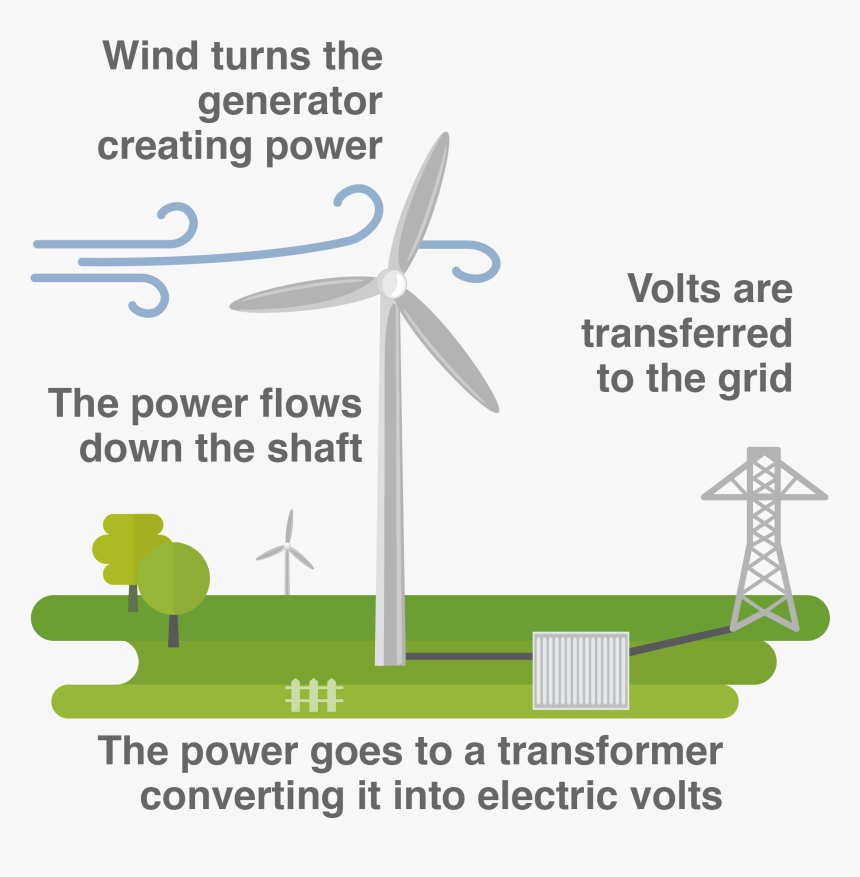
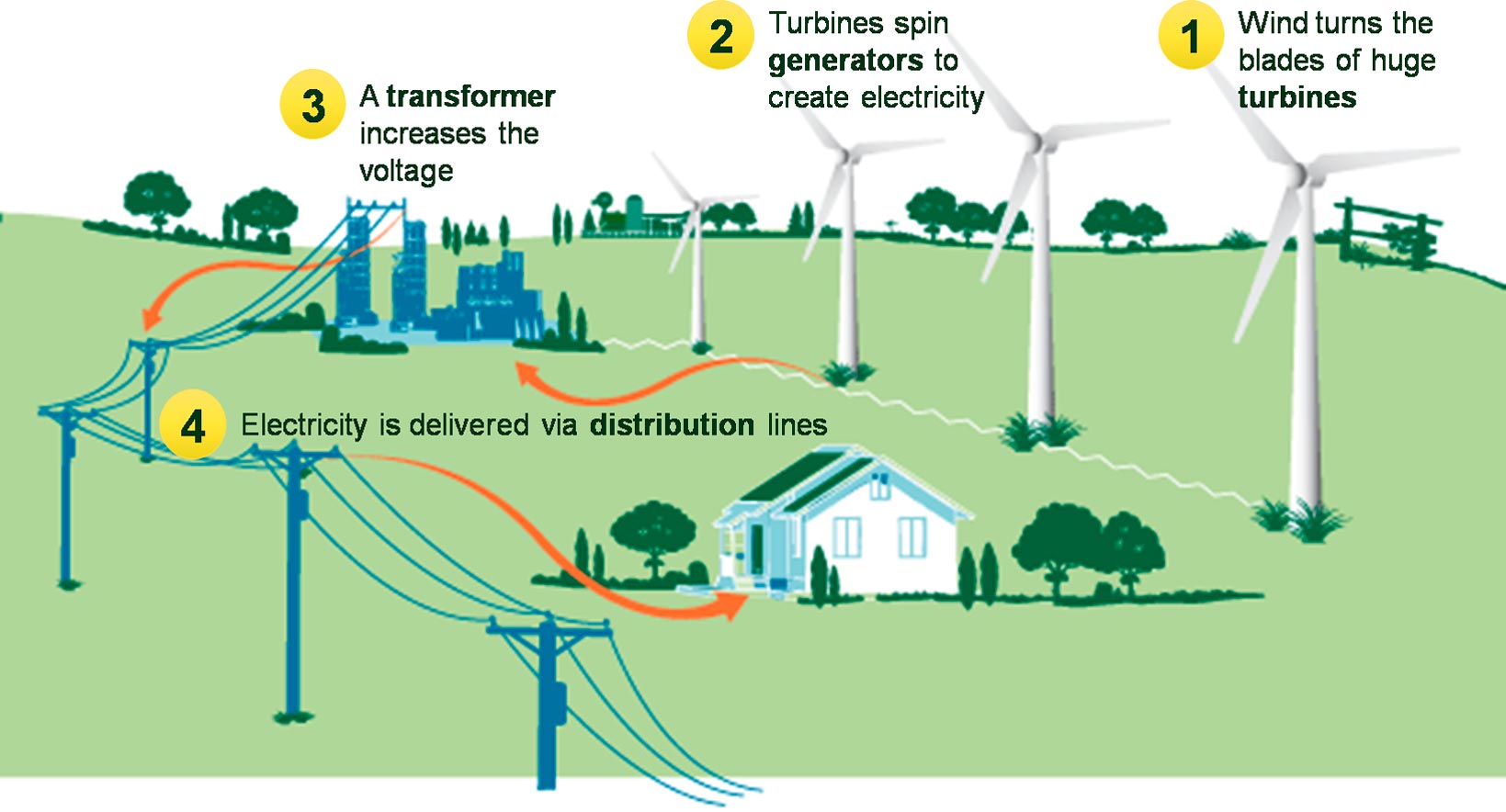
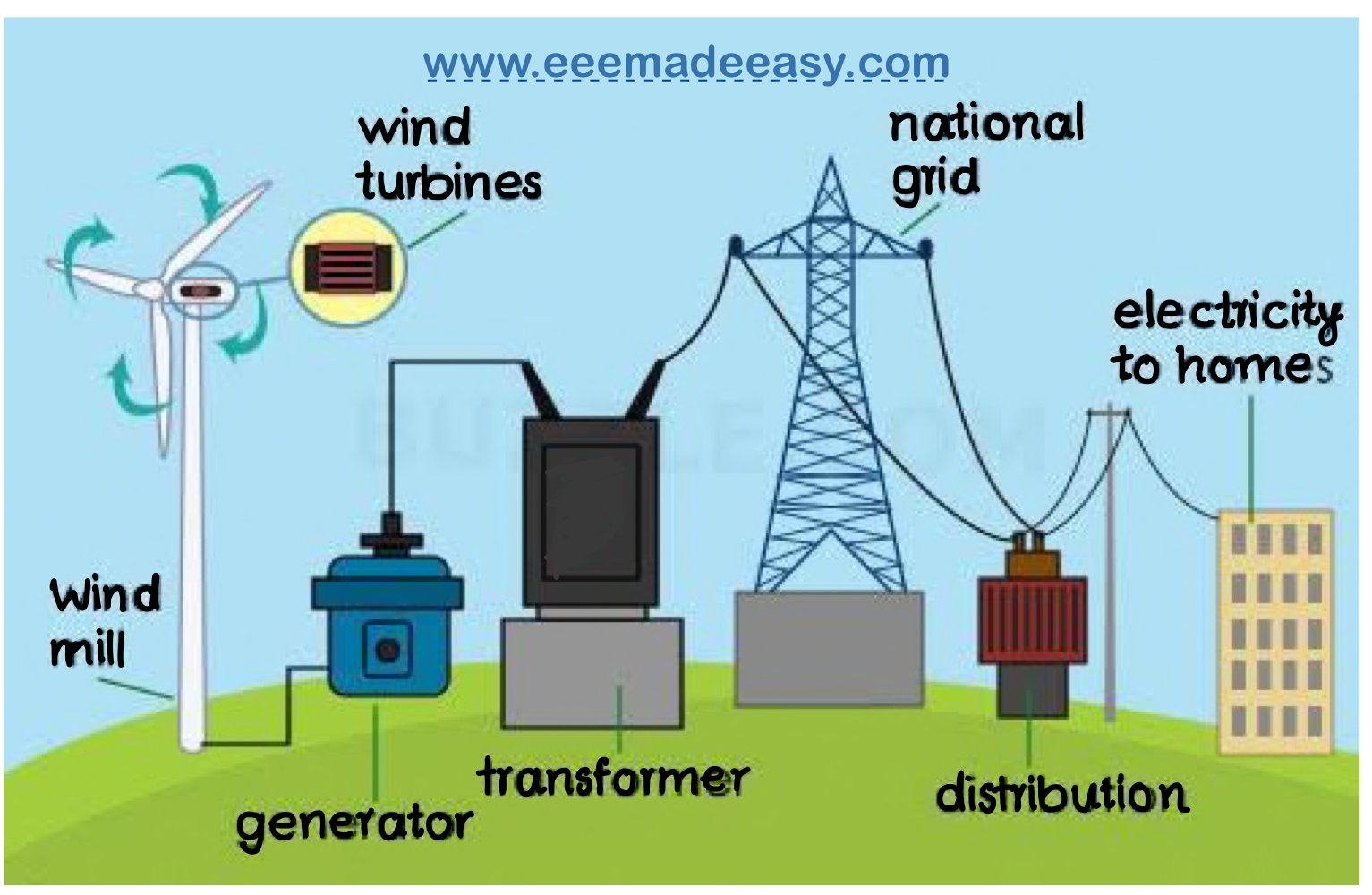
Here's the gist: as the magnets spin near the coils of wire, they create an electrical current. It's like magic, but it's actually science! This is the birth of electricity! This electricity is then sent down the tower via cables to a transformer. Why a transformer? Because the voltage needs to be bumped up so that it can be efficiently transmitted across long distances via power lines.
Think of it like water flowing through a pipe. If you want to send a lot of water a long way, you need to increase the pressure. The transformer does the same thing for electricity, boosting the voltage so it can travel further without losing too much power. It’s all very efficient, and surprisingly straightforward once you break it down.
From Wind to Your Toaster
So, there you have it! From the wind whistling through the blades, to the whirring of the generator, to the electricity zipping down the power lines, all the way to your toaster, perfectly browning your morning bagel. All thanks to the power of wind! Who knew turning air into toast could be so complicated?
Next time you see a wind turbine, you can impress your friends (or, again, bore them into a coma) by explaining exactly how it works. And remember, every little bit of renewable energy helps! So, go ahead, embrace the wind! Just, you know, don’t try to build your own turbine in your backyard. Trust me, your neighbors won’t appreciate it (and neither will the local zoning board).
One last fun fact, did you know that Denmark sometimes generates more electricity from wind than the country consumes? Amazing isn't it? Now, if you'll excuse me, I’m off to buy a kite. All this talk of wind is making me feel like a kid again!