
How Is Nuclear Energy Made
Alright, settle in, grab your imaginary latte, because we're about to demystify nuclear energy. And no, it’s not just a giant, glowing green donut machine from a cartoon. Though, wouldn't that be fun?
Most of us hear "nuclear" and immediately picture Homer Simpson or a mutant iguana. But the truth is, making nuclear energy is less about radioactive monsters and more about a very, very elaborate Rube Goldberg machine powered by tiny, sassy particles.
The Star of the Show: Uranium!
First things first, you need an ingredient. And our main star isn't some rare spice; it's uranium. Specifically, a quirky little isotope called Uranium-235. Think of it as the Beyoncé of atoms – it's a bit unstable, a lot powerful, and everyone wants a piece of it.
Must Read
Most uranium found in nature is the less exciting Uranium-238, which is like Beyoncé's sensible cousin. But we want the 235 because it's a bit of a drama queen. It's ready to split at the slightest provocation, which is exactly what we need for our atomic party trick.
The Big "Whoosh!" (aka Fission)
So, how do we get this Uranium-235 to perform? We shoot a tiny, high-speed particle called a neutron at it. Imagine throwing a minuscule bowling ball at an already wobbly, perfectly ripe avocado. Wham!
When the neutron hits the Uranium-235 atom, that atom gets so overwhelmed it literally splits apart. This isn't just a breakup; it's a full-on atomic divorce, complete with flying fragments. This process is called fission, and it releases a surprising amount of energy and, crucially, more neutrons.
And here’s where the magic (and the humor) happens: those newly liberated neutrons go on to hit other Uranium-235 atoms, causing them to split, releasing even more neutrons, and so on. It’s like a cosmic game of atomic billiards, or perhaps the fastest-spreading gossip chain in the universe. We call this a chain reaction.
Turning Up the Heat
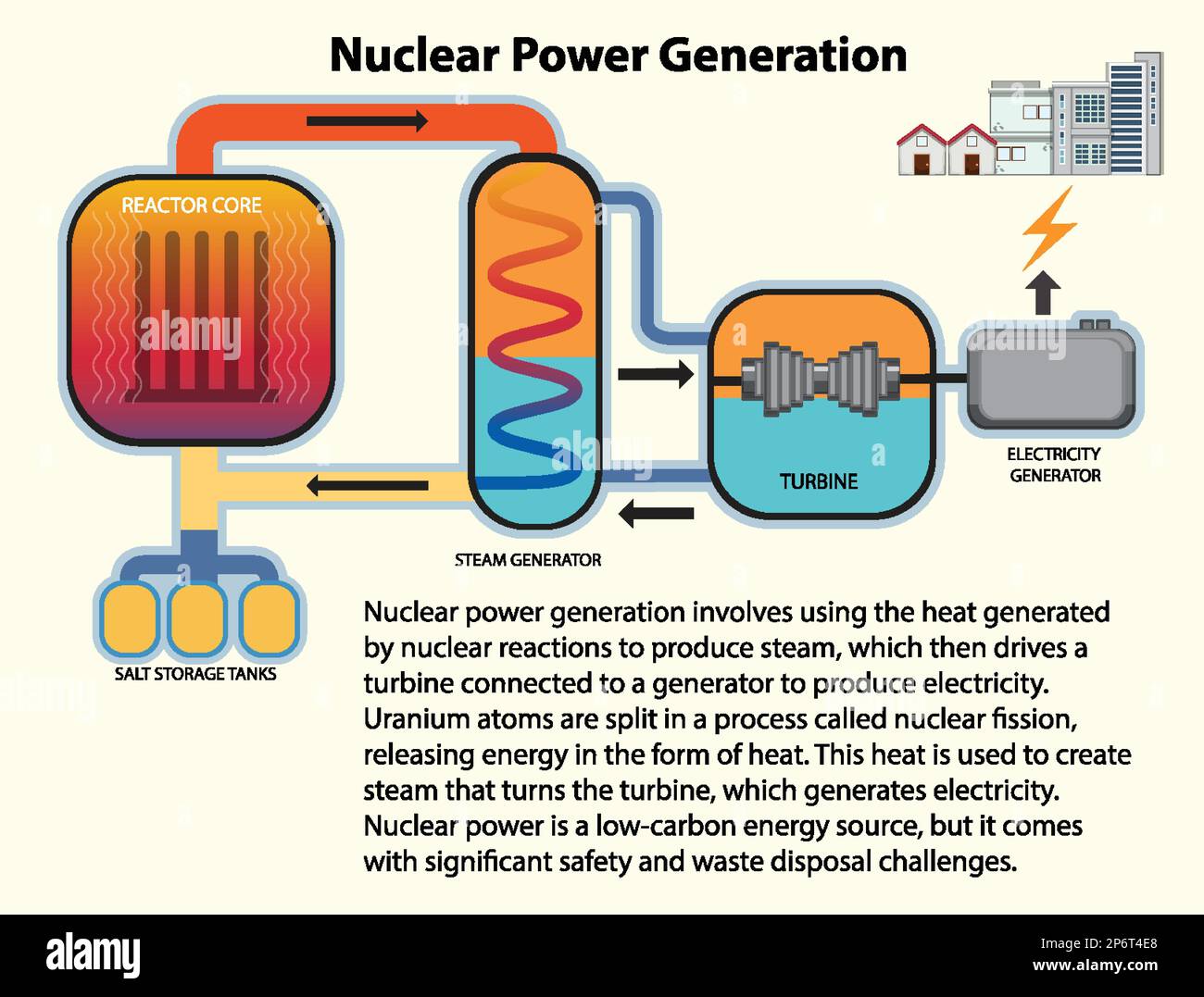
Now, when these atoms split, they don't just release more neutrons; they also release a tremendous amount of heat. Think of it as the ultimate atomic hot potato. This heat is the real prize! We're not trying to blow things up; we're just trying to get a really, really big kettle boiling.
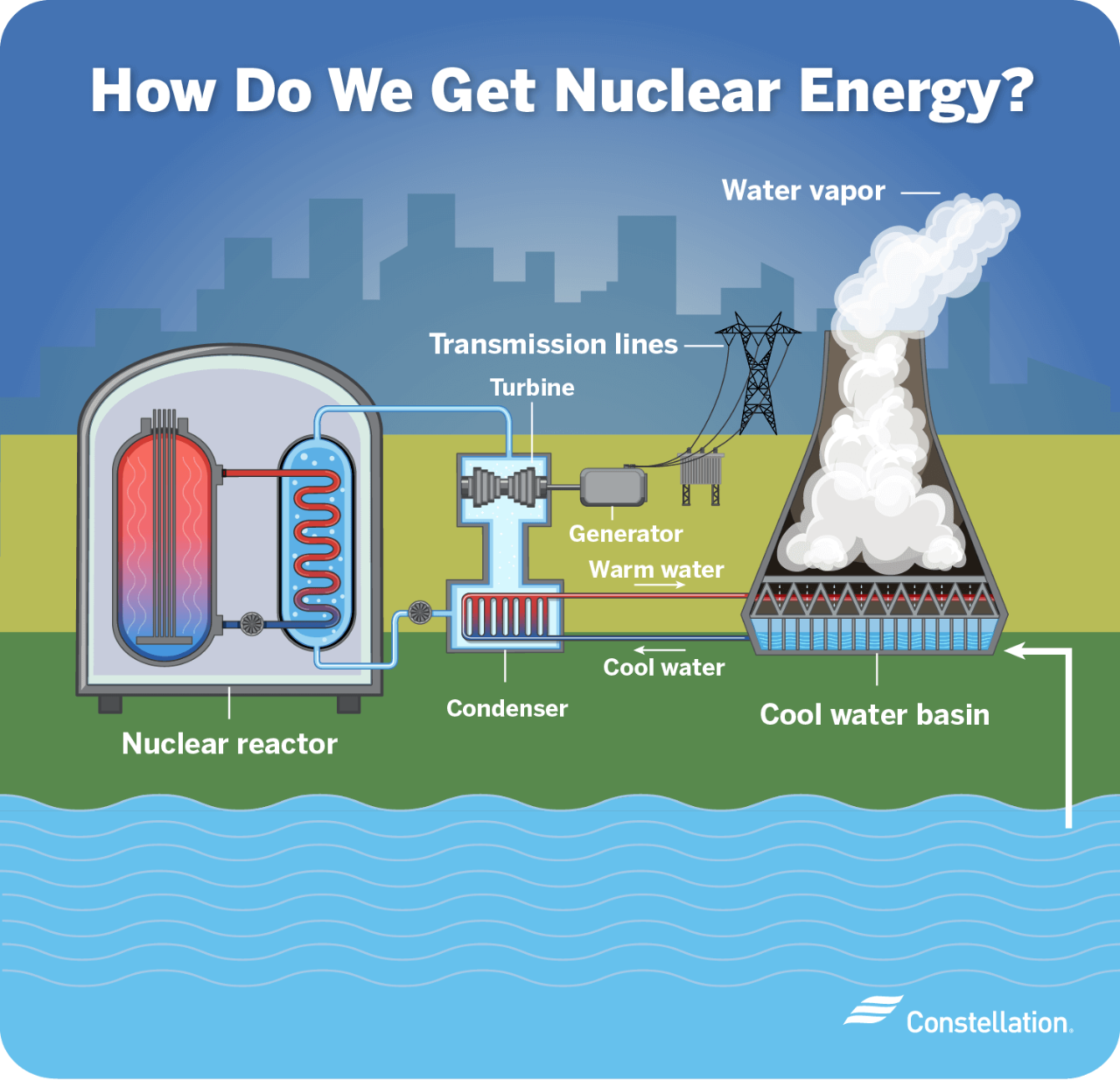
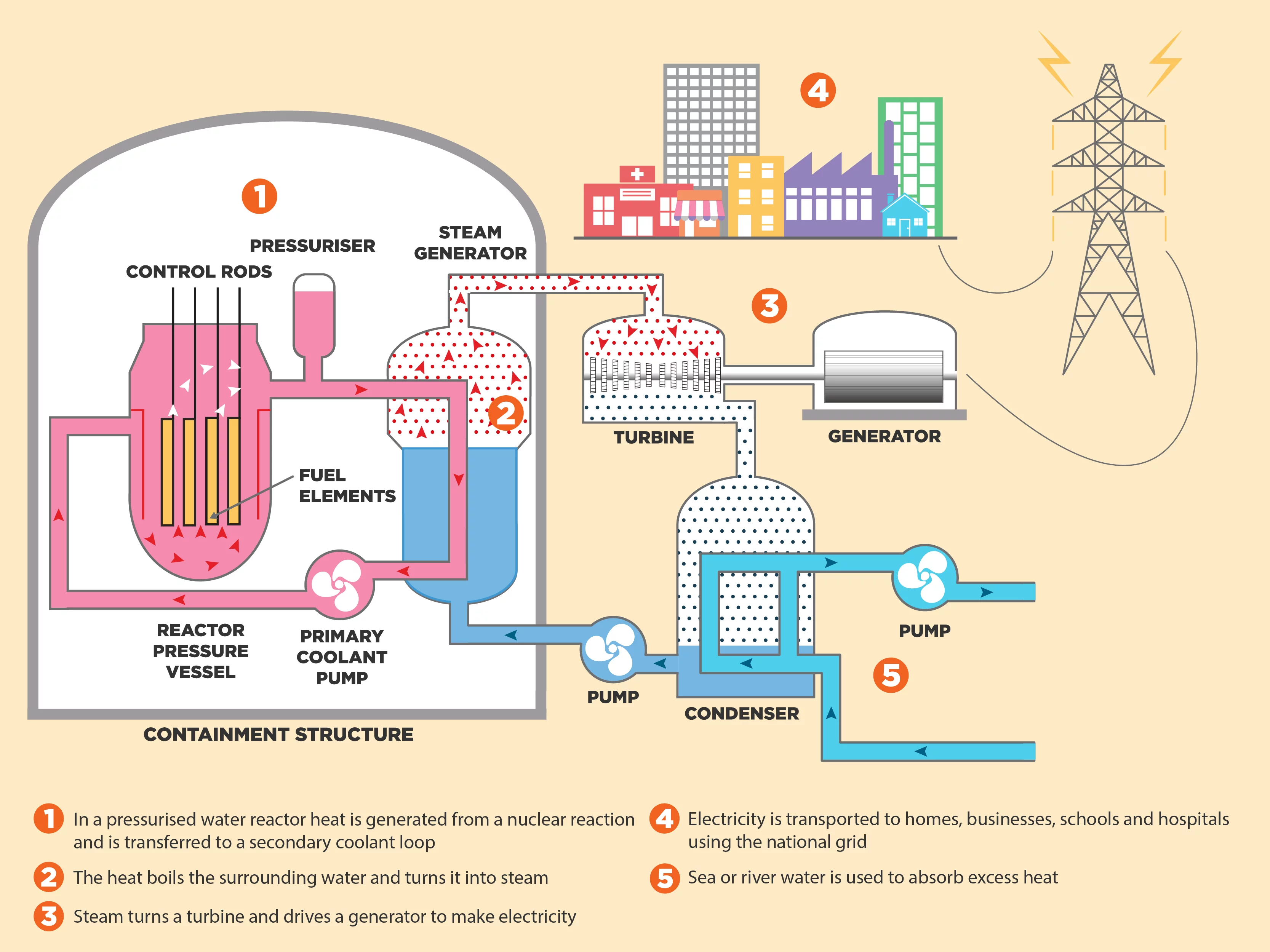
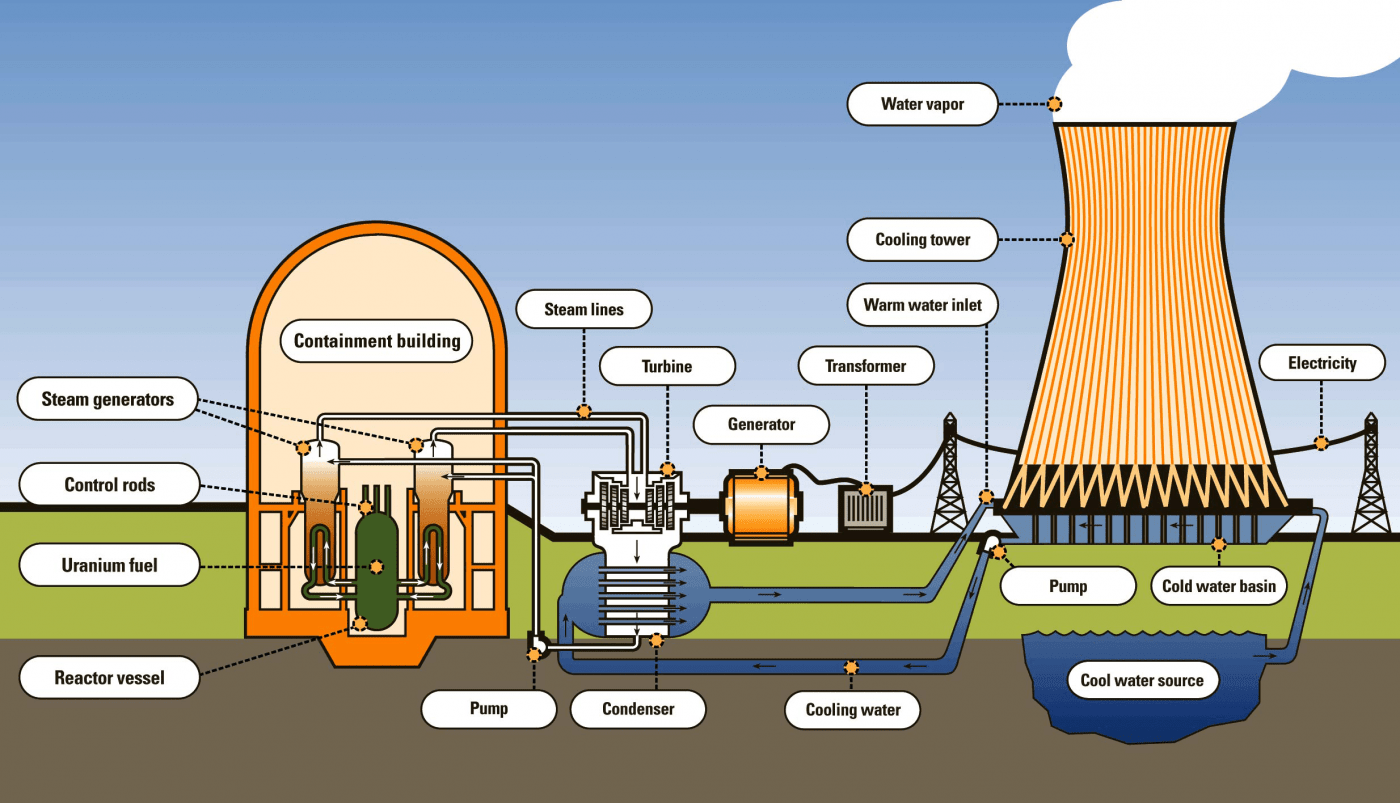
In a nuclear reactor, all this controlled fission happens in a "core," where water circulates. This water acts like a giant, tireless sponge, soaking up all that incredible heat. The water, now superheated, often under immense pressure to keep it from boiling away instantly, is then pumped around.
The Spin Cycle
The super-hot water (or sometimes steam, depending on the reactor design) then transfers its heat to another, separate loop of water. This secondary loop does boil, creating steam. And not just any steam – we're talking about incredibly high-pressure, super-charged steam, like the breath of a very enthusiastic dragon.
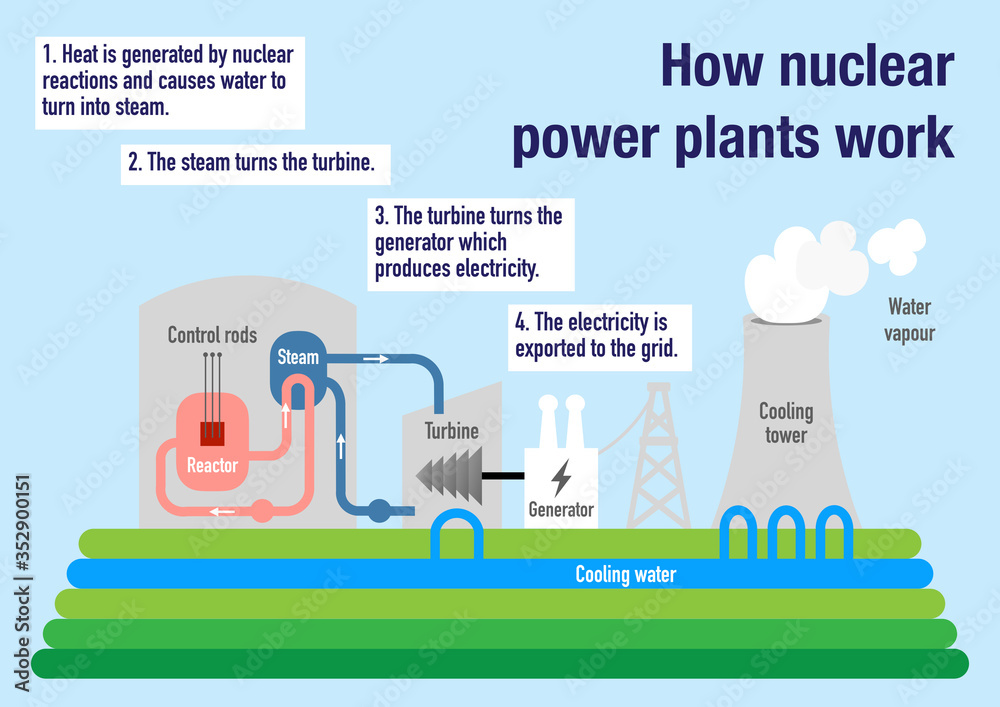
This powerful steam is then directed towards a set of gigantic, sophisticated pinwheels called turbines. Imagine a colossal wind farm, but instead of wind, it's being spun by atomic dragon breath. The force of the steam makes these turbines spin incredibly fast.
Attached to these spinning turbines are generators. And what do generators do? That's right, they generate electricity! It’s the same basic principle as a bicycle dynamo, just, you know, a million times bigger and powered by the split-second decisions of microscopic particles.
Keeping It Cool (and Safe!)
Of course, you can't just let the atomic gossip spread unchecked. That's where control rods come in. These are usually made of materials like boron or cadmium, which are basically atomic sponges that love to absorb those loose neutrons. When you lower the control rods into the reactor core, they soak up neutrons, slowing down the chain reaction and thus reducing the heat. Pull them out, and the party picks up again.
It's like having a very diligent bouncer at an atomic rave, making sure things don't get too wild. This careful control, along with multiple layers of safety systems and robust containment structures, is what keeps nuclear power plants operating safely.
The End Result
So, there you have it! From a grumpy little uranium atom to your smartphone charging, that's the journey of nuclear energy. We've taken an unstable atom, gently nudged it to split, captured the heat, boiled some water, spun a giant fan, and, voilà!, electricity.
Yes, there's the whole "nuclear waste" thing, which is essentially the tiny, spent remnants of our atomic party, needing careful, long-term storage. But that’s a story for another day, maybe over another imaginary coffee. For now, just appreciate that the lights are on, thanks to some very tiny, very dramatic atomic splits.