
How Does Accrued Market Discount Affect Gain Or Loss

Imagine you're at a flea market, and you spot a vintage baseball card priced way below its supposed value. Score! That, in a nutshell, is kind of like buying a bond at a market discount.
But hold on, friend! The tax implications of that sweet deal might have a quirky twist that can impact your gains or losses.
The "Discount" Explained (Without the Headache)
Think of market discount as the difference between a bond's face value (what it's ultimately worth at maturity) and what you actually paid for it.
Must Read
Maybe interest rates rose after the bond was issued, making older, lower-yielding bonds less attractive. That’s when the price drops.
Or perhaps the issuer's financial health took a dip, making investors nervous. Down goes the bond price!
The Not-So-Secret Life of Accrued Market Discount
Accrued market discount is simply the portion of that total discount that you've earned during the time you held the bond.
It's like slowly chipping away at the discount as you get closer to the bond's maturity date.
Now, here's where things get interesting and a little like playing detective with your investments!
The Plot Twist: Capital Gain vs. Ordinary Income
When you sell a bond at a profit, or when it matures and you get paid the face value, the IRS wants to know how much of that profit is from the market discount.
Why? Because that portion of the profit might be taxed as ordinary income, not as a potentially lower-taxed capital gain!
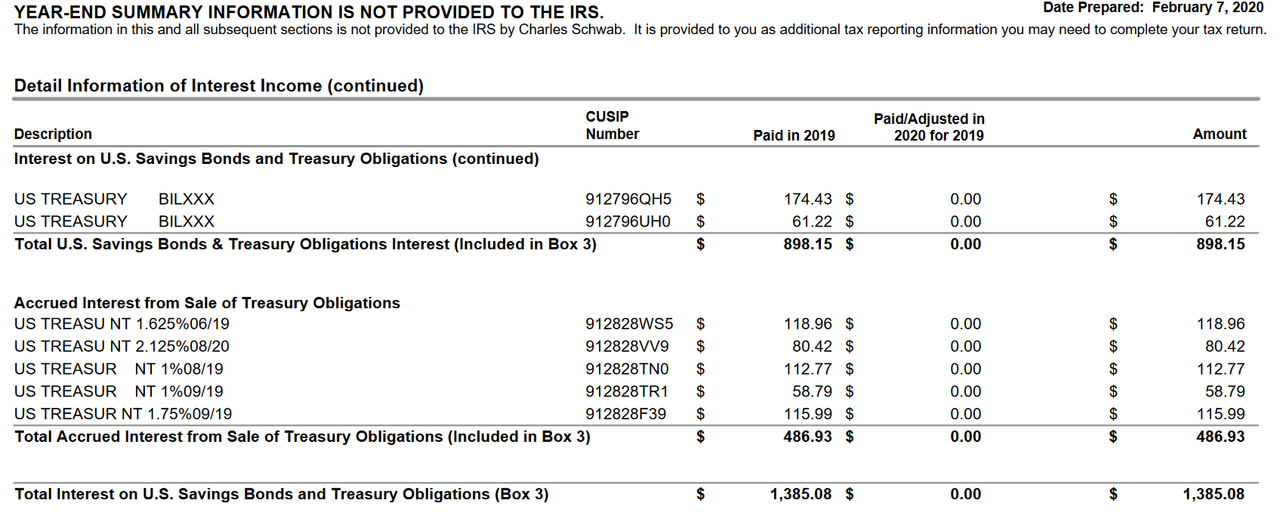
Think of it like this: the IRS sees the discount as you slowly earning back what you initially saved. Not from a clever investment strategy.
The Default Setting: Capital Gain... Mostly
By default, if you don't do anything special, the entire profit you make when selling the bond or at maturity is treated as a capital gain. Which is great!
This is usually the preferred route since capital gains rates are often lower than ordinary income tax rates.
But if the market discount is substantial, it can affect your overall tax picture when you sell the bond.
The Plot Thickens: Electing to Accrue
Here's where you can get a bit more proactive, like a savvy financial planner. You can elect to accrue the market discount each year.
This means you treat a portion of the discount as taxable interest income each year you hold the bond.
Sounds crazy, right? Why would you want to pay taxes earlier?
The "Accrue" Advantage: The Power of Now (and Later)
The beauty of electing to accrue is that it avoids a potentially larger chunk of ordinary income tax when you eventually sell the bond or it matures.

It can also be useful if you expect to be in a higher tax bracket in the future. Pay a bit now, save more later!
Plus, it can simplify your tax calculations down the road. No more complex discount deductions!
An Example with a Touch of Humor
Let's say you bought a bond with a face value of $1,000 for only $800 – a sweet $200 market discount. You hold it for five years until maturity.
Without electing to accrue, that entire $200 profit could be taxed as ordinary income at the time when the bond matures. Bummer!
But if you elected to accrue, you would have reported $40 of interest income each year ($200 discount / 5 years). You already paid tax on that!
The Big Finale: Selling Before Maturity
What happens if you sell the bond before it matures? The rules are similar.
If you didn't elect to accrue, the portion of the market discount that has "accrued" up to the sale date may still be taxed as ordinary income.

Electing to accrue simplifies things. You've already been paying taxes on the discount all along!
Important Caveats and Considerations
Not all bonds are created equal. Some bonds are exempt from these rules, like tax-exempt municipal bonds. Yay!
The rules surrounding market discount can be complex. Don't be afraid to consult a tax professional or financial advisor.
They can help you determine the best strategy for your specific situation and ensure you're not leaving money on the table, or worse, surprised by a larger-than-expected tax bill.
The Moral of the Story: Knowledge is Power (and Saves You Money)
Understanding accrued market discount might seem intimidating, but it's a valuable tool for managing your investments and minimizing your tax burden.
So, the next time you're tempted by a discounted bond, remember the flea market analogy and do your homework!
A little bit of knowledge can go a long way in maximizing your returns and keeping the taxman from taking too big of a bite.
"In the world of finance, sometimes the best deals come with a hidden tax surprise. Be prepared!"
Think of it like finding a treasure map – the treasure is the bond, and the instructions are the tax rules. Happy investing!

Beyond the Basics: A Touch of Advanced Planning
For sophisticated investors, strategies involving market discount can become quite nuanced. For example, they might consider selling bonds strategically to manage their overall tax bracket in a given year.
Or, they may use bond ladders with varying maturities to optimize their tax efficiency over time. Think of it as playing chess with the IRS!
But remember, these advanced strategies should always be implemented in consultation with a qualified professional. Don't try this at home... unless you're a certified tax guru!
A Final Word of Encouragement
Don't let the complexities of tax law scare you away from investing in bonds. Bonds are a crucial part of most well-diversified portfolios.
A bit of understanding and proactive planning can help you navigate the intricacies of market discount and other tax-related issues.
So, go forth and invest with confidence, knowing that you're armed with the knowledge to make informed decisions and keep more of your hard-earned money in your pocket!
Remember: the early bird gets the worm, but the informed investor gets the tax breaks!
And if all else fails, remember the flea market analogy, laugh about the quirks of the tax code, and enjoy the ride!