
How Do You Hardwire A Smoke Detector
Ever stared up at that little disc on your ceiling and thought, "Hmm, I wonder what magic makes that thing work?" Or maybe, more commonly, "Please, for the love of all that is holy, stop chirping at 3 AM!" Well, dear reader, today we're going on a little adventure into the surprisingly satisfying world of hardwiring a smoke detector. And no, it’s not as intimidating as it sounds. In fact, it's quite the opposite: an empowering journey that makes you feel like a certified home superhero!
You know that feeling when you learn something new and suddenly a previously mysterious task becomes… well, less mysterious and more like a puzzle you can totally solve? That’s exactly what hardwiring a smoke detector feels like. It’s not just about wires; it’s about taking charge of your home, understanding its inner workings, and making it a safer, happier place. And honestly, who doesn't want to feel like a domestic wizard?
Why Hardwire? The Perks Are Pretty Sweet!
"But wait," you might ask, "can't I just stick a battery-powered one up there?" Absolutely! Those are great too. But hardwired smoke detectors? They're the
Must Read
Imagine this: no more frantic dashes to the store for a 9-volt battery when that obnoxious chirp starts. No more climbing on a wobbly chair at an inconvenient hour. Hardwired means peace of mind, knowing your watchful protector is always on duty, drawing reliable power. Plus, many hardwired systems are interconnected, meaning if one goes off, they
Is It Scary? Nope! (But Be Respectful of Electricity!)
Now, let's talk about the elephant in the room: electricity. Yes, we’re dealing with it. And yes, it deserves our utmost respect. But being respectful doesn't mean being terrified. It means being

The key takeaway here is safety first, always. This isn't a race; it's a careful, methodical process. And guess what? Learning to handle these things responsibly is part of the fun! It builds confidence, skill, and an appreciation for the intricate dance of modern home living.
The (Not-So) Secret Recipe: A High-Level Peek
Ready for a quick, simplified tour of the process? Remember, this is about understanding, not an exhaustive instruction manual (always read your specific detector's instructions!).
Step 1: Power Off!
This is the

Step 2: Oldie Out, Newbie In
If you're replacing an existing detector, gently disconnect it. You'll usually find a wiring harness that plugs into the detector, and then wires connecting the harness to your home's electrical system. Pay attention to how things are connected – a quick photo with your phone can be a lifesaver!
Step 3: The Wiring Dance
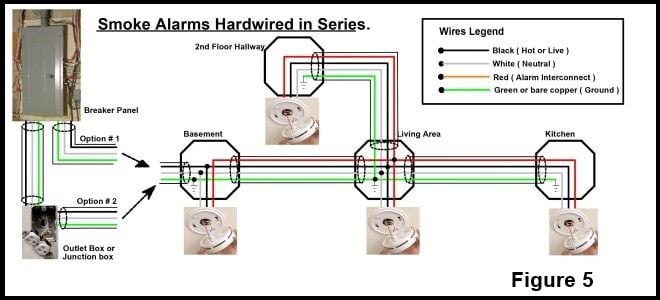
Here's where the magic happens! You'll typically see three wires:
- Black: This is your "hot" wire, carrying the power.
- White: This is your "neutral" wire, completing the circuit.
- Red or Orange: This is the "interconnect" wire, allowing your smoke detectors to talk to each other.
:max_bytes(150000):strip_icc()/install-hardwired-smoke-detectors-1152329-08-7adda3e3f25b408ca859f1f792f626e3.jpg)
Step 4: Mounting Magic
Once the wires are connected and safely tucked into the electrical box, you'll attach the new mounting bracket to the ceiling, then twist or snap your shiny new smoke detector into place. It’s incredibly satisfying to hear that click!
Step 5: Power On & Test!
Head back to your electrical panel, flip the circuit breaker back on. Then, stand back and press the "test" button on your detector. Hear that loud, clear alarm? Success! You’ve just hardwired a vital piece of home safety equipment. Give yourself a pat on the back! Or perhaps a silent cheer. Or maybe even an actual dance party. You earned it!
Beyond the Wires: The Fun, Fulfilling Part!
What’s truly inspiring about this little project isn't just the technical achievement. It's the profound sense of empowerment that comes with it. You've looked at something that seemed complex, broken it down into manageable steps, and successfully completed it. That's a huge win!

This isn't just about a smoke detector; it's about realizing that you're capable of more than you might think. It's about building confidence, saving money on professional help, and contributing directly to the safety and well-being of your household. That's a truly joyful and fulfilling experience, don't you think? Knowing you've made your home just a little bit safer, all by yourself, brings a unique kind of peace and pride.
So, the next time you look up at that little guardian on your ceiling, don't just see a device. See a symbol of your own growing capabilities, your commitment to safety, and the exciting journey of learning and doing.
Who knows what other "mysterious" home projects you'll tackle next? The world of DIY is full of opportunities to learn, grow, and make your living space truly your own. So go on, embrace that curious spirit, and discover the joy of being a little more hands-on. Your home, and your inner superhero, will thank you for it!