
How Do You Check Carbon Monoxide Levels

Okay, let's talk about something that's probably floating around your house right now. Something invisible, odorless, and a real sneak. No, not that dust bunny under the sofa. We're talking about carbon monoxide.
You know how you check if the oven is off? You double-check, maybe even triple-check. Or how about making sure the front door is locked? You jiggle the handle, right?
But when it comes to checking for carbon monoxide levels, things get a little... different. Suddenly, all our usual human superpowers are totally useless. Poof!
Must Read
Your Superpower Defeated by Air?
We humans are pretty good at noticing things. We can smell cookies baking from a mile away. We can hear a pin drop in a quiet room, sometimes.
We can even see a tiny speck of dirt on a freshly cleaned floor. Our senses are usually on point. But carbon monoxide? It laughs at our senses.
It's like the ultimate hide-and-seek champion. You can't see it. You can't smell it. And you certainly can't taste it.
The Great Mystery of the Unseen Gas
So, how do you check for something you can't detect? This is where our inner detective gets a bit flummoxed. There's no secret handshake with the air.
You can't hold up a finger and test the wind direction for CO. You can't squint your eyes and try to spot the invisible particles. It just doesn't work that way.
Many of us secretly wish we had a special CO-detecting nose. Imagine the dinner party conversations!
"Oh dear, I do believe there's a slight whiff of CO by the fireplace."
The "Unpopular Opinion" About Checking
Here’s the big secret, the slightly unpopular truth. Most of us? We don't actually check for carbon monoxide levels ourselves. Not directly, anyway.

We don't pull out a magnifying glass and peer at the air. We don't wave a magic wand. And no, holding your breath isn't a viable strategy.
The real check, the proper one, involves a little helper. A quiet, unassuming hero in your home. A gadget, if you will.
Are You Secretly a CO Sniffer? (Probably Not)
Let's be honest. Have you ever tried to "feel" if there's carbon monoxide? Maybe you've felt a bit tired and wondered,
"Is it just Monday, or is it CO?"
That's your brain trying its best, bless its cotton socks. But feelings, as useful as they are, aren't scientific CO detectors. They're more for deciding if you need more coffee.
You might look at a furnace and think, "Seems fine!" But what you're seeing is the furnace. Not the invisible gas it might be producing.
Enter the Gadget: Your CO Detector!
This is where the real magic happens. Our faithful carbon monoxide detector. This little box is your home's unsung superhero. It does all the heavy lifting.
It sits there, patiently sniffing the air, twenty-four hours a day. It's like having a tiny, dedicated air-quality inspector living on your wall or ceiling.
And when it finds something suspicious? It doesn't write a memo. It doesn't send a subtle hint. It shrieks!
The Sweet Sound of Safety (Usually a Shriek)
That loud, piercing alarm? That's your detector yelling,
"Hey! Pay attention! Something's up!"It's its way of saying, "I'm doing my job!"
So, how do you "check" carbon monoxide levels? You let your detector do the checking for you. Your job is much simpler, really.
It's like owning a guard dog that barks when there's an intruder. You don't patrol the yard yourself; you trust the dog.
The Real "Checking" You Do
Your actual responsibility isn't to sniff the air. It's to make sure your detector is ready for action. Think of it as keeping your superhero's cape clean.
First, placement matters. Your detector shouldn't be chilling too close to a window. Or too near a dusty air vent.
It needs a good, clear view of your indoor air. Away from direct sunlight or anything that might block its little sensor nose.

Pressing That Magic Button
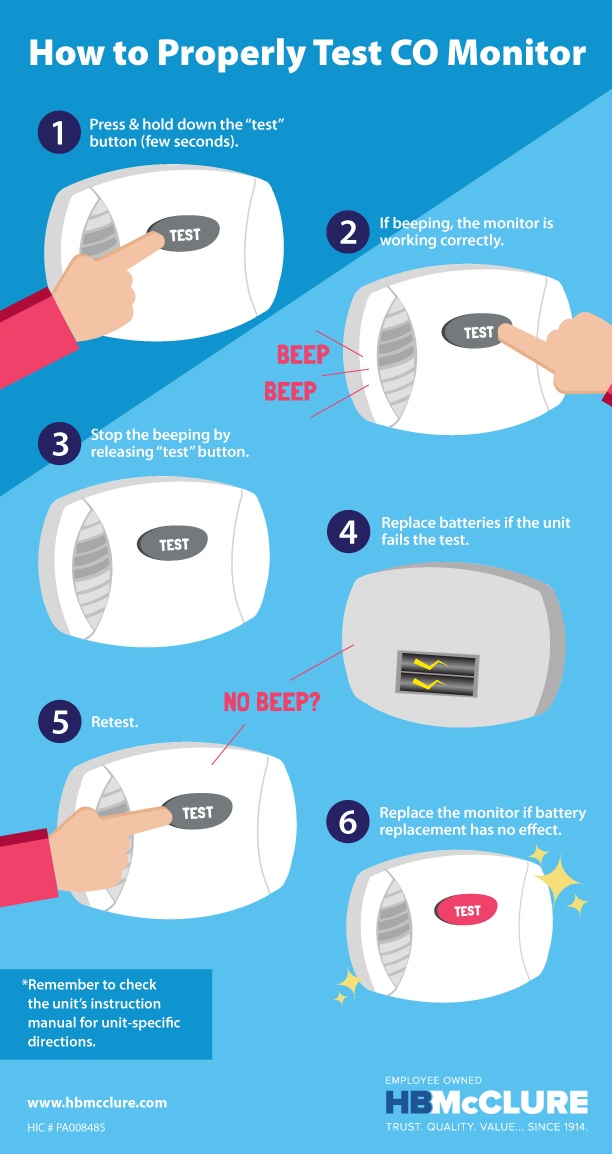
Many detectors have a test button. This isn't just for show. This is like giving your superhero a quick workout. Press it!
You'll hear a very loud, very distinct chirp or series of chirps. That's your detector confirming, "Yep, my voice box works!"
It's not checking for CO during this test. It's just checking its own internal systems. Like a self-check before a big mission.
Battery Business and Lifespans
If your detector uses batteries, guess what? You need to check those. Just like your TV remote, they don't last forever.
Most manufacturers suggest changing them at least once a year. Maybe when you change your clocks for daylight saving. That's an easy reminder.
If your detector starts beeping softly or chirping intermittently, that's usually its polite way of saying,
"A little juice, please?"Not a full-blown emergency.
The Detective's Retirement Plan
Did you know CO detectors have a lifespan? They don't last forever, sadly. Just like your favorite pair of sneakers.

Most models have a life of about five to ten years. There's often a "replace by" date printed on the back. Find it!
It's important to honor that date. An old detector might look fine, but its internal sensors can get tired. They might not be as sharp as they once were.
The Peace of Mind Factor
So, how do you check carbon monoxide levels? You don't. You install a good, working detector. And then you check on the detector.
This simple act gives you a huge amount of peace. You can sleep soundly, knowing your little electronic guardian is on duty. It's like a silent, invisible bodyguard.
No need for frantic sniffing or holding your breath. Just a quick button press now and then. And a battery change. Easy peasy.
Trust Your Tech, Not Your Nose
Resist the urge to rely on your personal "spidey senses" for CO. They just aren't designed for it. Your nose is for sniffing roses and dinner.
Your ears are for listening to music and gossip. And your eyes are for binge-watching your favorite shows. Let the tech handle the invisible threats.
So go forth, confident that you know the real secret. You don't check CO. Your detector does. And that's perfectly okay. Smart, even!