
Gloomy Sunday Lirik Terjemahan

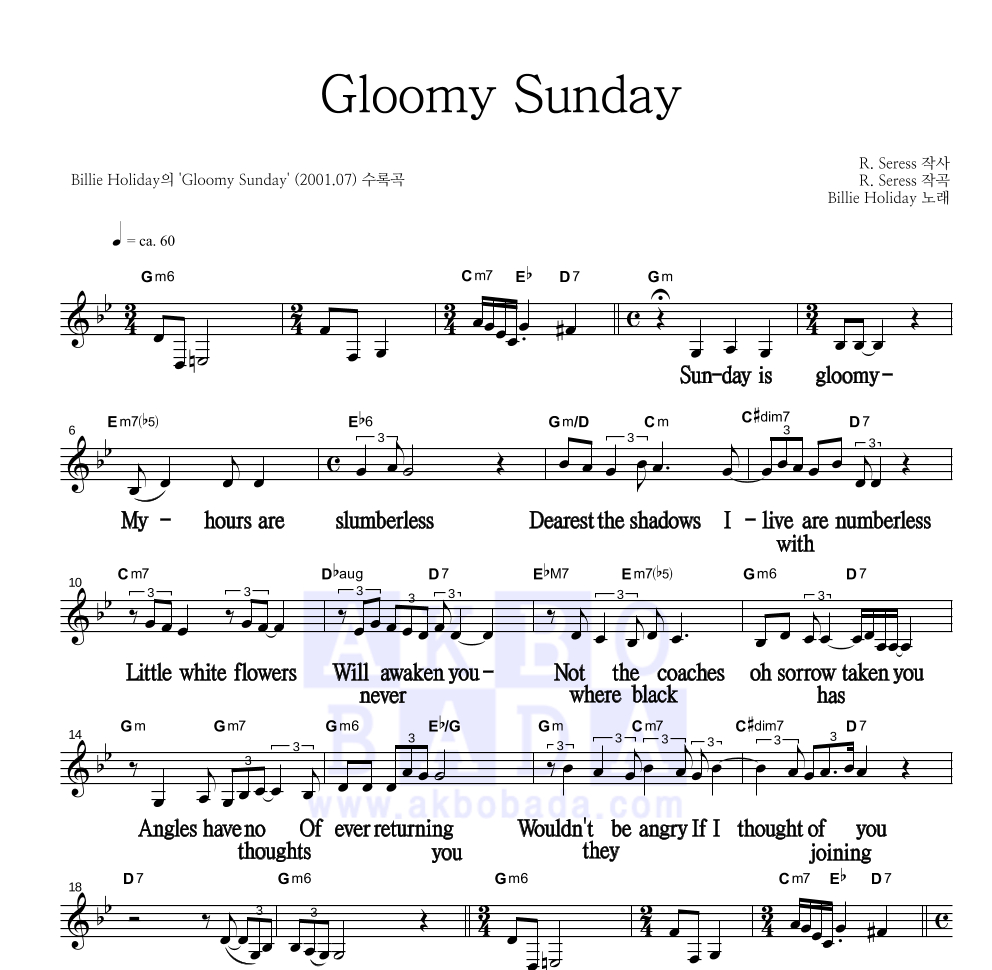
Ever heard a song so sad it makes you want to... well, not that, but maybe curl up in a fetal position with a tub of ice cream? Then you've probably heard whispers about "Gloomy Sunday."
This tune, originally a Hungarian poem titled "Vége a világnak" ("The World is Ending"), is a total mood. We’re going on a journey to find the humour in the sadness, and maybe even learn a little something along the way about translations.
The Original Gloom
Written by László Jávor with music by Rezső Seress in 1933, it wasn't initially a global sensation. The original lyrics, quite different from the later English versions, were all about despair and the end of the world.
Must Read
Think of it as the ultimate breakup song, but instead of just losing your sweetheart, you're losing everything. Bit dramatic, perhaps, but hey, artists are allowed to feel things deeply, right?
Translation Troubles (and Triumphs!)
Now, here's where things get interesting. The English version, the one most people know (and maybe fear!), has gone through more makeovers than a pop star. There are several translations, each with its own spin on the original melancholy.
One of the most popular English versions was written by Sam M. Lewis. His lyrics are still super depressing, focusing on a dream and a lost love. But you know, in a more accessible, less "end of the world" kind of way. It’s a bit like swapping out doomsday preppers for emotional sweaters.
The thing about translation is it's never a perfect copy. It's an interpretation. And with a song as intensely emotional as "Gloomy Sunday," that interpretation can dramatically change the impact.
The Curse (or the Coincidence?)
The "Hungarian Suicide Song" moniker isn't just for show. Stories started circulating about a string of suicides linked to the song. People supposedly ended their lives while listening to it, or were found with the sheet music nearby.

Of course, correlation doesn't equal causation. Was it the song, or were these people already struggling with deep depression? Probably a bit of both, plus a healthy dose of sensationalism from the press.
Still, the legend stuck. Some radio stations even banned the song to prevent further "incidents." Talk about a song with a reputation!
Billie Holiday's Take
The legendary Billie Holiday recorded her version in 1941, and it became one of the most famous interpretations. Her soulful, haunting voice only amplified the song's emotional weight.
Billie brought a raw, personal vulnerability to the song, making it feel less like a general lament and more like a deeply felt expression of her own pain. You could almost feel the tears in her voice.
It’s arguably the definitive version, even if it’s not exactly a cheerful singalong. But then, “Gloomy Sunday” was never meant to be cheerful, was it?
Lost in Translation: Humour in the Heartbreak
Okay, so a song about despair and potential suicide isn't exactly a laugh riot. But consider this: the sheer intensity of the song, and the legends surrounding it, have taken on a life of their own.
The idea that a song could be so powerful it drives people to extreme actions is almost comical in its absurdity. It's like something out of a dark comedy.
Imagine a movie scene: a character dramatically throws themselves onto a fainting couch, clutching a vinyl record of "Gloomy Sunday." It's tragic, yes, but also… slightly ridiculous.
The Power of Suggestion
Think about how suggestible we are as humans. If everyone tells you a song is super depressing, you’re going to listen to it expecting to feel sad. It’s a self-fulfilling prophecy in musical form.
The power of suggestion is real. We find what we expect to find in this case a melancholic masterpiece.
It is amazing how a few notes, words and story can influence our emotions and feeling.
Beyond the Gloom: Appreciation and Art
Ultimately, "Gloomy Sunday" is a testament to the power of music and art to evoke strong emotions. It's a reminder that even in the darkest corners of human experience, there can be beauty and meaning.
The song's enduring popularity speaks to our universal capacity to feel sadness, loss, and longing. It allows us to connect with those emotions in a safe, vicarious way.
Rather than fearing the song, we can appreciate it for what it is: a powerful expression of human vulnerability, a fascinating case study in the power of suggestion, and a reminder that even in despair, there can be a strange kind of beauty.
The Lyrics, Simplified
If you strip away all the melodrama, what are the lyrics really saying? Someone is feeling heartbroken and alone.
It's a universal experience, just amplified to eleven. We can all relate to feeling down sometimes, even if we don't express it quite so dramatically.
So next time you hear "Gloomy Sunday," don't just focus on the sadness. Listen for the artistry, the history, and the subtle humor that lies beneath the surface. You might be surprised at what you discover.

"Gloomy Sunday" Today
The song continues to be covered and referenced in popular culture. It pops up in movies, TV shows, and even video games, often as a shorthand for sadness or despair.
It’s a cultural touchstone, instantly recognizable even to those who don’t know the full story behind it. The power of the song’s reputation precedes it.
The legacy lives on, a constant reminder of how a song can both reflect and shape our understanding of human emotion.
Takeaway
So, the next time you find yourself humming a melancholic tune, remember "Gloomy Sunday." Remember the translation travails, the alleged curse, and the enduring power of music to move us, even to tears (or laughter!).
Remember that even in the depths of despair, there’s always room for a little bit of absurdity and a whole lot of art.
And maybe, just maybe, avoid listening to it while operating heavy machinery. Just to be on the safe side.