
Formula For Electrical Energy Consumption
Ever stared at your electricity bill, feeling a bit like you’re deciphering ancient hieroglyphs? Or maybe you’ve just wondered how that tiny phone charger costs so much less than, say, your monster gaming rig?
Well, buckle up, buttercup! Because today, we’re peeking behind the curtain of electrical mysteries. It’s not magic, it’s not voodoo, and it’s definitely not a conspiracy. It’s actually just a super cool formula!
And trust me, understanding it is way more fun than you think. You’re about to become an electricity detective!
Must Read
The Core Clue: Energy, Power, and Time!
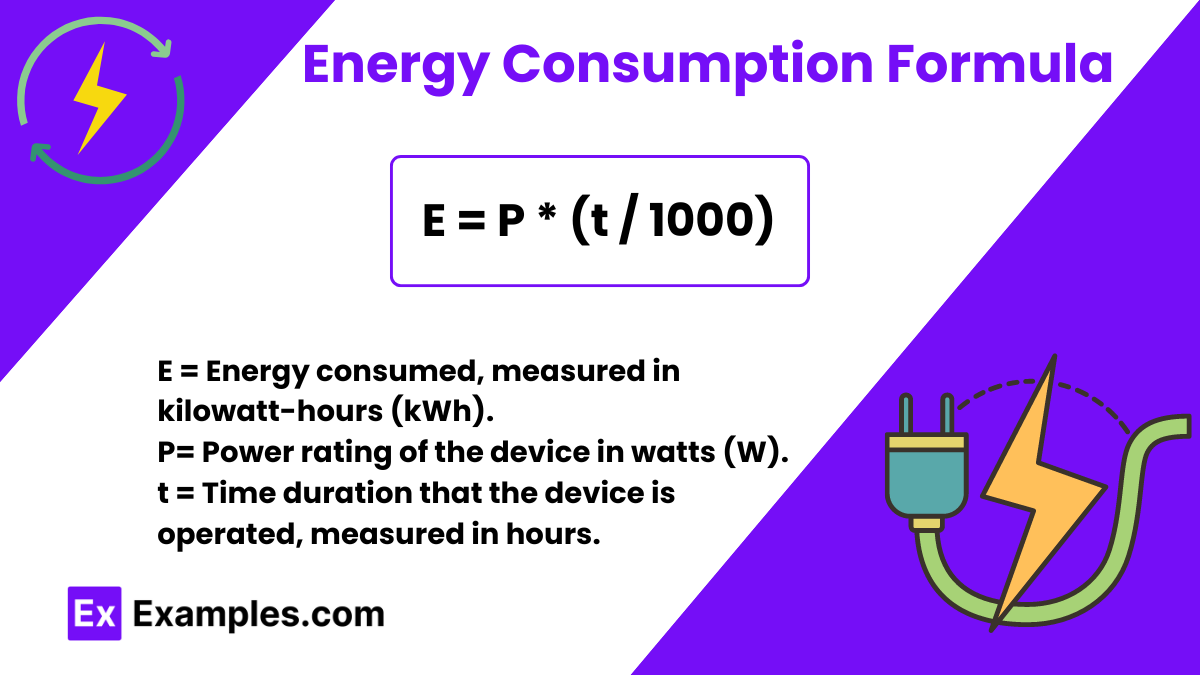
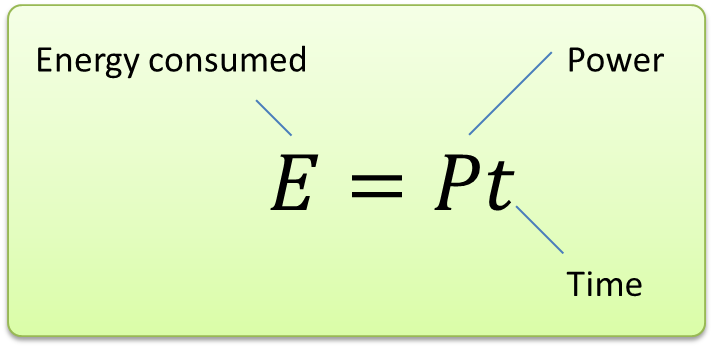
Alright, let’s get straight to the good stuff. The main star of our show, the grand poobah of your power bill, is represented by this little gem: E = P x t.
Sounds like a secret agent’s codename, right? But it’s actually pretty straightforward. Let’s break it down:
E stands for Energy. This is what you’re actually paying for! Think of it as the total "work" done by your electrical gadgets. It's the juice that boils your kettle or charges your laptop.
P is for Power. Imagine power as how hard an appliance is working at any given moment. A tiny LED bulb uses very little power. A giant hairdryer? That thing chugs power like it’s going out of style!
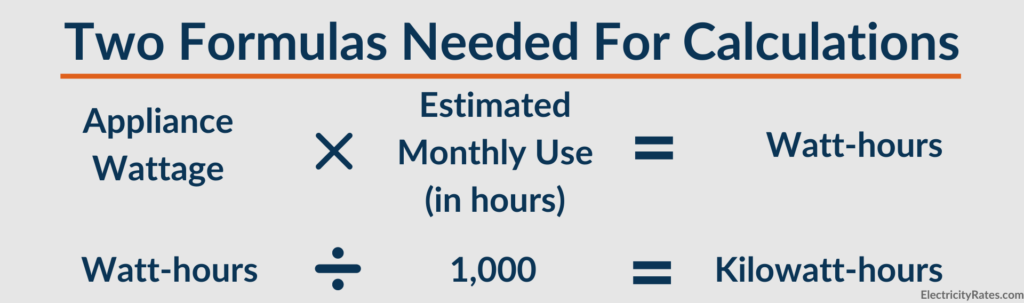
And finally, t is for time. This is super simple: it’s just how long you keep that appliance running. Common sense, right? Run your hairdryer for 5 minutes versus 5 hours, and you’ll definitely see a difference.
So, in a nutshell: the harder something works (Power) and the longer it works (Time), the more Energy it consumes! Easy peasy lemon squeezy.
Power's Inner Workings: Voltage Meets Current!
But wait, there’s a twist! Where does that "Power" (our P) come from? It’s not just a number pulled out of thin air. It has its own formula, and it's quite elegant:
P = V x I.
Yep, another dynamic duo! Let’s meet them:

V is for Voltage. Think of voltage as the "push" or the "pressure" that gets electricity moving. In most homes, it’s usually around 120 volts (in North America) or 230 volts (in many other parts of the world). It's the force driving the electrons.
I stands for Current. This is the actual "flow" of electricity, like water rushing through a pipe. The more devices you plug in, the more current flows to power them.
So, more push (Voltage) and more flow (Current) means more Power! Makes sense, right? It’s like a superhighway for electrons, with voltage as the speed limit and current as the traffic volume.
The Grand Unified Theory (for your light bill)!
Now, let's play mad scientist and combine our formulas! If E = P x t and P = V x I, then we can substitute!
Voila! The ultimate formula for electrical energy consumption is: E = V x I x t.
Mind blown, right? This seemingly simple equation is the wizard behind the curtain, explaining pretty much every flicker of light and hum of an appliance in your house. It’s what your smart meter is basically calculating.
Quirks, Units, and Vampire Power!
Okay, now for the fun facts and head-scratchers!
Why Kilowatt-hours (kWh)? You've seen kWh on your bill, right? Why not just "Joules"? Well, a Joule is super tiny! Imagine saying you used "millions of pennies" instead of "thousands of dollars." It’s just more practical. A 100-watt bulb running for 10 hours uses 1 kilowatt-hour. Your utility company charges you by the kWh because it's a more manageable number for billing. It's like measuring a road trip in miles instead of inches!
Vampire Power! Ever heard of it? It's not spooky, but it is sneaky! Many electronics still draw a tiny bit of power even when they're "off" but plugged in. Think standby mode for your TV, charger bricks, or coffee makers with digital clocks. They're silently sucking a trickle of current, consuming energy without doing anything useful. It's like a tiny, invisible energy vampire in your home! Unplugging those dormant devices can actually make a difference over time.
Edison vs. Tesla! Back in the day, there was a literal "War of the Currents" between Thomas Edison (who championed Direct Current, DC) and Nikola Tesla (who backed Alternating Current, AC). Tesla and AC won the big battles for power distribution because AC could travel much further without losing as much energy. So, when you plug something in, you’re usually getting AC power – a little nod to Tesla’s genius!
The Hotter, The More! Think about your toaster, electric stove, or hairdryer. What do they have in common? They produce heat! Heating elements consume a lot of power because converting electricity directly into heat is energy-intensive. That's why your clothes dryer is a big energy guzzler!
Your New Superpower: Understanding Your Bill!
So, what does all this mean for you? It means you're no longer just blindly paying for electrons! You now understand the fundamental formula behind your electricity consumption.
You can look at an appliance's wattage (that’s its power!) and instantly have a better idea of its energy appetite. You can marvel at how little energy your LED bulbs use compared to old incandescent ones (because their P is tiny!). You can even go on a vampire hunt, unplugging devices that are secretly draining your wallet!
It’s not about becoming an electrical engineer overnight, but about having a little bit of fun with the physics that powers our lives. It’s about being a curious human in a world full of fascinating, everyday science.
So next time you flip a switch, give a little wink to E = V x I x t. You’re now in on the secret!