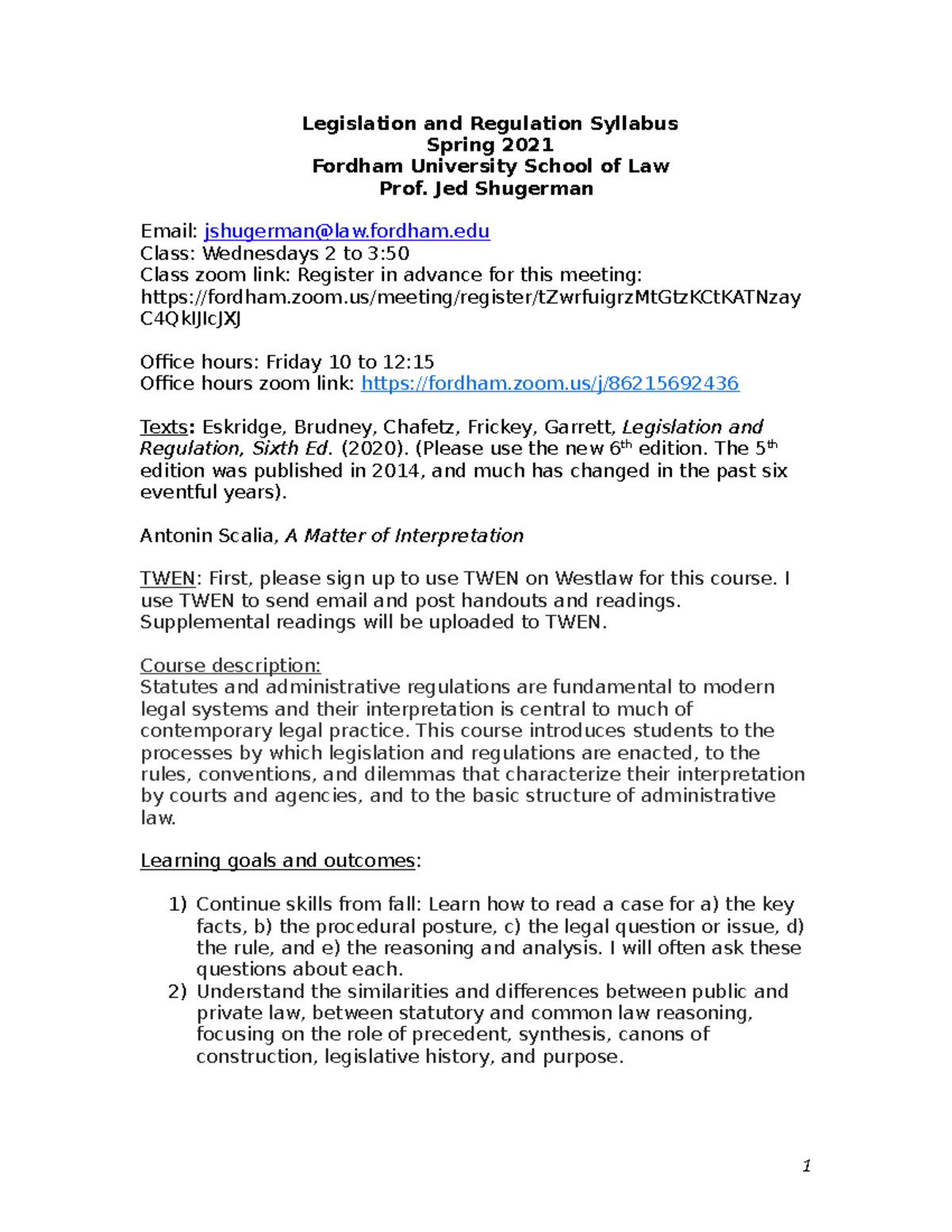
Fordham Law Class Syllabi

Okay, hear me out. I know what you're thinking: "Syllabi? Fun? Engaging?" But stick with me for a minute. We're diving into the surprisingly fascinating world of Fordham Law School class syllabi, and trust me, even if you're not planning on becoming a lawyer, there's something here for everyone. Think of it as a peek behind the curtain, a glimpse into the minds of legal scholars, and a potential cheat sheet for understanding how any complex subject is structured and taught. Plus, who knows? You might even find your next great book recommendation!
So, what exactly is the purpose of a law school syllabus? It's much more than just a list of readings and dates. A good syllabus is a roadmap for the entire course. It outlines the professor's objectives, the key concepts you'll be grappling with, and the methodology they'll use to guide you through the material. Think of it as a contract between the professor and the students, setting expectations and ensuring everyone is on the same page. For Fordham Law, a syllabus reflects not just the specific instructor's approach, but also the school's commitment to rigorous legal training.
But why should you care about Fordham Law syllabi if you're not a law student? Well, for starters, they offer a window into how legal professionals think. You can see how arguments are structured, how cases are analyzed, and how complex information is broken down into digestible pieces. This is incredibly useful for anyone who wants to improve their critical thinking skills, regardless of their field. Imagine applying legal reasoning to your own work – you’d be a force to be reckoned with!
Must Read
Beyond that, browsing through syllabi can be a goldmine for finding interesting reading material. Professors often include a list of essential texts, landmark cases, and influential articles that delve into the subject matter. Looking for a deeper understanding of constitutional law? Check out a Fordham Law Constitutional Law syllabus. Curious about the intricacies of corporate finance? You guessed it – there's a syllabus for that. These documents aren't just course outlines; they're curated reading lists crafted by experts in their fields. Think of it as a personalized recommendation engine for legal literature!

Finally, understanding the structure of a law school syllabus can help you in your own learning endeavors. Whether you're taking an online course, reading a non-fiction book, or even just trying to master a new skill, the principles of course design are universally applicable. A well-designed syllabus breaks down a large topic into smaller, more manageable chunks, providing a clear progression of learning. You can use this framework to create your own study plan, ensuring you cover all the essential material and achieve your learning goals. So, next time you're faced with a daunting task, take a page from the law school syllabus playbook and break it down into manageable steps.
So, who knew that Fordham Law School syllabi could be so… dare I say… fascinating? They're more than just required reading; they're a window into the world of legal education, a source of valuable reading recommendations, and a tool for improving your own learning strategies. Happy reading!