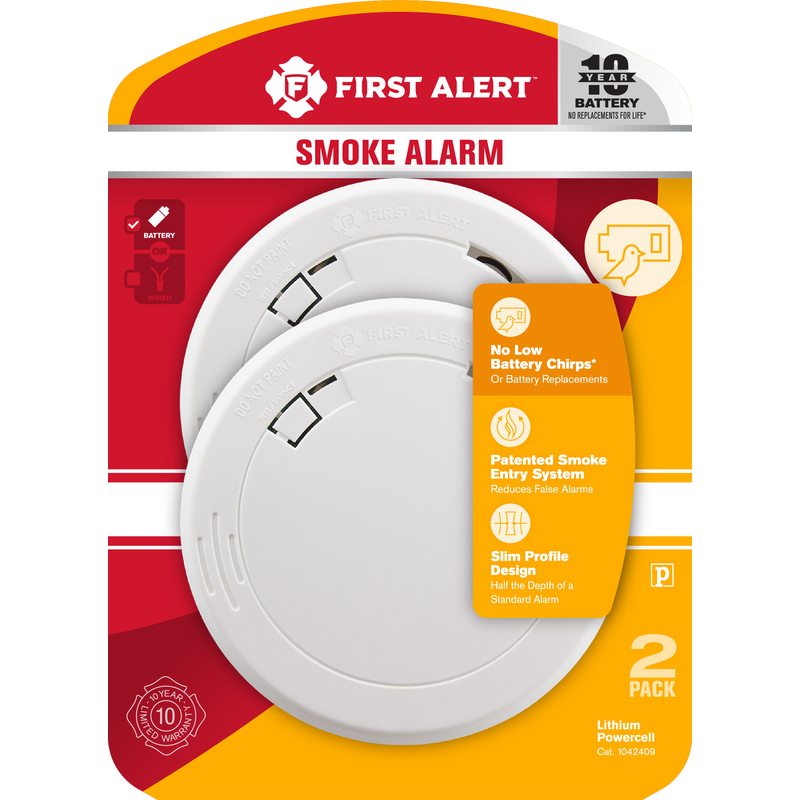
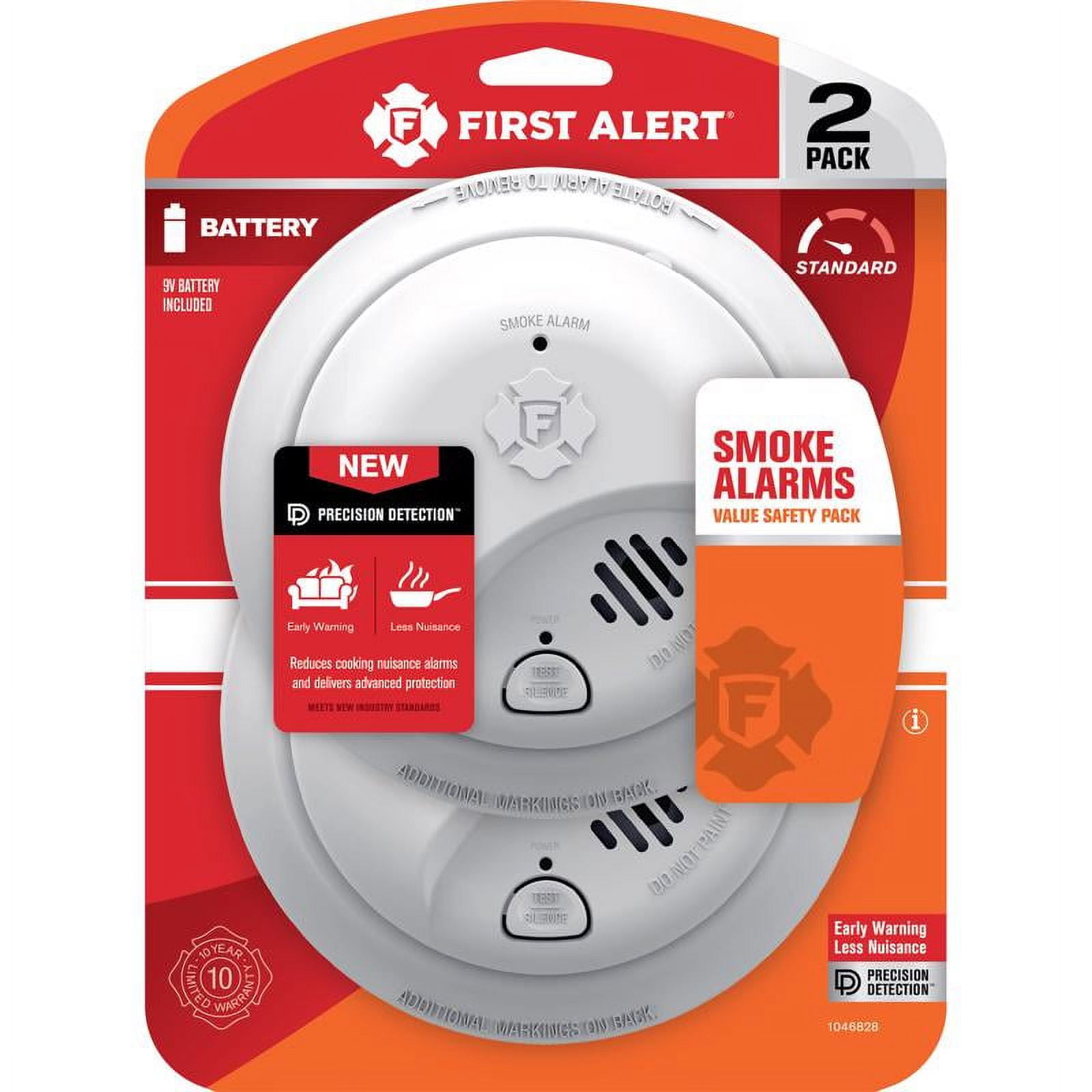
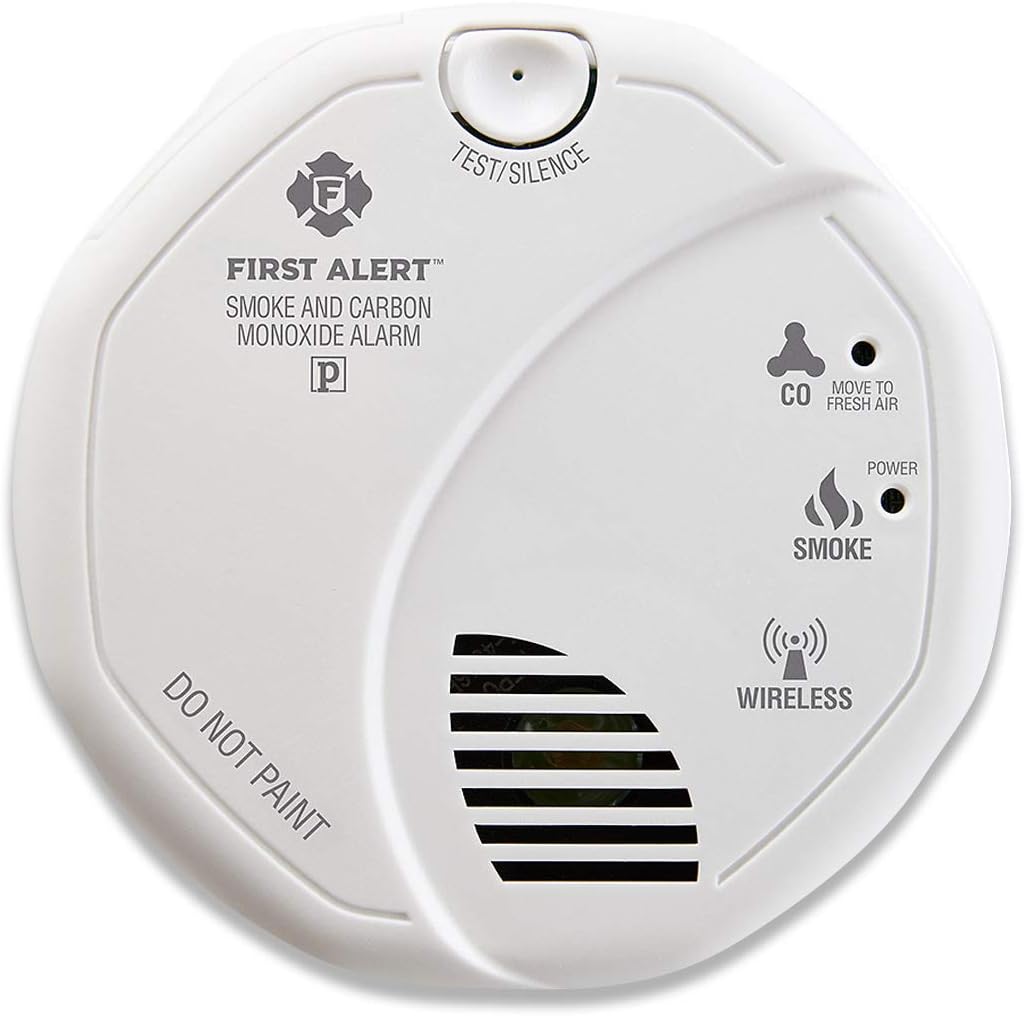
First Alert Battery Powered Smoke Detector
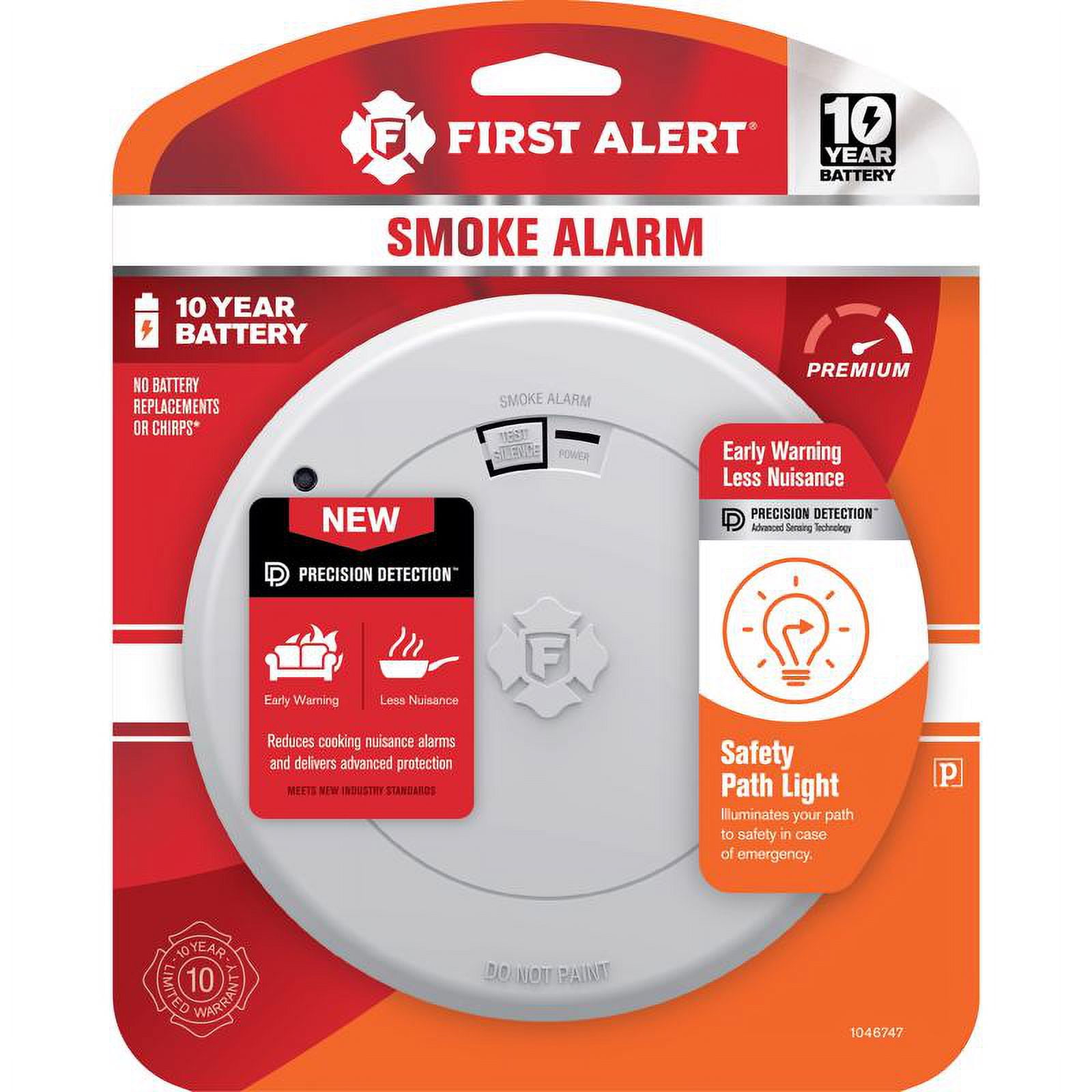
Ever stopped to think about the quiet guardians watching over our homes? It’s not always the grandest tech that makes the biggest difference, but often the simplest, most reliable devices. Today, let’s get a little curious about one such unsung hero: the First Alert Battery Powered Smoke Detector. Learning about these everyday wonders isn't just about safety; it's about appreciating the clever engineering that gives us peace of mind, and frankly, it's pretty fascinating to understand how such a small device can have such a monumental impact.
At its core, the purpose of a smoke detector is beautifully simple: to alert you to the presence of smoke, which is often the first sign of a fire. Imagine the smell of something burning while you’re asleep; your smoke detector is designed to be your nose and ears when yours are off duty. The benefits are profound. Firstly, and most importantly, it provides early warning, giving you crucial extra minutes to evacuate safely. This early detection can be the difference between a minor incident and a life-threatening disaster. Since it's battery-powered, it continues to work even during power outages, ensuring constant protection. This portability also means you can easily install them where they're most needed, without worrying about electrical wiring, making them incredibly versatile and accessible for almost any space.
You’ll find First Alert Battery Powered Smoke Detectors everywhere, quietly doing their job. In our daily lives, they are an essential part of nearly every home, apartment, and even RV. They’re usually nestled on ceilings or high on walls in bedrooms, hallways, and near kitchens, standing guard. Think about a school fire drill – often, the distinct chirp you hear is a smoke detector being tested, or an alarm going off, demonstrating its vital role in safety education. In a more hands-on educational setting, a science class might use one to discuss basic electrical circuits or the physics of smoke detection, perhaps even showing how different types of smoke (like from a smoldering fire versus a fast-flaming one) might trigger the sensor.
Must Read
Curious to explore your own smoke detector? Here are a few simple ways. First, make it a habit to test your smoke detector monthly by pressing the test button. You'll hear a loud, unmistakable chirp, confirming it's functional. If it doesn't chirp, or if it chirps weakly, it's time for new batteries! Speaking of batteries, a great tip is to change them annually, perhaps when you change your clocks for daylight saving time – it’s an easy way to remember. You can also gently vacuum around the vents occasionally to prevent dust buildup from causing false alarms. Take a moment to check the manufacturing date on the back of your unit; smoke detectors typically have a lifespan of about 10 years, so knowing when to replace them is another smart safety measure. Engaging with these small, mighty devices helps us all live a little safer, a little smarter, and a lot more curious about the world around us.