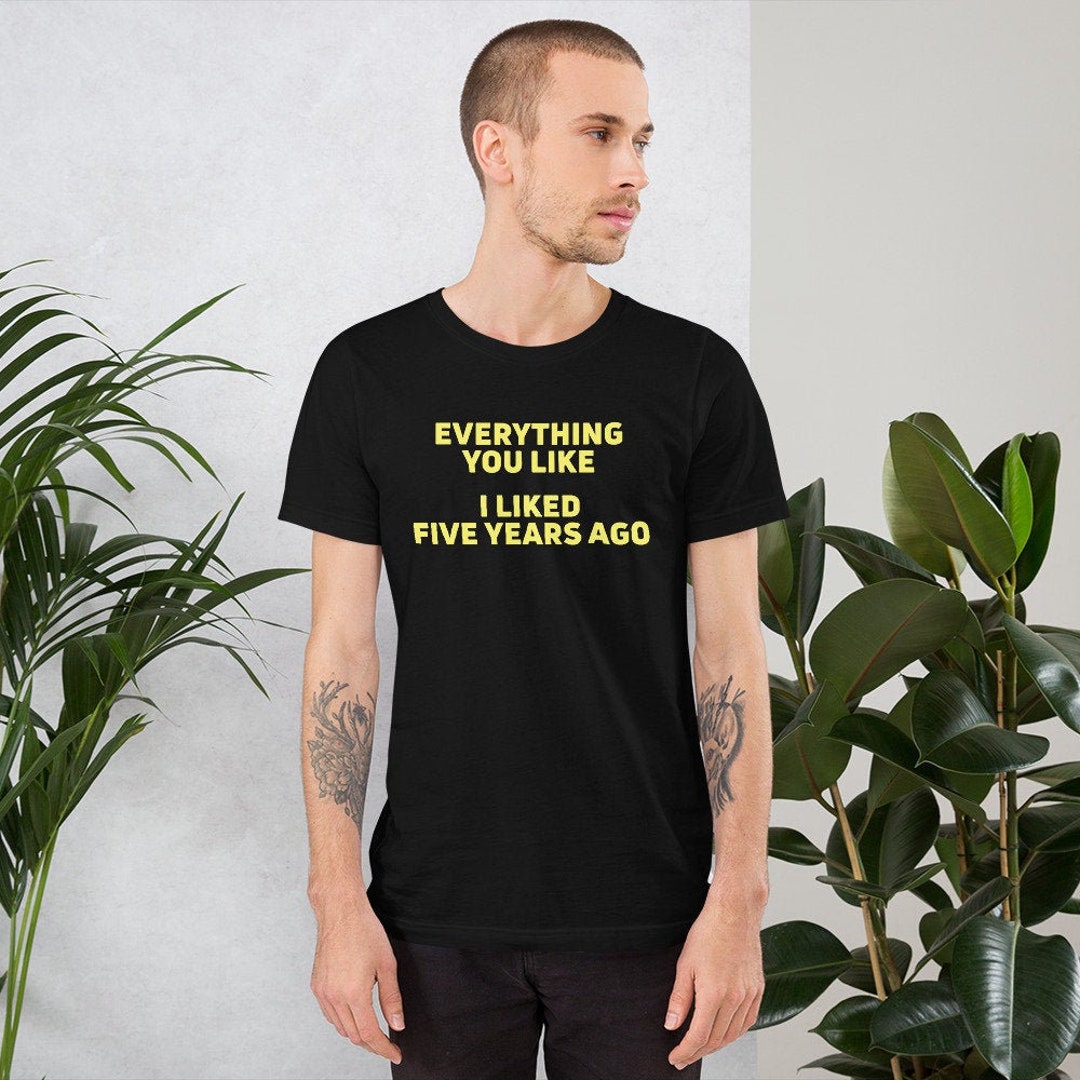
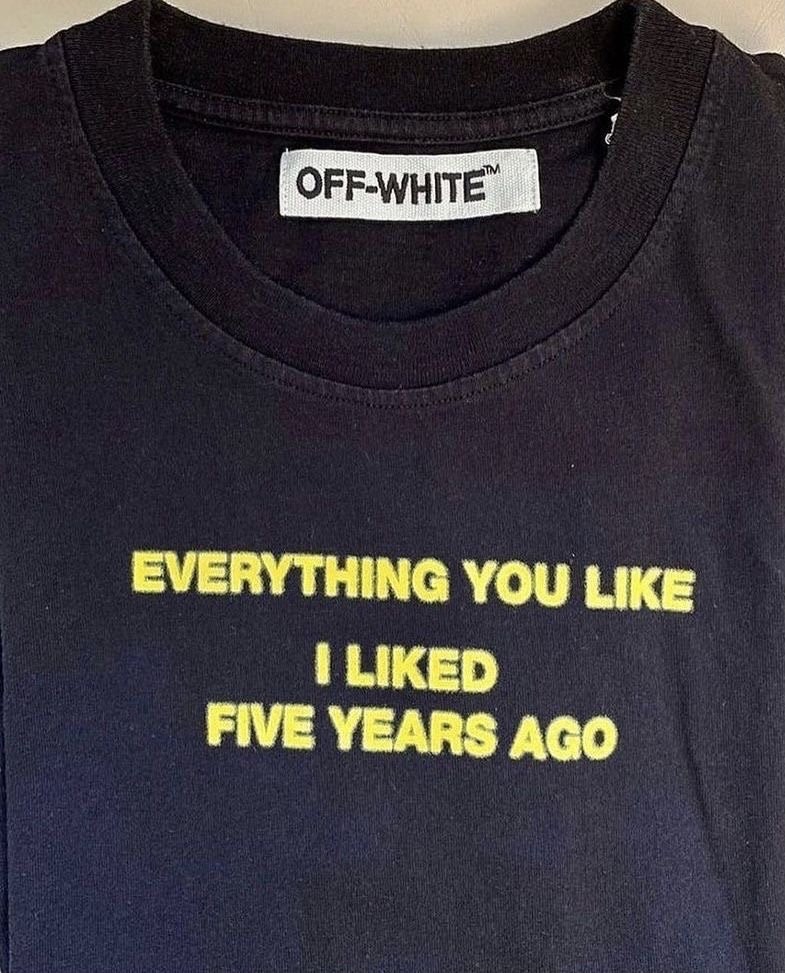
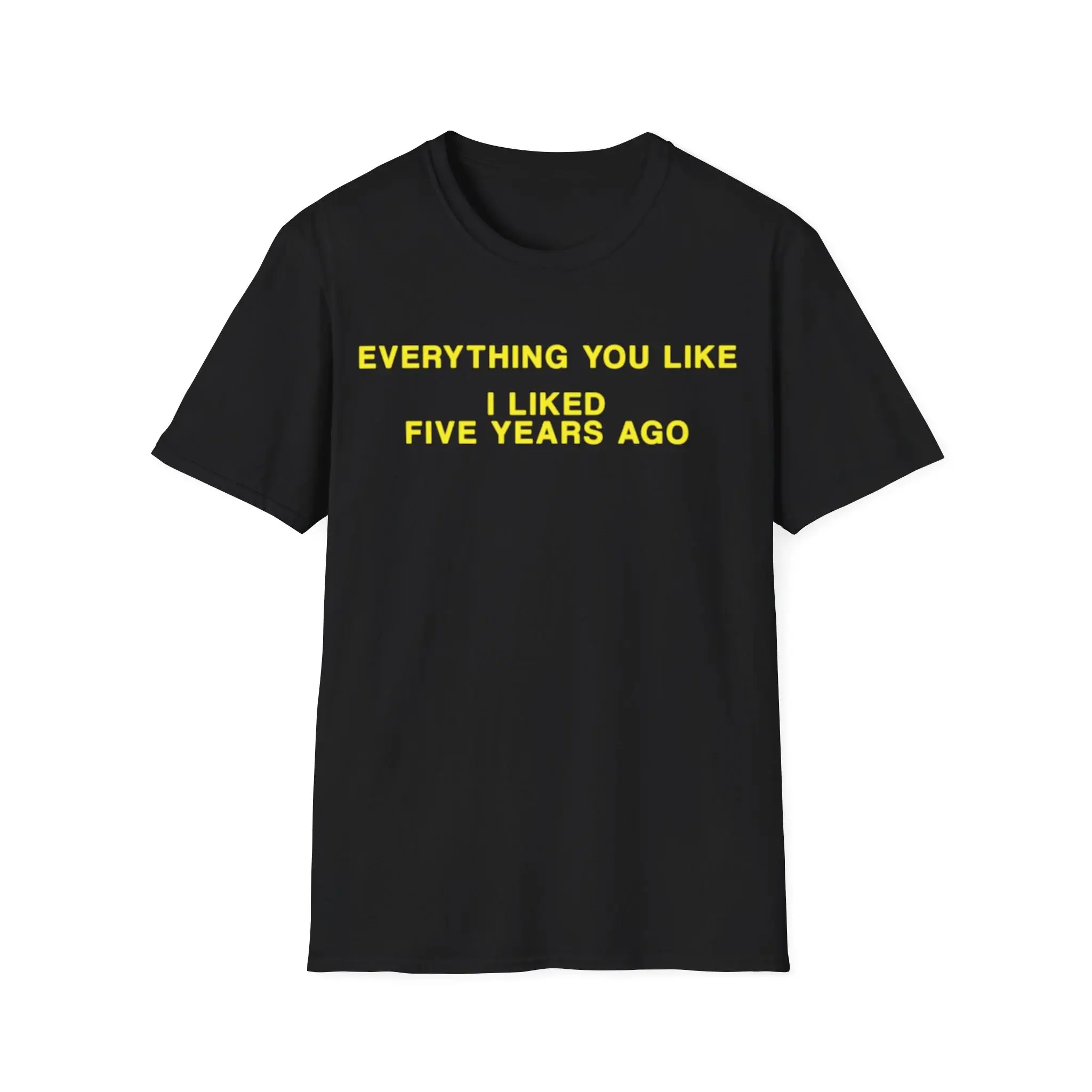
Everything You Like I Liked 5 Years Ago Off White
Ever find yourself scrolling through Instagram, admiring someone's effortlessly cool style, and thinking, "Wow, they're really onto something"? Then, a fleeting thought crosses your mind: "Wait, didn't I used to be into that… years ago?" That, my friends, is the story we're exploring today, using the lens of a specific fashion phenomenon: Off-White.
Why is this relevant, and more importantly, why is it fun? Because it's a micro-study in trends, influence, and our own evolving tastes. It's about recognizing the cyclical nature of popularity and understanding how something once cutting-edge can become, well, slightly...retro. We’re not just talking about clothes; we’re talking about a mirror reflecting our ever-shifting cultural landscape. Think of it as fashion archaeology, but with sneakers.
Off-White, for those unfamiliar, was (and in some ways still is) a high-fashion brand known for its deconstructed aesthetic, irony-laden designs, and heavy use of quotation marks. Think industrial belts, zip ties on sneakers, and words like "SCULPTURE" emblazoned across bags. Founded by the late, influential Virgil Abloh, it quickly became a status symbol, dominating streetwear and high fashion circles alike. Its purpose, arguably, was to challenge conventional notions of luxury, blurring the lines between high and low culture, and sparking conversations about authenticity and appropriation.
Must Read
So, what were the "benefits" of Off-White’s reign? Well, beyond making a bold fashion statement (which, let's be honest, was a primary driver), it forced the fashion industry to reckon with streetwear's growing influence. It democratized (somewhat) access to high fashion, appealing to a younger, digitally-native audience. And, perhaps most importantly, it encouraged creative expression and a willingness to experiment with unconventional designs.
Where might we see this influence in everyday life? Consider the resurgence of chunky sneakers – a direct descendant of the Off-White aesthetic. Or the increasing prevalence of visible logos and ironic graphic tees. Even the deconstructed look, with raw edges and exposed seams, has trickled down into mainstream fashion. In education, the impact can be seen in design schools where students are encouraged to push boundaries and challenge traditional design principles, questioning the very definition of "good" taste.
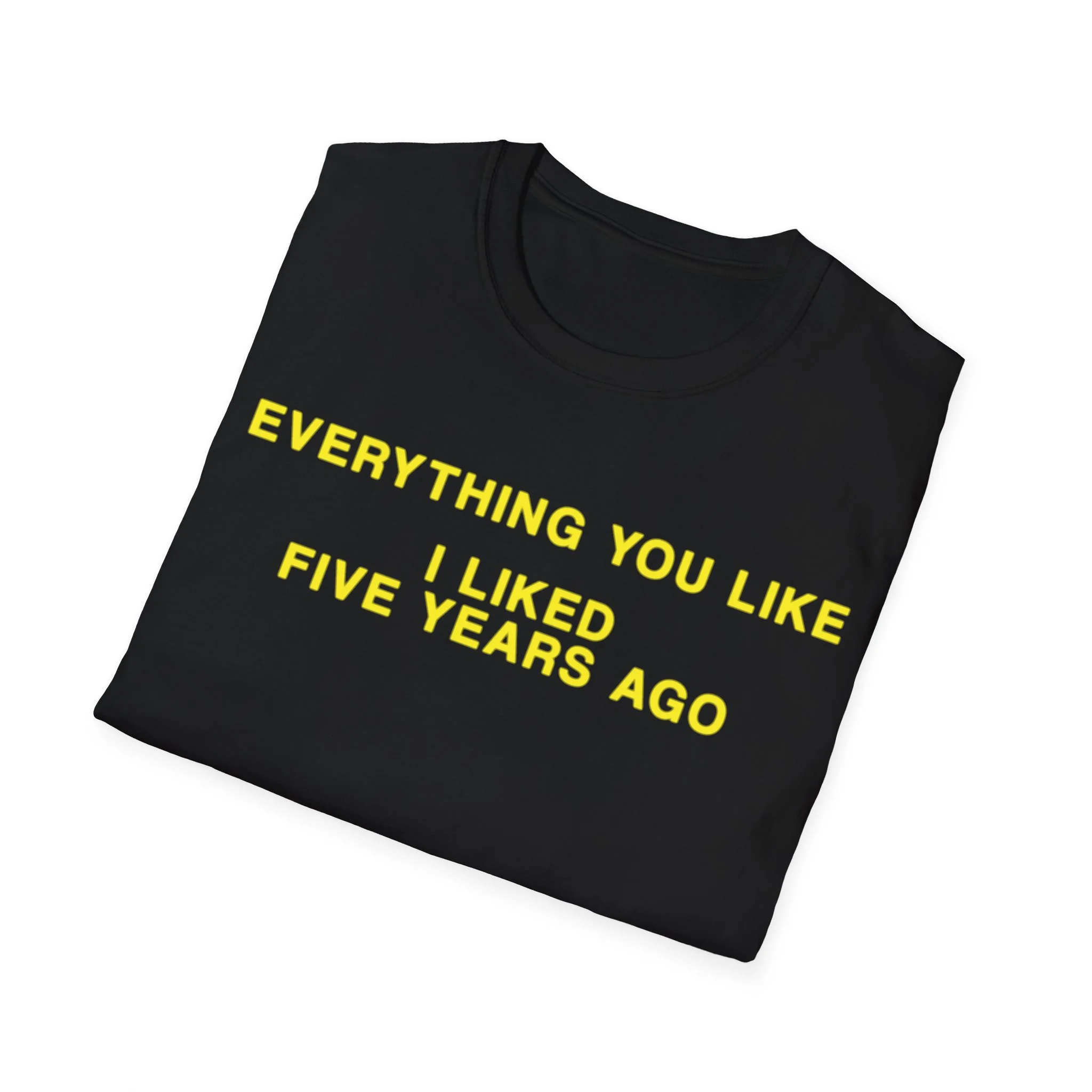
Want to explore this phenomenon further? Start by looking back at your own wardrobe from five years ago. What trends were you embracing? Then, compare those trends to what's considered fashionable today. You might be surprised to see how tastes have evolved. Another fun exercise is to analyze Off-White's designs and identify the elements that made them so popular – the deconstruction, the irony, the collaborations. Then, look for those same elements in current trends. Consider this a fun game of spot the influence.
Ultimately, understanding the rise and (relative) fall of Off-White is about more than just fashion. It's about understanding the ever-changing cultural currents that shape our tastes and preferences. And who knows? Maybe in another five years, those old Off-White pieces will be back in style, and you'll be a trendsetter once again. Fashion, after all, is a revolving door.