Energetics Of Hybridization Wikipedia
Alright, chemistry curious folks, let's dive into something that sounds way more complicated than it actually is: the energetics of hybridization. Found something on Wikipedia, did we? Don't worry, we're going to unpack it together in a way that's actually... well, maybe even a little bit fun? 😉
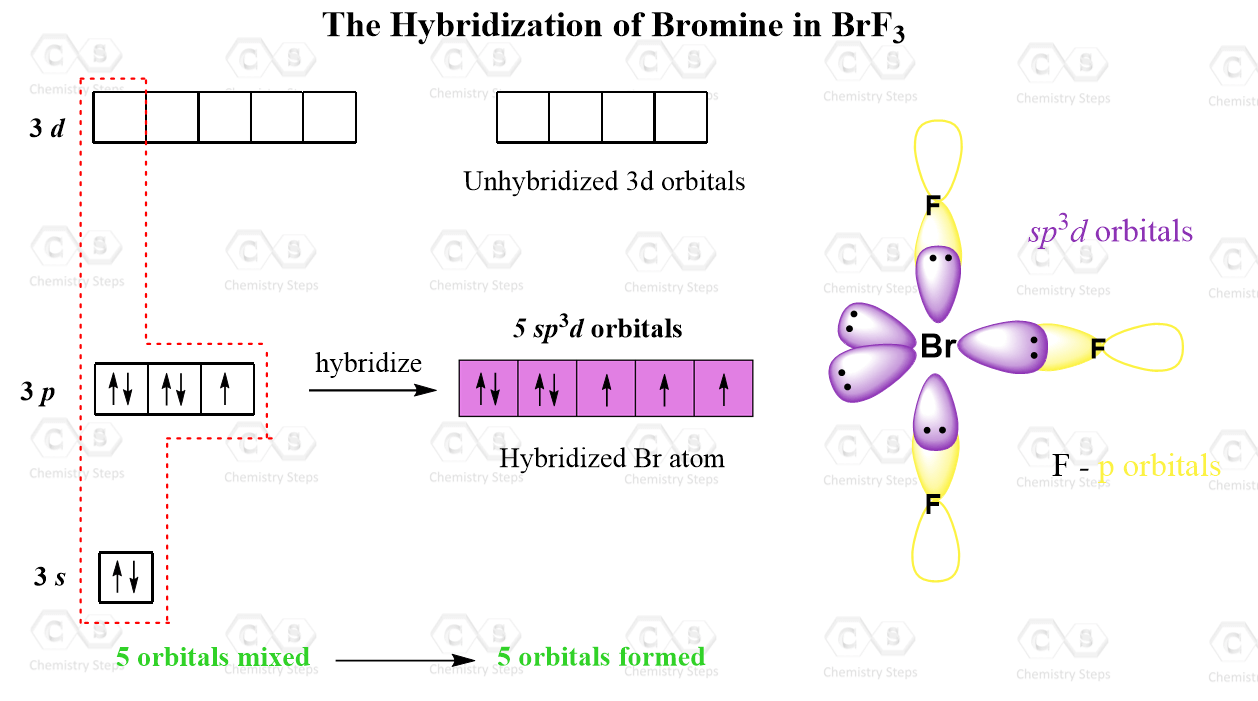
So, what is this "energetics of hybridization" all about? Basically, it's the story of how atoms shuffle their electron orbitals to form better, stronger, and more stable bonds. Think of it like atomic matchmaking! They want to find the perfect partners to connect with.
Mixing and Matching: Atomic Style
You know how sometimes you have a wardrobe full of clothes, but nothing quite works? You might have a super fancy dress and some comfy sweatpants, but they don't exactly go together for a casual coffee date, right? That's kind of like what happens with atomic orbitals. Atoms have different orbitals (s, p, d, f – think of them as different "styles" of clothing for electrons), and they sometimes need to mix them up to create something new that's more appropriate for the situation. That's hybridization in a nutshell!
Must Read
Let's break down the "energetics" part. Energy plays a HUGE role. Why? Well, mixing orbitals requires a bit of an initial investment. It takes energy to reshuffle those electron configurations. Think of it like the effort it takes to reorganize your closet. It's a pain at first, but in the end, you can find things easier and create better outfits (bonds!).
Is it worth it though? Absolutely! Atoms only bother to hybridize if the resulting bonds are stronger and the overall molecule is more stable. In other words, the energy released when forming those new bonds has to be greater than the energy required to hybridize the orbitals in the first place. Makes sense, right? No one would bother reorganizing their closet if it made things worse!

Why Does This Matter?
Okay, so atoms like to mix and match their orbitals. Why should we care? Well, hybridization explains a lot about the shapes of molecules. And shape, as you probably know, is super important in chemistry.
Think about it: A water molecule (H₂O) is bent, not linear. That's because the oxygen atom undergoes hybridization, creating four orbitals that arrange themselves in a tetrahedral shape (imagine a pyramid with a triangular base). Two of these orbitals hold the hydrogen atoms, and the other two hold lone pairs of electrons. These lone pairs repel the hydrogen atoms, pushing them closer together and creating that characteristic bent shape.
If water was linear, it wouldn't be able to dissolve nearly as many things, and life as we know it wouldn't exist! So, yeah, hybridization is kind of a big deal.
.jpg)
Examples in Action: SP3, SP2, and SP!
You've probably heard of sp³, sp², and sp hybridization. What do these terms mean?
- sp³: One 's' orbital mixes with three 'p' orbitals. This is common in molecules like methane (CH₄), where the carbon atom forms four single bonds with hydrogen atoms.
- sp²: One 's' orbital mixes with two 'p' orbitals. This happens in molecules like ethene (C₂H₄), where the carbon atoms are double-bonded to each other.
- sp: One 's' orbital mixes with one 'p' orbital. This is seen in molecules like ethyne (C₂H₂), where the carbon atoms are triple-bonded to each other.
Notice a pattern? The more 'p' orbitals involved, the more single bonds can be formed, and the more tetrahedral the shape becomes. As you decrease the number of 'p' orbitals, you increase the number of multiple bonds and the molecules become more planar or linear.

The Energetic Trade-Off
Remember, all of this is driven by energy. The atom is always striving for the most stable configuration. Sometimes, it takes a little bit of initial energy input to get to a lower energy state overall. Just like it takes energy to climb a hill before you can coast downhill.
So, next time you see a funky molecule with a weird shape, remember the energetics of hybridization! It's all about atoms finding the perfect way to bond and create stable and interesting structures. It's like atomic-level engineering, driven by the relentless pursuit of lower energy and greater stability. Pretty cool, huh?
Don't be afraid to explore those Wikipedia pages! Now you've got a basic understanding of the energetics of hybridization to guide you. Happy learning!