
Each Class Of Antibody Is Differentiated By The
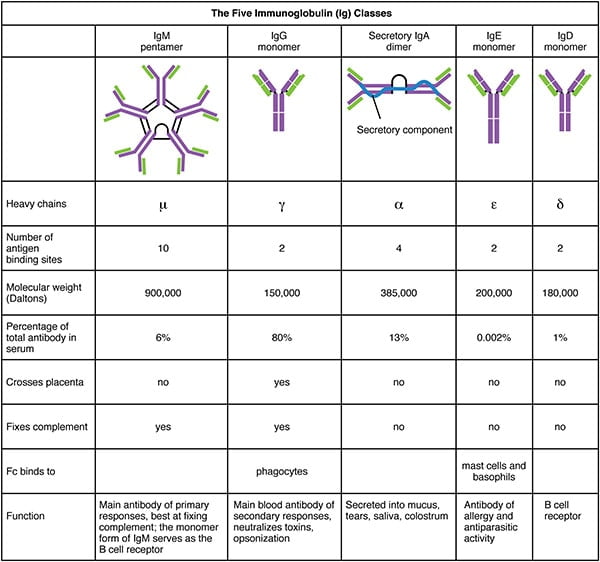
Ever wondered how your body fights off villains – I mean, viruses and bacteria? It's all thanks to your immune system's secret agents: antibodies!
Think of antibodies as tiny, Y-shaped warriors patrolling your bloodstream, each with a specific mission. But what makes them different from each other? It's all in their “uniforms,” which scientists call classes.
Antibody Classes: A Fashion Show for Immunity
Imagine a fashion show, but instead of dresses, it's all about antibodies sporting different structural "details." Each class has its own distinct look and special superpower.
Must Read
IgM: The First Responders
First up, we have IgM. Think of IgM as the "OMG, there's an invader!" antibody. These guys are big and bulky, usually the first on the scene when a new infection hits.
IgM are like the town criers, shouting, "Intruder alert!" and rallying the troops (other immune cells) to fight. They're not the most precise, but they're enthusiastic!
Think of a clumsy but well-meaning giant trying to swat a fly. That's IgM in a nutshell!
IgG: The All-Rounder Superstars
Next, we have IgG, the all-stars of the antibody world. They're like the Swiss Army knives of immunity, handling a wide range of threats.
IgG are the most abundant antibodies in your blood. They remember past infections and provide long-term protection.
They can neutralize toxins, activate other immune cells, and even cross the placenta to protect newborns – talk about dedication!
IgA: The Mucosal Defenders
Say hello to IgA, the guardians of your body's entry points. They hang out in your mucous membranes, like those lining your gut, respiratory tract, and even your tears!
IgA act like bouncers at a club, preventing pathogens from getting past the velvet rope (your mucosal lining). They're the first line of defense against ingested or inhaled invaders.
Ever wonder why breast milk is so good for babies? It's packed with IgA, giving newborns a head start in the immunity game.
IgE: The Allergy Alarm System
Now, meet IgE. While usually helpful in fighting parasites (like worms!), IgE can sometimes be a bit too enthusiastic.

IgE are the culprits behind allergies. They bind to allergens like pollen or peanut proteins. This triggers a cascade of events that lead to those oh-so-familiar allergy symptoms.
It's like they're shouting "Danger!" at a harmless speck of dust. Sometimes, IgE can overreact in what can be described as an immunological hissy fit.
IgD: The Mystery Antibody
Finally, we have IgD, the enigmatic member of the antibody family. Scientists are still trying to figure out exactly what they do! They are like the quiet, mysterious classmate that no one really understand.
IgD are found mainly on the surface of B cells (the cells that make antibodies). They're thought to play a role in B cell activation. This role is related to the production of other antibodies.
Perhaps one day, we'll uncover their secrets and discover their hidden superpowers! For now, IgD remains the immune system's intriguing mystery.
How The Classes Are Differentiated
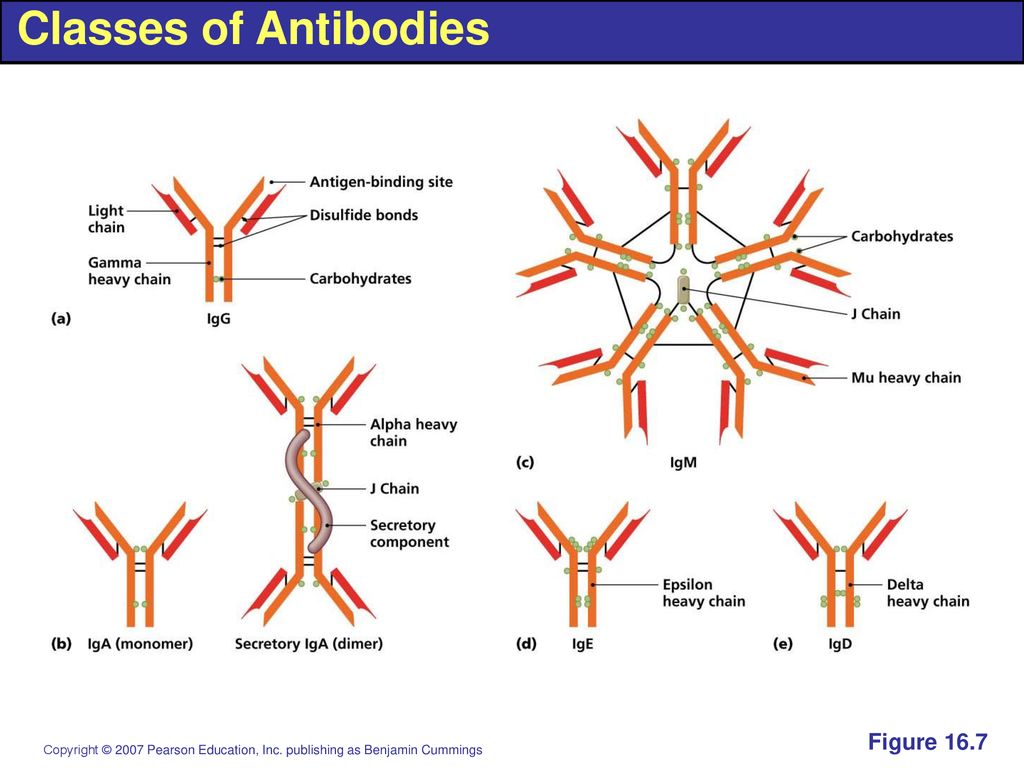
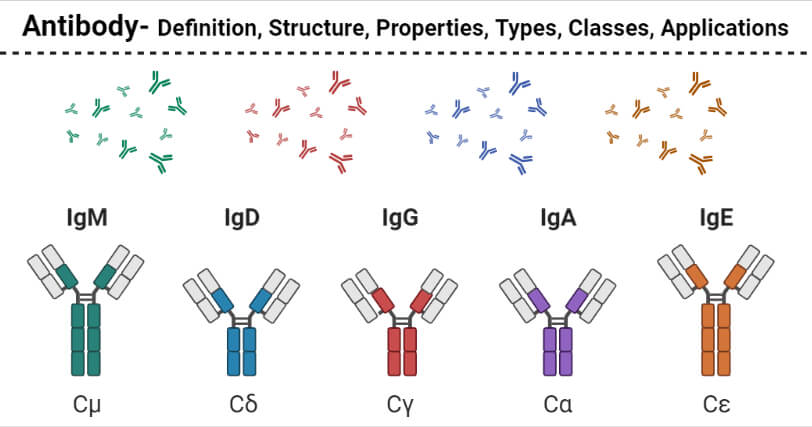
So, what makes each antibody class unique? It all comes down to the structure of their heavy chains. These are the "backbone" of the antibody molecule.

Each class has a distinct heavy chain structure. These structures gives the antibody its specific properties and functions. Think of it like different car models. They all have wheels and an engine but the frame and body shape change its function.
It's like each antibody class has a slightly different "recipe" for its heavy chain, resulting in different shapes and sizes and binding capabilities.
Antibodies: A Team of Superheroes
Together, these antibody classes work as a well-coordinated team. Each member has its strengths and weaknesses but together, they protect your body from a wide range of threats.
IgM sounds the alarm, IgG provides long-term defense, IgA guards the entry points, IgE deals with parasites (and sometimes allergies), and IgD… well, it's still a mystery!
So, the next time you feel a cold coming on, remember the incredible work of your antibody superheroes. They're fighting tirelessly to keep you healthy and happy!
More Than Just Fighters
These antibodies are used for more than just fighting diseases. In the lab, antibodies are essential in scientific discovery.
They are used for creating targeted therapies and diagnostics. These antibodies are powerful tools in biological research and medical science.
These antibodies are invaluable in identifying and treating diseases. It all started with a better understanding of how these proteins are structured.
An Ode to Our Immune Defenders
So, the next time you're sipping a cup of tea or enjoying a walk in the park, remember the amazing world of antibodies. These tiny protein warriors are always on guard, protecting you from unseen threats.
Each class, with its unique structure and function, plays a vital role in keeping you healthy. Take a moment to appreciate the incredible complexity and ingenuity of your own immune system.
It's a microscopic marvel of evolution, and it's working tirelessly for you, every single day.