
Does The Us Have Any Nuclear Power Plants
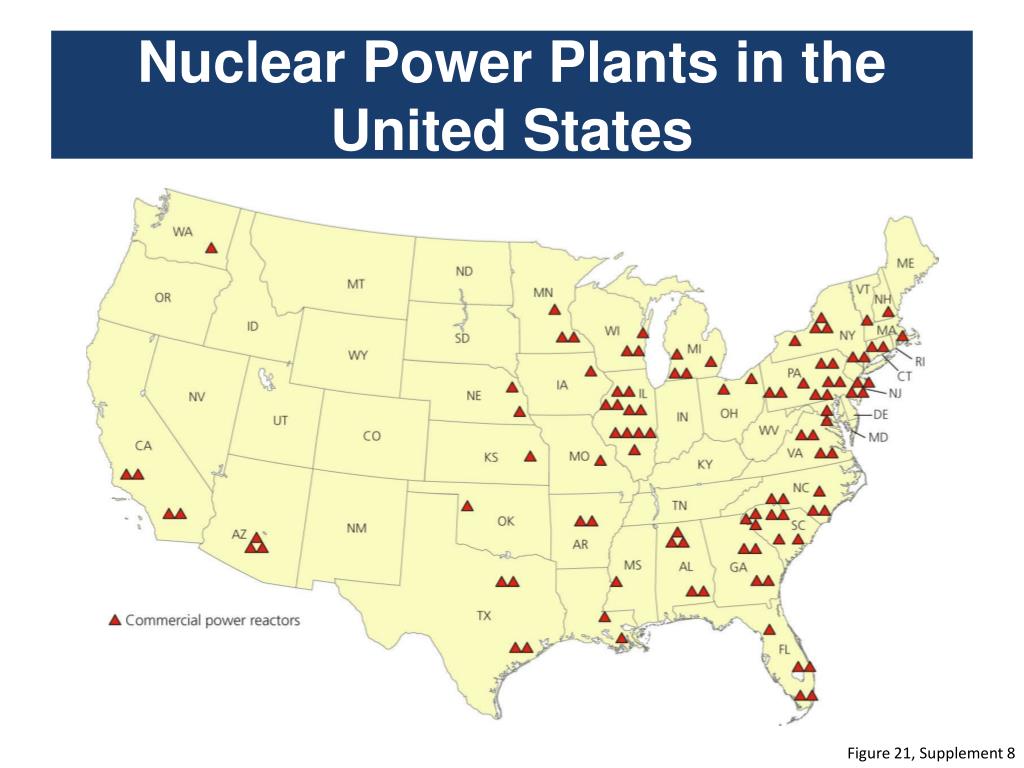
Ever paused during a casual chat and thought, "Does the U.S. even have nuclear power plants anymore?" It's a question that often pops up, perhaps while scrolling through news or seeing a dramatic movie scene.
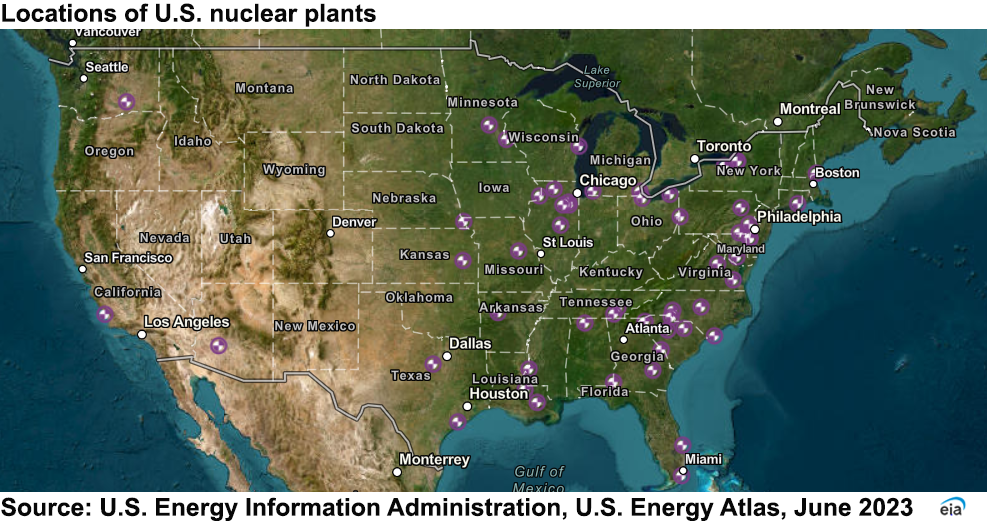
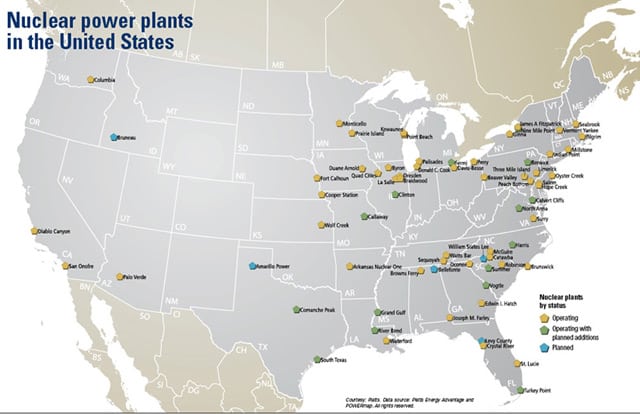
The answer might just surprise you more than a plot twist in your favorite show: Yes, absolutely! The United States is actually a global leader in nuclear power, quietly running a whole fleet of these fascinating facilities.
Many of us picture something straight out of a sci-fi flick or maybe an old cartoon, complete with glowing green ooze and cartoonishly oversized cooling towers. But the reality is far more grounded and, frankly, much less dramatic.
Must Read
The Unseen Powerhouses Among Us
You might be driving past one right now, completely unaware. These plants are often tucked away, providing reliable electricity without much fanfare. They’re the unsung heroes of our modern grid, working tirelessly in the background.
Imagine powering millions of homes, hospitals, and schools, all from a single, compact location. That’s the everyday magic of nuclear power, making sure your lights switch on and your coffee maker hums each morning.
These aren't just obscure structures in the middle of nowhere. Many nuclear power plants are integral parts of their local communities, often employing thousands of people.
More Than Just Towers: A Community Hub
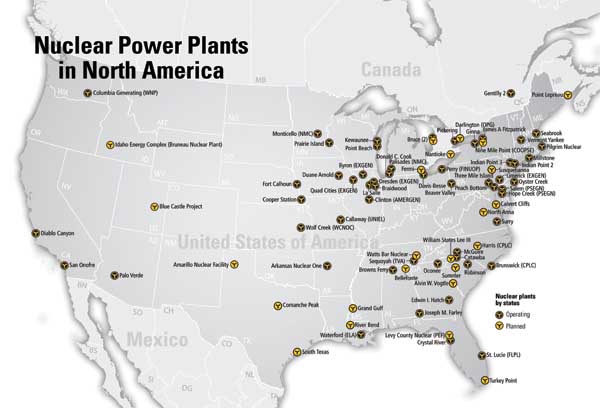
Take, for instance, the Palo Verde Generating Station in Arizona. It’s the largest nuclear power plant in the U.S. and, interestingly, the only one not located near a large body of water. How does it cool down? Using treated wastewater!
This clever approach shows how innovation is at the heart of these facilities. They adapt and find smart ways to operate, often in surprising harmony with their environment.
Another heartwarming example is how some plants contribute to local wildlife. Cooling ponds, sometimes hundreds of acres wide, can become unexpected sanctuaries for birds and other creatures.
At places like the Crystal River Nuclear Plant in Florida, the warm water discharged into rivers often attracts manatees seeking refuge from colder Gulf waters in winter. Locals sometimes call it a "manatee spa"!
“These plants aren't just about electricity; they're about ingenuity and often, surprising ecological connections.”
It’s a far cry from the smokestacks and industrial grays you might associate with power generation. Nuclear power plants produce zero greenhouse gas emissions during operation.
This makes them a vital tool in the fight against climate change, offering a powerful source of electricity without contributing to air pollution. It’s a clean energy secret many are just beginning to fully appreciate.
Beyond the Headlines: Safety and Innovation
Of course, when people hear "nuclear," sometimes thoughts drift to past incidents like Three Mile Island or far-off events like Chernobyl. It’s natural to feel a bit apprehensive, thanks to decades of dramatic storytelling.
However, modern nuclear power plants in the U.S. operate under incredibly strict safety regulations. The industry has learned immensely from past experiences, leading to continuous improvements in design and operational protocols.
The highly trained professionals who work at these plants are dedicated to safety above all else. They go through rigorous training and constant drills, making these facilities some of the most scrutinized and secure industrial sites anywhere.
Think of it this way: the level of precision and redundancy in a nuclear plant would make a Swiss watch look simple. Every component, every system, has multiple backups and fail-safes.
These plants are built to withstand extreme events, far beyond what they are ever likely to encounter. This commitment to resilience is a cornerstone of their design.
A Surprising Look at "Old" vs. "New"
While many of the reactors currently operating in the U.S. were built decades ago, they've been continually upgraded and meticulously maintained. They’re like classic cars that get regular, top-notch tune-ups and modern tech integrations.
And the future looks even more exciting! There's a lot of buzz around Small Modular Reactors (SMRs). These are smaller, simpler, and even safer designs that can be built more quickly and affordably.
SMRs could bring clean nuclear power to even more communities, potentially powering cities, industrial complexes, or even remote areas with their compact footprint.
Imagine a future where nuclear plants are not just massive industrial sites but smaller, more integrated parts of our energy landscape, powering everything from data centers to desalination plants.

“The innovation in nuclear power is constantly evolving, proving that even a powerful technology can always get smarter and safer.”
So, the next time your phone charges instantly or your lights flicker to life, take a moment to consider the silent, powerful force behind it. There's a good chance a nuclear power plant played a part.
They are not the ominous, dangerous places of fiction. Instead, they are high-tech, highly regulated facilities, staffed by dedicated people, providing crucial, clean energy to keep our modern lives humming along.
Perhaps it's time to shift our perspective and appreciate these engineering marvels. They are a testament to human ingenuity, quietly powering our present and helping to build a cleaner future.
The U.S. nuclear fleet is a surprising, reliable, and increasingly vital part of our energy story. It’s an everyday wonder, if only we take a moment to look beyond the stereotypes.