Does Nest Thermostat Work With Heat Pump

Alright, settle in, grab your metaphorical (or actual) coffee, because we're about to tackle one of the great domestic mysteries of our time. It’s a question that keeps homeowners awake at night, staring at their thermostats, wondering if they’re about to accidentally summon a polar vortex or a sauna in their living room. The question? Does a Nest Thermostat actually play nice with a heat pump?
And before you start nervously eyeing your circuit breaker, let me cut straight to the chase with a drumroll and a burst of confetti: Yes, absolutely, unequivocally, most definitely YES! In most cases, they get along like two peas in a pod, or like me and a fresh batch of cookies. But, as with all things in life (especially anything involving wires and algorithms), there are a few delightful quirks and conditions.
Understanding the Unsung Hero: The Heat Pump
First, let's give a round of applause to the heat pump. This unsung hero of home climate control often gets a bad rap, or worse, no rap at all! People picture a giant fan outside their house and think, "Oh, that's just an air conditioner running backward in winter, right?" And while that's not entirely wrong, it’s like saying a smartphone is just a fancy phone. It's so much more!
Must Read
A heat pump doesn't burn fuel to create heat; it moves heat. In winter, it sniffs out heat from the outside air (even when it feels freezing!) and brings it inside. In summer, it reverses the process, kicking heat out. It’s like a magical heat-transferring ninja, and it’s often way more energy-efficient than traditional furnaces and ACs. So, give your heat pump a mental high-five, it's doing some serious work for you.
Why the Existential Crisis About Compatibility?
So, if heat pumps are so great and Nest thermostats are so smart, why all the hand-wringing? Well, imagine trying to introduce your incredibly tech-savvy, app-loving niece to your incredibly charming but slightly analog great-aunt. They'll probably get along, but there might be a few moments of "What's a TikTok?" or "Why won't this thing just plug in?"

Older HVAC systems, including some heat pumps, often have simpler wiring. Modern smart thermostats, like the Nest, have more sophisticated brains and sometimes need a bit more juice or a specific wire to perform all their dazzling tricks. This is where the legend of the "C-wire" comes in. More on that later, but just know it's often the unsung hero that bridges the gap between old and new.
Nest's Brain vs. Your Heat Pump's Brawn
The Nest thermostat, with its sleek design and intuitive interface, is pretty much a mini-computer designed to optimize your home's comfort. And good news for heat pump owners: it’s specifically designed to understand the nuances of your system.
- Multi-stage heating/cooling: Many heat pumps have multiple stages for heating and cooling to maximize efficiency. Your Nest can totally handle this, telling your heat pump exactly when to ramp up or down.
- Auxiliary/Emergency Heat: This is a big one! When it gets REALLY cold outside, your heat pump might need a little help from a supplementary heating source (often electric resistance coils or a gas furnace). This is called auxiliary heat. Your Nest is smart enough to know when to engage this, preventing your heat pump from running inefficiently and saving you money. It will even learn your home's heating patterns to optimize when auxiliary heat kicks in.
- Fan control: Beyond just heating and cooling, Nest gives you fine-tuned control over your fan, which is useful for air circulation with heat pumps.
The Infamous C-Wire: A Love Story (Sort Of)
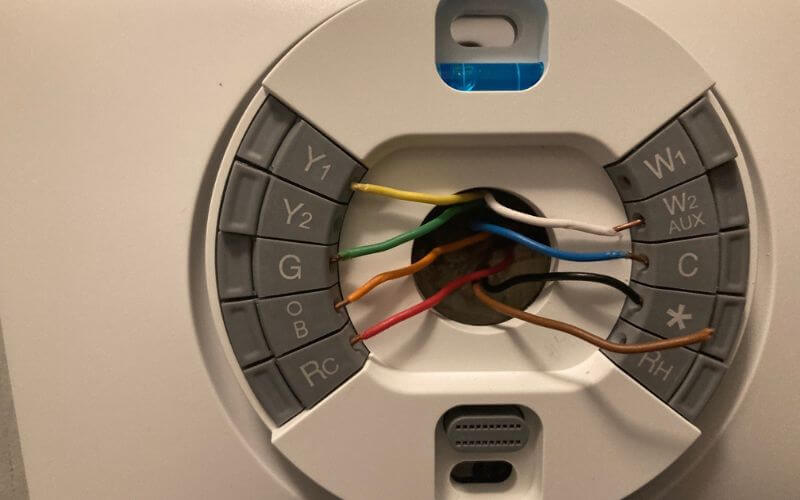
Now, let's talk about the C-wire, or common wire. Many older heat pump systems, especially if they only ever had a basic mercury thermostat, might not have one. The C-wire provides continuous power to your smart thermostat. Without it, your Nest might try to "borrow" power by trickling it through other wires, which can lead to unpredictable behavior, like your system short-cycling or your Nest's battery dying a tragic, digital death.
But fear not! If your existing wiring doesn't have a C-wire, there are solutions! Sometimes, there's an unused wire coiled up behind your old thermostat that can be repurposed. Other times, you might need a simple power adapter kit (often called a C-wire adapter) or, if you're truly stumped, a professional HVAC technician to run a new one. It's usually a straightforward fix, but always, always, ALWAYS turn off the power at the breaker before messing with wires! Seriously, we don't need any unexpected fireworks.

Before You Buy: The Nest Compatibility Checker is Your Friend!
Feeling a bit overwhelmed? Don’t be! Google Nest has a fantastic compatibility checker tool on their website. It’s like a magical crystal ball for your HVAC system. You simply input the wires from your current thermostat, and it tells you if a Nest will work and, if so, which model is best. This is your absolute first stop before you even think about buying one. It can save you a world of headaches, frustration, and possibly a call to a very confused electrician.
The Bottom Line: Smart Home, Smart Savings
So, to bring it all back home: yes, a Nest Thermostat absolutely works with a heat pump, and often, it makes your heat pump work even better! You get intelligent learning, remote control, energy reports, and all the bells and whistles that make modern living so delightfully convenient. You'll not only be more comfortable, but you’ll likely see a dip in your energy bills thanks to Nest’s optimization algorithms. Think of it as your heat pump getting a serious brain upgrade, finally reaching its full, efficient potential.
So go forth, empowered heat pump owner! Check your wires, consult the compatibility checker, and get ready to experience a whole new level of cozy, smart home bliss. Your house (and your wallet) will thank you.