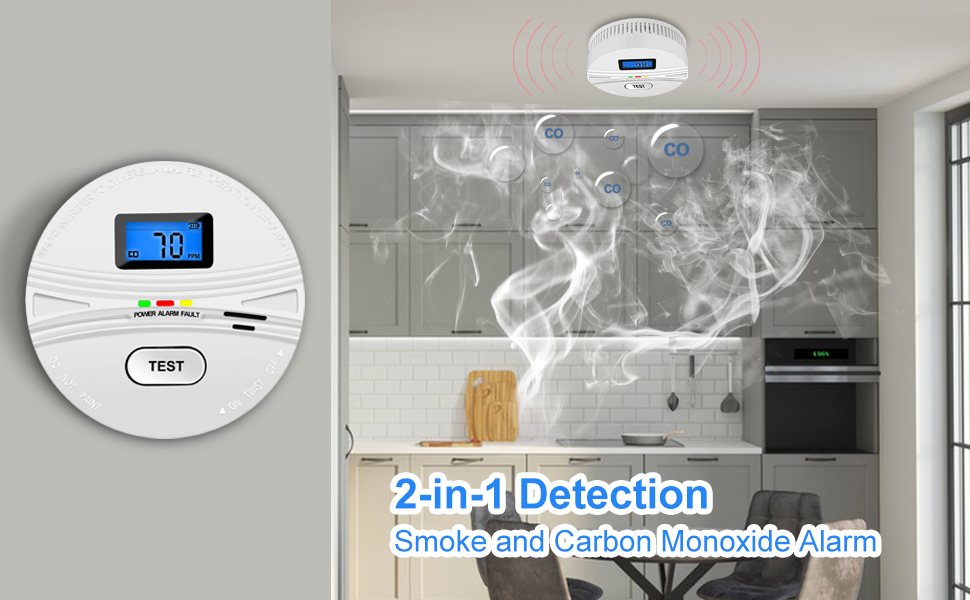
Does Carbon Monoxide Detector Detect Smoke
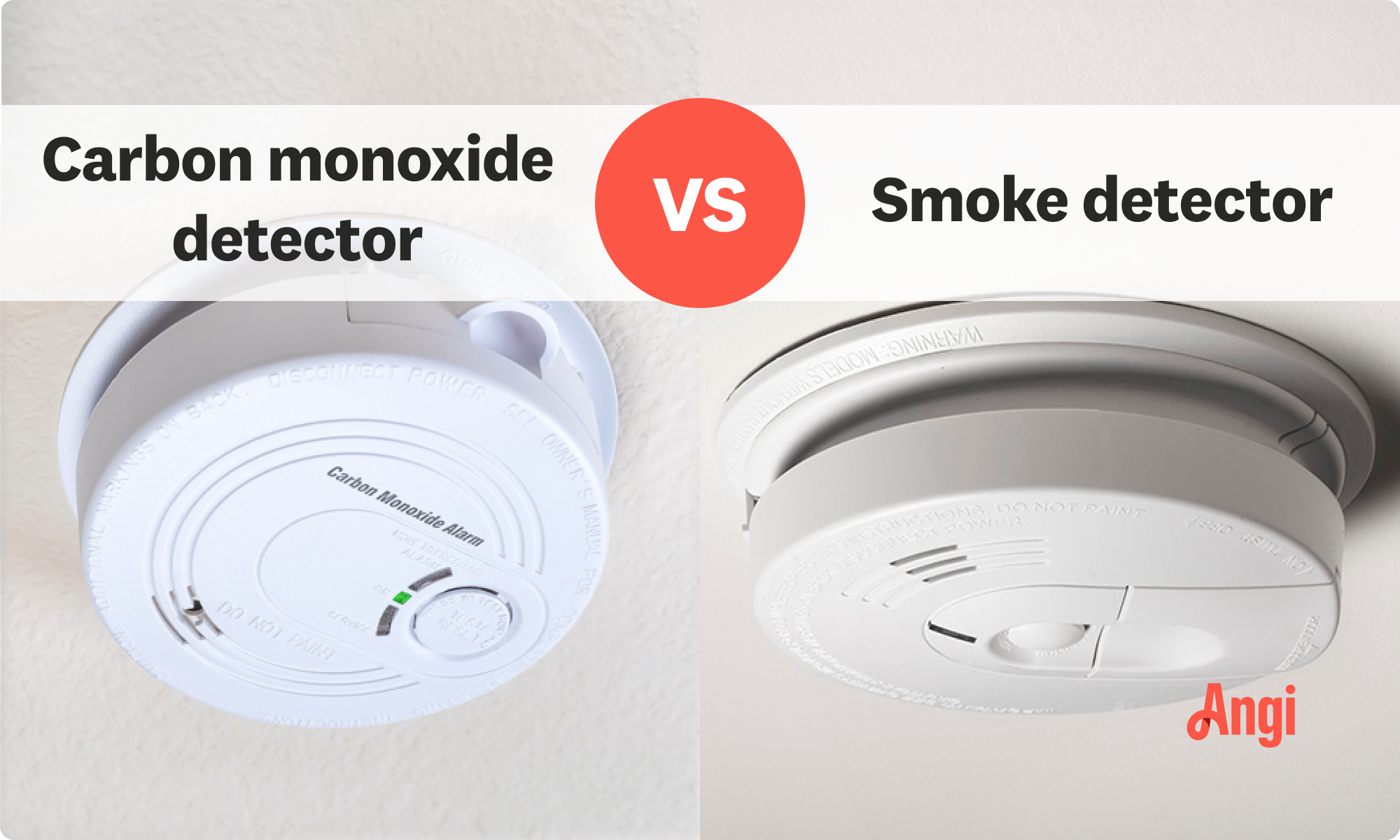
The Great Detector Divide: Smoke vs. Carbon Monoxide – Let's Clear the Air!
Alright, let's dive into a question that pops up more often than a surprise pop quiz on a Monday morning: Can your carbon monoxide detector also play superhero and sniff out smoke? It's a fantastic question, and one we're going to tackle with all the enthusiasm of a kid in a candy store!
Imagine this: You're whipping up a culinary masterpiece in the kitchen, perhaps a slightly-too-toasty batch of garlic bread (we've all been there!). Suddenly, the air fills with that unmistakable haze, a definite sign that your toast has entered the "charred chic" phase. And then, BAM! Your smoke detector shrieks, letting you know loud and clear that something's amiss. It’s doing its job, being the ultimate drama queen of your ceiling, and we love it for that! You see, your smoke detector is designed to react to those tiny, visible particles that waft up from anything burning. Whether it’s a tiny puff or a full-blown plume, it catches those physical bits in the air, often using a tiny beam of light or an ionization chamber to spot the intruders.
Now, let's talk about its lesser-known, much stealthier cousin: the carbon monoxide detector. This little gadget is a whole different breed of hero. While smoke loves to make a grand entrance, filling your space with visible clouds and a distinct aroma, carbon monoxide is the ultimate ninja. It's completely invisible, odorless, and tasteless. It's the silent, sneaky villain that can slip into your home without a single warning sign from your senses. This isn't just an inconvenience; carbon monoxide is incredibly dangerous, quietly replacing the oxygen in your blood before you even realize anything is wrong. It truly is the invisible ink of dangerous gases – you wouldn't know it's there without a special tool to reveal it.
Must Read
Your carbon monoxide detector isn't looking for a visible spectacle. It's on a mission to detect a very specific, dangerous gas that you absolutely cannot see, smell, or taste. It's like having a highly specialized sniffer dog trained only for one unique scent.
So, back to our burning question: Does one detect the other? The short, sweet, and wonderfully simple answer is: nope! These two marvelous marvels of modern safety technology are like two completely different superheroes with totally distinct powers and villains to fight. Think of it this way:
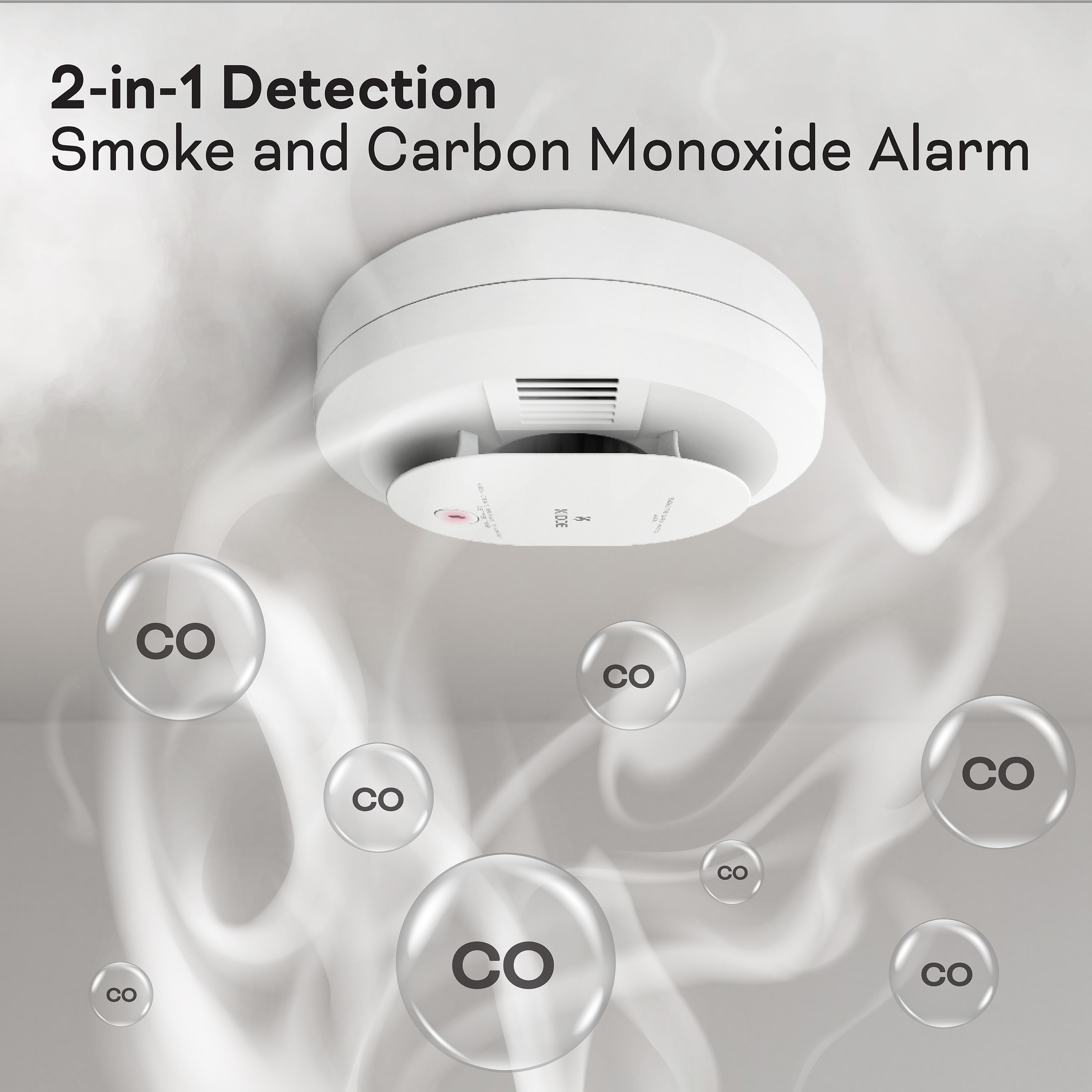
- Your smoke detector is the visual guard, always on the lookout for tiny, floating particles of burnt stuff. Whether it's a forgotten pizza in the oven or an actual house fire, if there are visible particles of combustion floating around, your smoke detector is going to sound the alarm faster than you can say "fire drill!" It's sensitive to physical particles that disrupt its light beam or ionize the air, acting as the ultimate particle paparazzi.
- Your carbon monoxide detector, on the other hand, is a chemical detective. It's specifically designed to measure the concentration of CO gas in the air. It doesn't care if there's a cloud of burnt toast particles; its only job is to warn you if that sneaky, invisible CO gas reaches dangerous levels. It's tuned to a specific chemical signature, not physical particulate matter, making it the gas-sniffer extraordinaire.
Why They're Different (And Why That's a Good Thing!)
This division of labor isn't some oversight; it's brilliant design! If your carbon monoxide detector went off every time you had a minor kitchen mishap, you'd probably rip it off the wall in frustration. Imagine the chaos! And if your smoke detector waited for an invisible gas to build up before alarming, well, that would be far too late for a smoke-related emergency. Each device is perfectly honed for its unique threat, making them incredibly effective in their respective roles.
They are specialists, each excelling in their own vital field. It’s like asking your super-fast race car to also be an amazing off-road monster truck. Possible? Maybe with a lot of modifications. Efficient? Not really! Each tool is designed for a specific job, and they do it incredibly well without getting in each other's way.
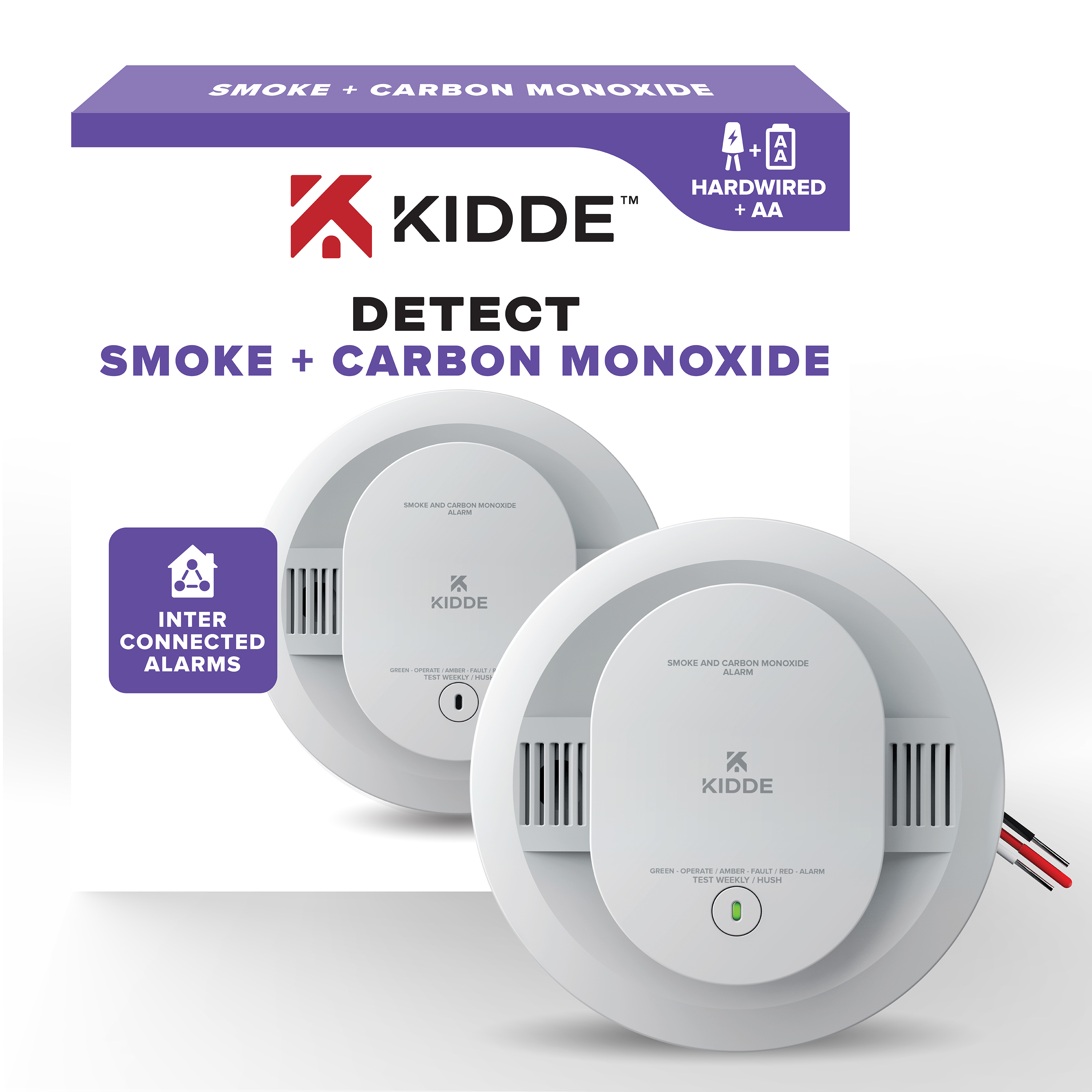
Imagine your smoke detector as the loud, proud town crier, shouting about visible dangers. Your carbon monoxide detector is the quiet, watchful guardian, silently scanning for the unseen threat. They complement each other, forming an impenetrable safety net around your home and your loved ones.
So, the next time you're wondering if your CO detector is also secretly checking for smoke, remember this: While both are absolute champions of home safety, they operate in completely different arenas. One guards against the visible aftermath of fire, the other against the invisible peril of faulty combustion.
To truly keep your home a fortress of fabulous safety, you need both. A smoke detector on every level and near sleeping areas, and a carbon monoxide detector near sleeping areas and on every level with fuel-burning appliances. They’re the dynamic duo your home deserves, working in tandem to give you ultimate peace of mind. Go forth, be safe, and may your toast always be perfectly golden (unless you like it "charred chic," of course!).