
Difference Between Engineering Stress And True Stress
Alright, gather 'round, folks! Let's talk about stress. No, not that kind of stress – the kind where your boss is breathing down your neck. We're talking about the physics kind. Specifically, engineering stress versus true stress. It's a tale of two stresses, each with its own personality and quirks.
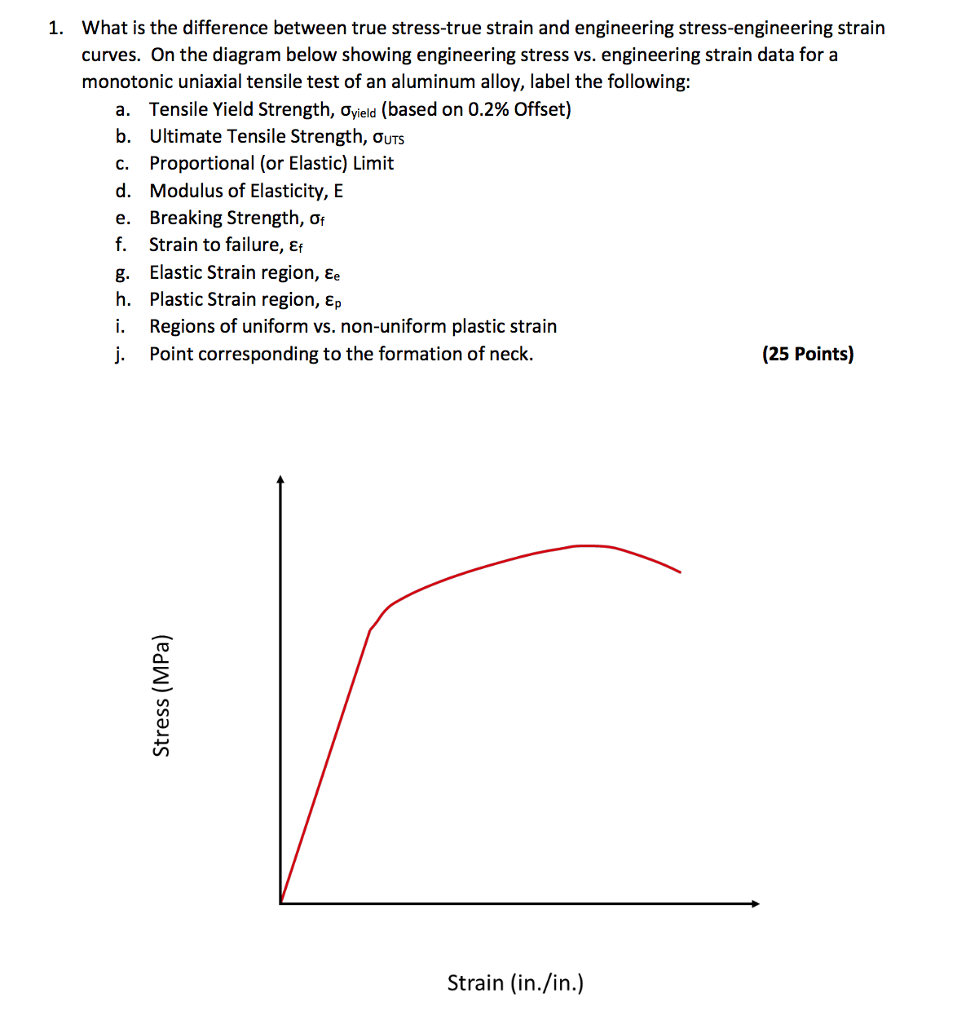
Imagine you're stretching a rubber band. You pull it, and it gets thinner, right? Engineering stress is like that friend who only looks at the initial width of the rubber band to calculate the force per area. It's all like, "Hey, I used to be this thick, so that's what I'm sticking with!" Super reliable, if you’re working in a situation where it doesn’t deform too much, then its fine. It’s the method we use for simple calculations.
Technically speaking, engineering stress, also known as nominal stress, is defined as the applied force divided by the original cross-sectional area of the material. Simple, straightforward, and a little bit… stubborn.
Must Read
Engineering Stress: The Good Ol' Reliable
Think of it like ordering a pizza. You order a 12-inch pizza, and you expect a 12-inch pizza. You don't care if it shrinks a little during baking. Engineering stress is the same way. It's concerned with the initial dimensions, not what happens to them during the stretching, squishing, or bending process. This makes it incredibly useful for basic calculations, especially when dealing with materials that don't deform too drastically.
Engineering stress is fantastic for everyday applications. Building a bridge? Engineering stress. Designing a simple lever? Engineering stress. It is the go to option for designing simple and easy parts. We are talking about a paper clip, or a simple table.
It is useful, but you have to remember it has limitations.
True Stress: The Honest Truth Teller
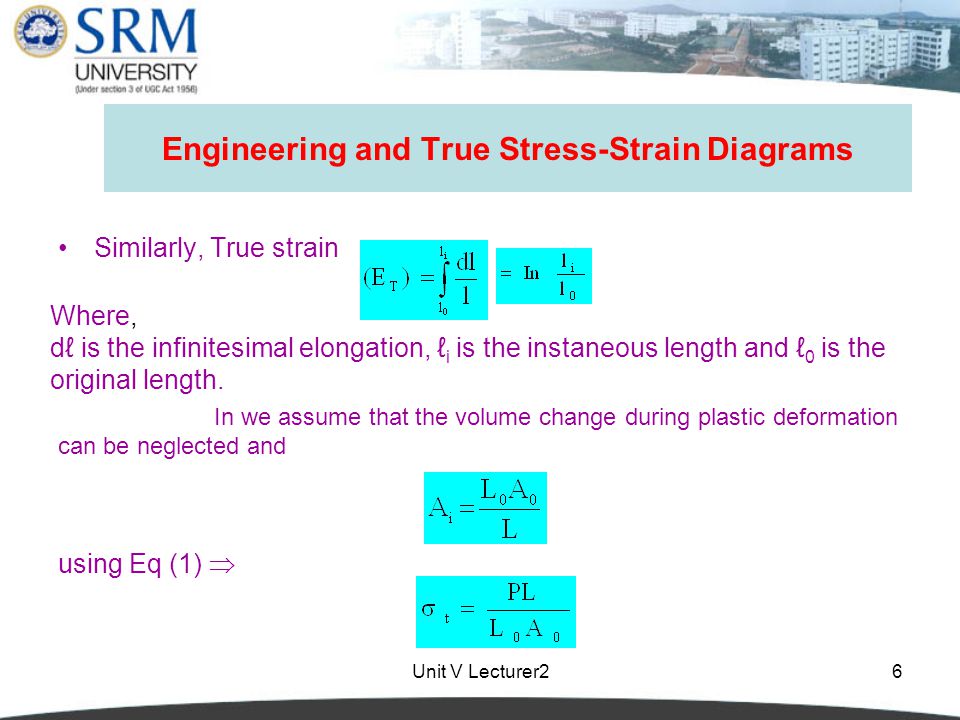
Now, true stress is the friend who's all about honesty. It's like that brutally honest pal who tells you that dress really doesn't flatter you. It uses the actual, instantaneous cross-sectional area of the material to calculate the stress. As the rubber band stretches and gets thinner, true stress takes that into account. "Hey, I'm actually this thin right now!" it declares.
So, true stress is defined as the applied force divided by the instantaneous cross-sectional area of the material. It's more complex, and it gives you a more accurate picture of what's happening at the atomic level. It takes into account what engineering stress doesn’t.
Imagine that same rubber band. As you stretch it, it gets thinner and thinner. Engineering stress stubbornly clings to the original thickness, underestimating the actual stress. True stress, on the other hand, is like, "Whoa, this rubber band is really thin now! The force is concentrated over a much smaller area!" It’s like looking at a magnifying glass, you get a very detailed description of what is going on. It’s accurate!
Why Does This Matter?
You might be thinking, "Okay, that's interesting, but why should I care?" Well, imagine you're designing something that will undergo significant deformation – something like a metal forming process or even some types of earthquake-resistant buildings. In these situations, true stress is crucial. Engineering stress can lead to inaccurate predictions and potentially catastrophic failures!
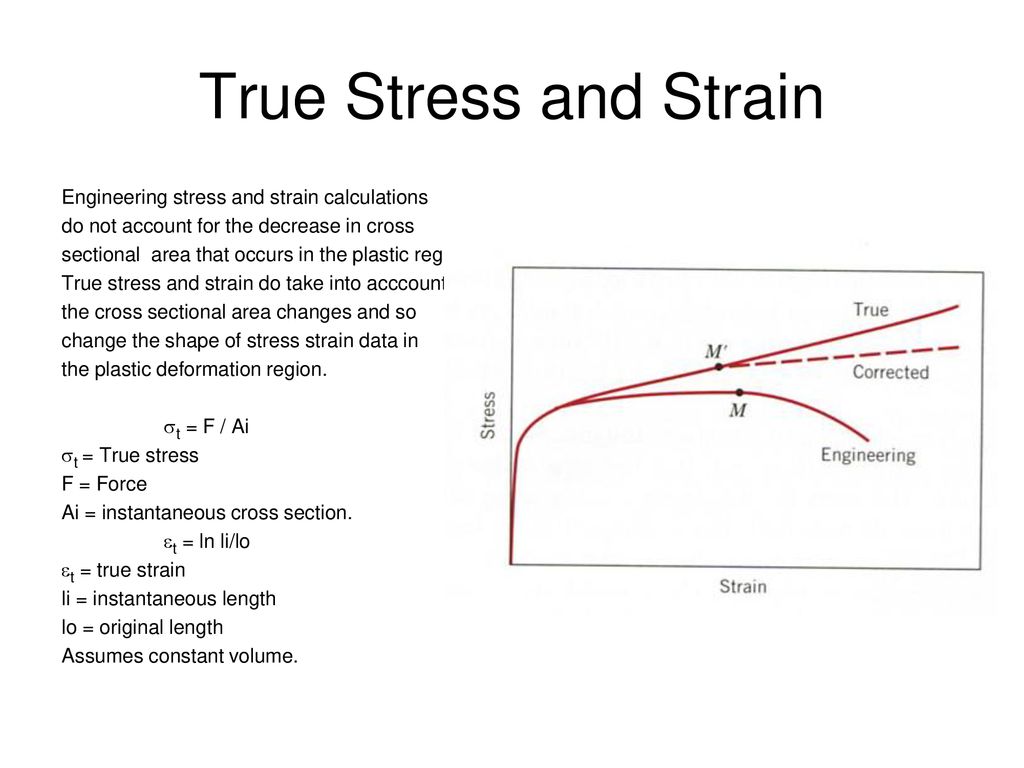
For example, when a metal neck, true stress will keep increasing until the material fractures. Engineering stress will actually decrease after necking starts. This is because, after the necking, the force required to deform the material decreases.
Think of it like this: Engineering stress is like saying, "I can bench press 200 pounds!" But then you try to lift it with only one finger. True stress is like saying, "Okay, realistically, that's way too much stress on my finger! The cross sectional area of the finger can’t support this.
The Bottom Line
In summary:
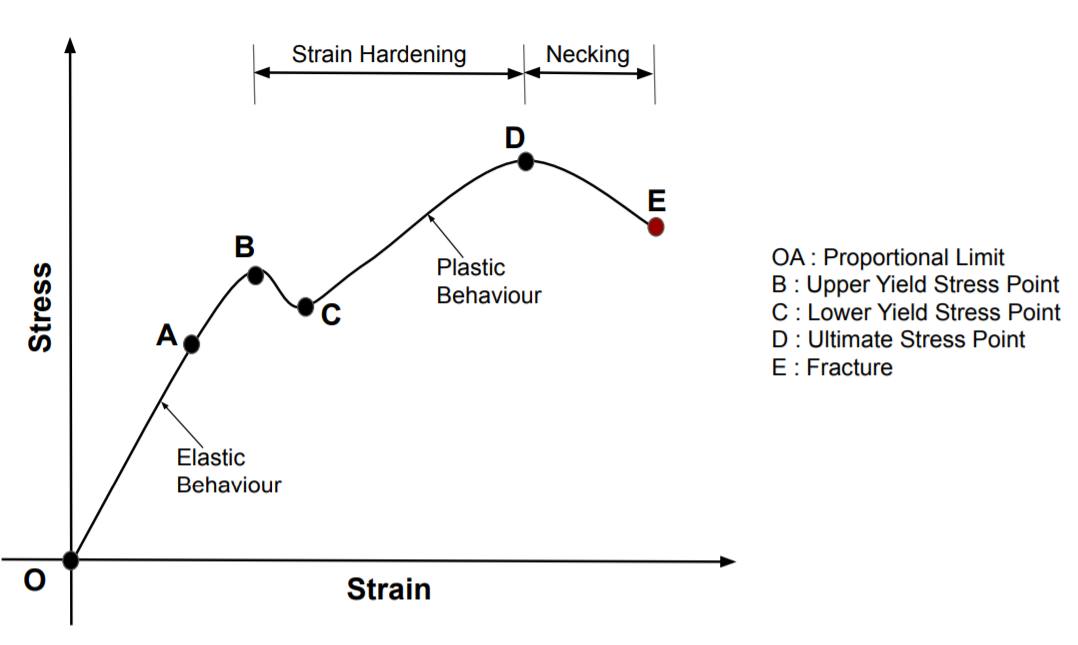
- Engineering stress: Easy to calculate, useful for small deformations, but can be misleading at high deformations.
- True stress: More accurate, crucial for large deformations, but requires more complex calculations.
Which one should you use? It depends on the situation! For simple, everyday stuff, engineering stress is your friend. But for complex scenarios where things get stretched, squished, or twisted significantly, true stress is the only way to go.
So, the next time you're stretching a rubber band, take a moment to appreciate the difference between engineering stress and true stress. And remember, sometimes the truth hurts… but in engineering, it can also save lives!
Now, who's up for another slice of (perfectly 12-inch) pizza?