
Constellations Of The Milky Way
Hey there, star gazer! Ever looked up at the night sky and thought, "Whoa, that's a lot of dots"? I mean, seriously, it's overwhelming, right? But fear not, because those dots? They're not just randomly scattered across the cosmic canvas.
They're actually grouped into patterns! We call them constellations. Think of it like celestial connect-the-dots. But instead of drawing a picture of a puppy, you're drawing… well, a bear (Ursa Major), a hunter (Orion), or even a dragon (Draco)! Okay, maybe you aren't drawing them, but you get the idea.
What's the Deal with Constellations Anyway?
So, why did ancient civilizations bother connecting these stars? Was it just boredom? Probably not just boredom. It was actually super practical! They used constellations for navigation (no GPS back then, folks!), tracking seasons (crucial for farming!), and even for storytelling (cosmic bedtime stories!). Imagine trying to tell time by looking at the stars... talk about a skill!
Must Read
And let's be honest, who doesn't love a good story? Many constellations are named after mythological figures. Orion, for instance, is this super buff hunter, always ready for action. Then there's Cassiopeia, the boastful queen. I mean, space drama is apparently timeless!
Fun fact: Did you know the constellations we commonly use today are largely based on the Greek and Roman interpretations? Yep, those guys were star obsessed (and good at naming things, apparently).

Constellations in Our Milky Way Galaxy
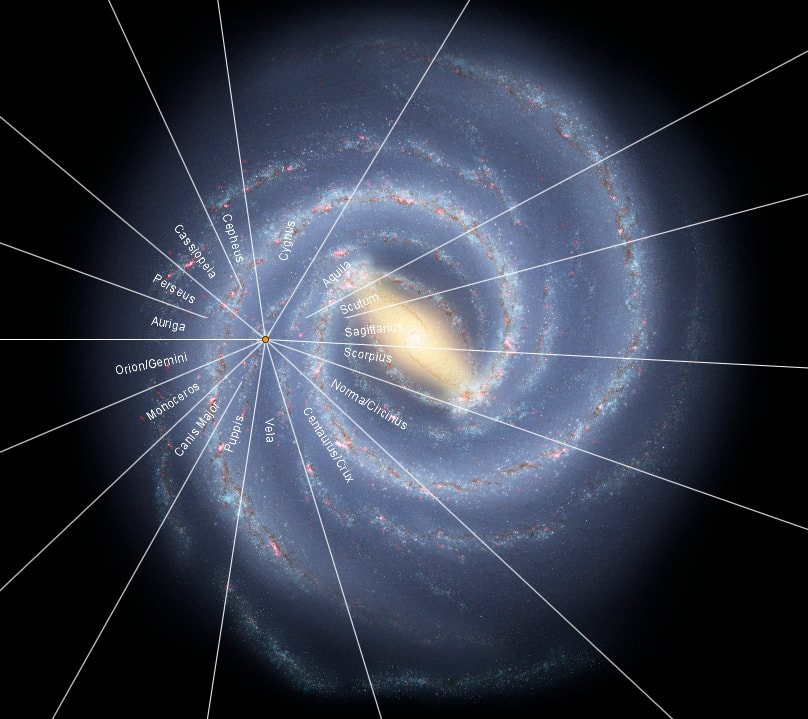
Now, here's where it gets really cool. All these constellations we're talking about? They're pretty much all within our own galaxy, the Milky Way. Think of the Milky Way as your cosmic neighborhood. And constellations? They're like the landmarks within that neighborhood.
So when you're looking at, say, the constellation Sagittarius (the archer), you're actually peering towards the center of our galaxy! Woah, right?! I mean, talk about aiming for the stars!
Important note: The stars that make up a constellation aren't necessarily close to each other in space. They just appear close from our vantage point on Earth. It’s like seeing a bunch of people standing in a line at a parade, but they're actually blocks away from each other.
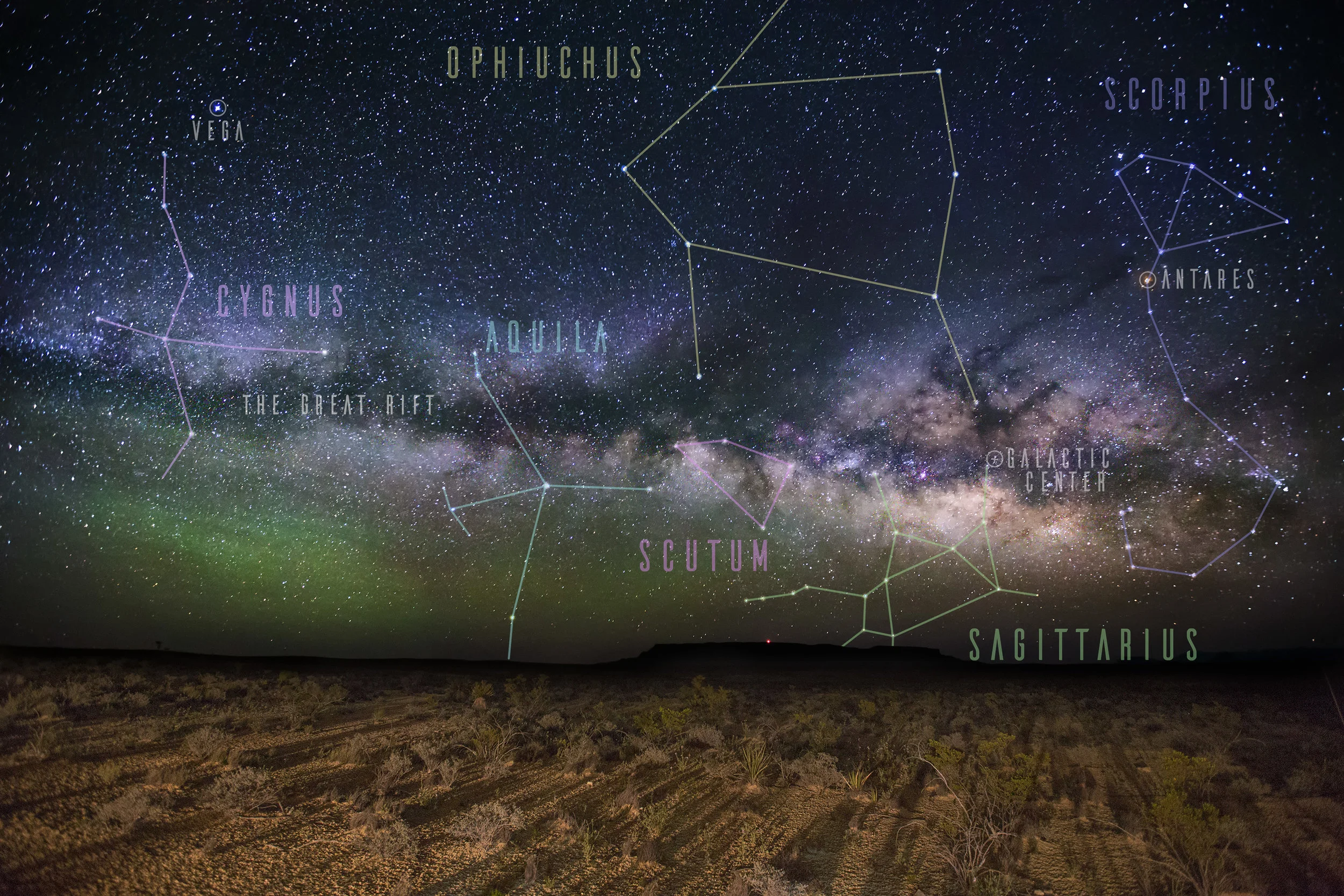
Ever heard of the Summer Triangle? It's not really a constellation, but it's an asterism, which is a fancy name for a prominent pattern of stars within one or more constellations. The Summer Triangle is made up of the bright stars Vega (in Lyra), Deneb (in Cygnus), and Altair (in Aquila). Super easy to spot in the summer sky (hence the name!).
Another cool one to find is Orion. It's super noticeable because of its bright belt stars. Find those, and you've got Orion pegged! Plus, Orion is home to some amazing nebulae (clouds of gas and dust where stars are born!). The Orion Nebula is visible with binoculars! So grab those binocs and become a cosmic explorer!
So, What Now?
Ready to start your own constellation quest? First, find a dark spot away from city lights. Seriously, light pollution is the enemy of stargazing! Second, grab a star chart or download a stargazing app. There are tons out there, and they can really help you navigate the night sky.
Then, just look up! Start with the bright, easy-to-find constellations like Ursa Major (the Big Dipper - which is actually an asterism within Ursa Major! Confused yet?) and Orion. Don’t get discouraged if you don’t see them right away. It takes practice! Just keep looking up, and soon you'll be spotting constellations like a pro!
And that's the lowdown on constellations within our Milky Way! So next time you're gazing at the stars, remember that those dots aren't just random. They're part of something bigger, something ancient, and something truly amazing. Happy stargazing!
