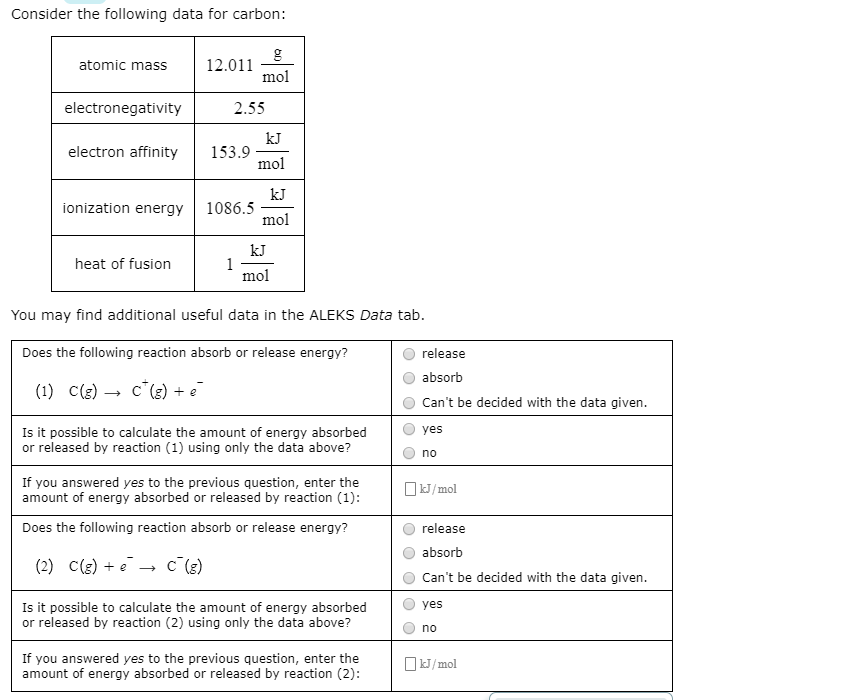
Consider The Following Data For Carbon
You know that feeling when you're rummaging through a drawer, looking for something specific, and you pick up a seemingly ordinary object – say, a paperclip – and for a split second, you just stare at it? Not because it’s lost its purpose, but because you suddenly wonder, "What is this actually made of? How does it even exist in this form?" It's a quick, almost philosophical detour in an otherwise mundane search.
Well, pull up a chair, because we're about to have a similar moment of existential pondering, but instead of a paperclip, we’re going to dive headfirst into something far more fundamental, far more ubiquitous, and frankly, far more mind-blowing: carbon.
Considering the Data on Carbon
Forget dry textbooks for a second. Let's talk about carbon like it's the rockstar element it truly is. When a scientist says, "Consider the following data for carbon," what they're really inviting you to do is peel back the layers of reality and see just how central this one element is to… well, everything.
Must Read
First off, let’s talk about its uncanny ability to make friends. Carbon atoms have this amazing knack for forming four strong, stable bonds with other atoms, including themselves. Think of it like a master LEGO builder with four perfect connection points. This isn't just a fun fact; it's the secret sauce behind carbon's incredible versatility. It can build long chains, intricate rings, and complex 3D structures. It’s the ultimate molecular architect.
Now, here’s where the "data" truly gets wild. Imagine you have two identical sets of LEGOs. If you build a house with one and a spaceship with the other, they both came from the same initial set, right? Carbon is like that, but on an atomic scale, and the "buildings" it creates are astonishingly different.
Take diamond, for instance. We all know diamonds: incredibly hard, brilliantly sparkly, and they’ll cut through almost anything. Diamonds are pure carbon, with each carbon atom bonded to four others in a perfectly symmetrical, strong tetrahedral lattice. That specific arrangement of "carbon data" gives it its legendary hardness and refractive sparkle. Pretty cool, huh?
But then, consider graphite. The stuff in your pencil lead (yes, it's actually graphite, not lead!). It’s soft, slippery, and leaves a dark mark on paper. Also pure carbon! But here, the carbon atoms are arranged in flat, hexagonal layers that can easily slide past each other. Same element, wildly different properties. If that's not interesting "data," I don't know what is! You've got to admit, it's a bit ironic that the hardest natural substance and one of the softest are made of the exact same ingredient.
And the plot thickens! We've also got graphene. Imagine taking one of those graphite layers and peeling off a single, atomic-thin sheet. That’s graphene. It’s a supermaterial: stronger than steel, incredibly lightweight, and an excellent conductor of electricity. Scientists are still figuring out all the amazing things we can do with it. Then there are fullerenes, like Buckyballs, which are carbon atoms arranged into hollow spheres, sort of like a microscopic soccer ball.
All of these – diamond, graphite, graphene, fullerenes – are simply different arrangements of carbon atoms. The "data" isn't just about what carbon is, but what it can become based on how its fundamental units are organized. It's like looking at the same set of building blocks and seeing a skyscraper, a bridge, and a sculpture all emerge.
Beyond these structural marvels, let's not forget carbon's starring role in something even more profound: life itself. Every living thing on Earth, from the smallest bacterium to the largest whale, is carbon-based. Our DNA, the blueprint of who we are, is built on a carbon backbone. Proteins, carbohydrates, fats – all the molecules that make us function, grow, and think, are fundamentally carbon compounds. We are literally walking, talking, breathing collections of complex carbon structures. How’s that for data?
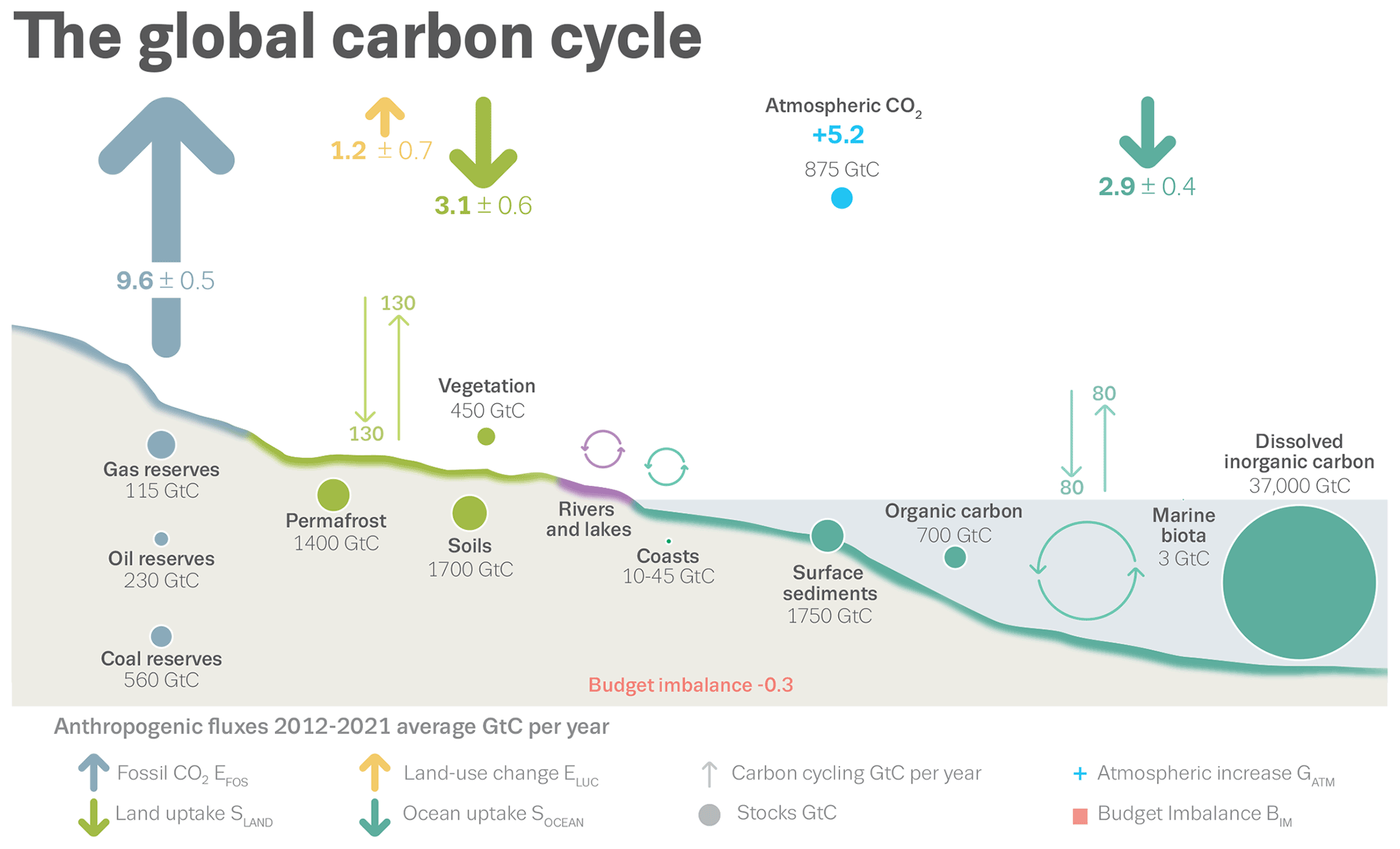
And finally, the bigger picture: the carbon cycle. Carbon is constantly moving between the atmosphere, oceans, rocks, and living organisms. It's in the air we breathe (carbon dioxide), the fossil fuels we burn, and the food we eat. This planetary-scale data flow is critical to Earth’s climate and habitability. Understanding this cycle, and our impact on it, is arguably the most vital piece of "carbon data" for humanity right now.
So, the next time someone casually mentions "carbon," don't just nod. Pause. Remember the diamond and the pencil lead. Remember the incredible resilience of a graphene sheet. Remember that your very existence is a testament to its versatility. Because when you truly "consider the following data for carbon," you're not just looking at numbers; you're glimpsing the very fabric of our universe, in all its astonishing, diverse, and often ironic forms. Isn't that just the coolest?