
Claytons Basic Pharmacology For Nurses 18th Edition Test Bank
Okay, let's talk pharmacology! I know, I know, it sounds about as thrilling as watching paint dry, right? But stick with me, especially if you're a nursing student staring down the barrel of a massive exam. We're going to chat about the Clayton's Basic Pharmacology for Nurses, 18th Edition Test Bank. And trust me, it's way more exciting (and helpful!) than you think.
Think of pharmacology as understanding the secret language of medicines. It's like knowing the ingredients in your favorite recipe, but instead of making cookies, you're helping people get better. And that's pretty darn awesome.
Why Should You Even Care? (Beyond Just Passing the Test)
Imagine this: You're working as a nurse, and a patient is experiencing a weird side effect from their medication. Do you just shrug and say, "Oh well, that's just how it is"? No way! You need to understand what's happening, why it's happening, and what you can do to help. That's where a solid understanding of pharmacology comes in.
Must Read
Think of it like this: Your body is a complex machine, and medications are like the tools you use to fix it. You wouldn't use a hammer to screw in a lightbulb, would you? You need the right tool for the right job. Pharmacology helps you choose the right "tool" (medication) and use it effectively and safely.
And let's be honest, no one wants to accidentally give the wrong dose or administer a medication that interacts negatively with another. That knowledge isn’t just for passing a test, it’s about making the best decisions for your patients.

Enter the Test Bank: Your Secret Weapon
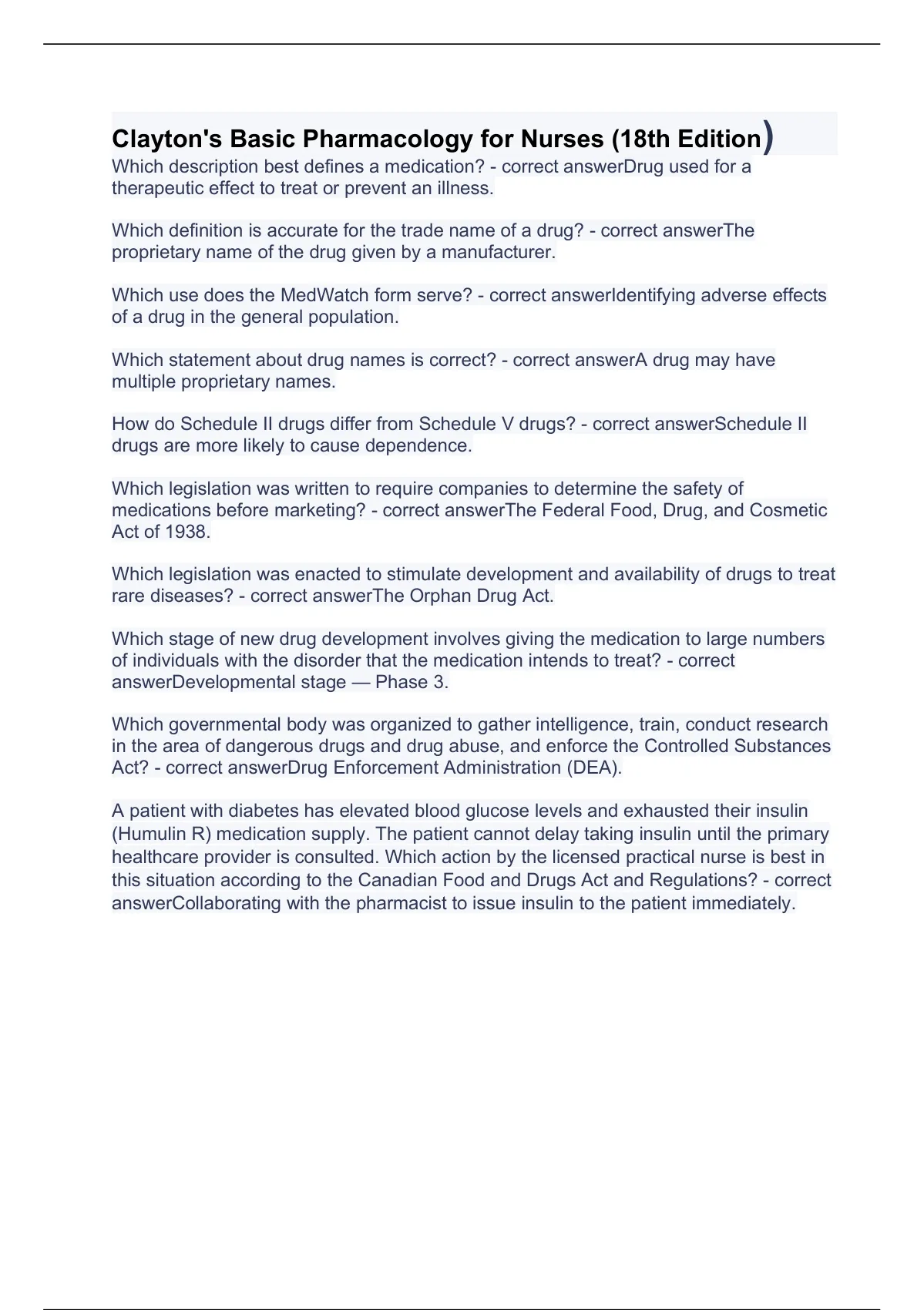
So, how do you actually learn all this complicated stuff? That's where the Clayton's Basic Pharmacology for Nurses, 18th Edition Test Bank comes in. It's not just a collection of practice questions; it's more like a training simulator for your brain.
Think of it like practicing free throws before a big basketball game. You wouldn't just show up on game day and expect to nail every shot, would you? You need to practice! The test bank is your practice court, helping you hone your skills and get comfortable with the material.
It helps you:
- Identify your weak spots: Maybe you're fuzzy on diuretics or struggle with anti-anxiety meds. The test bank will highlight those areas so you can focus your study efforts.
- Apply your knowledge: It's one thing to memorize facts; it's another to apply them to real-world scenarios. The test bank provides those scenarios, challenging you to think critically.
- Build confidence: The more you practice, the more confident you'll feel going into the exam. Knowing you've tackled hundreds of questions will ease your anxiety and boost your performance.
Instead of just blindly reading the textbook (which, let's face it, can be a bit of a snooze-fest), the test bank forces you to actively engage with the material. Active learning is key! It's like the difference between passively listening to music and actually playing an instrument. You'll learn so much more by doing.
Don't Just Memorize, Understand!
The goal isn't just to memorize the answers to the test bank questions. That might get you through the exam, but it won't help you in the long run. The real value comes from understanding why the answers are correct.
For example, imagine a question about a patient taking warfarin (a blood thinner). The test bank might ask about potential drug interactions. Don't just memorize the interacting drugs; understand why they interact. Knowing the mechanism of action of both warfarin and the other drugs will help you answer similar questions in the future, even if you've never seen them before.
Making it Fun (Yes, Really!)
Pharmacology doesn't have to be a dreaded subject. Try these tips to make studying more engaging:
- Study with a friend: Quiz each other, explain concepts to one another, and make it a collaborative effort. Misery (and studying) loves company!
- Use mnemonic devices: Create silly acronyms or rhymes to help you remember key information. The more ridiculous, the better!
- Relate it to real life: Think about medications that you or your family members have taken. How do they work? What are the potential side effects?
- Take breaks! Don't try to cram everything in at once. Short, frequent study sessions are more effective than long, drawn-out ones.
Think of it like learning a new language. At first, it seems daunting, but as you practice and immerse yourself in it, you start to understand the nuances and appreciate its beauty. Pharmacology is the same way. The more you learn, the more fascinating it becomes.
So, grab that Clayton's Basic Pharmacology for Nurses, 18th Edition Test Bank, dive in, and start unlocking the secrets of medications. You'll be amazed at how much you learn, and you'll be well on your way to becoming a confident and competent nurse. Good luck!