Carbon Monoxide Detector Beeping 5 Times

You know that moment, right? It’s usually precisely when you’ve settled down for a quiet evening, maybe snuggled on the couch with a cup of tea, a good book, or your questionable reality TV show. The house is silent, the kids (or pets) are finally asleep, and you’re just about to achieve peak relaxation… and then, BEEP! BEEP! BEEP! BEEP! BEEP!
Your heart leaps into your throat, performs a tiny somersault, and then tries to crawl back down. Because let’s be honest, when any detector starts wailing, your brain immediately screams, "FIRE! GAS LEAK! INTRUDERS! ALIENS!" And when it’s the carbon monoxide detector, a whole new level of existential dread kicks in. Because carbon monoxide is the ultimate party pooper, the invisible, odorless ninja of doom. It’s the kind of thing that makes you suddenly hyper-aware of every single gas appliance you own. Is the stove on? Did I leave the car running in the garage (no, definitely not)? Is my neighbor secretly brewing a potent CO cocktail?
But then you count the beeps. And you count them again, just to be sure. Five of them. Not four, which is the universally recognized "Oh my god, get out now!" signal for actual carbon monoxide. No, just five distinct, slightly less urgent, but still utterly infuriating beeps. And you think, "What fresh hell is this?"
Must Read
The Great Five-Beep Mystery: Not Your Typical Doomsday Siren
For a moment, you might even consider yourself a hero. "I caught it!" you whisper, triumphantly. "I identified the specific beep pattern! I am a domestic detective!" Then you remember you have no idea what five beeps means, and the heroics deflate quicker than a week-old birthday balloon. You scramble for the manual – which, let’s be real, is probably nestled somewhere between last year’s tax returns and a single sock that has lost its soulmate. Or you do what any modern human does: you frantically Google it.
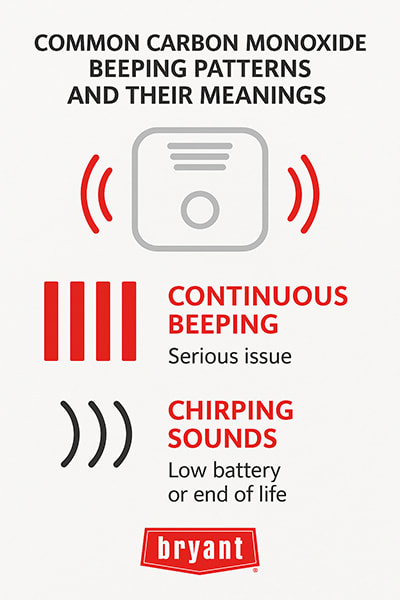
And that, my friends, is where the surprising truth comes out. Because while four beeps means "Danger! Invisible killer gas!" and one intermittent beep often means "Low battery! Feed me new power!" (the detector equivalent of a grumpy teenager), five beeps is something else entirely. It’s not an immediate threat to your life from an unseen gas.

It’s actually far more… mundane. And yet, arguably, just as important.
Drumroll please… five beeps means your carbon monoxide detector has reached the end of its life.
"I'm Not Dead Yet! Oh, Wait, Yes I Am." - Your CO Detector
Yep. It’s like your trusty old smartphone suddenly deciding it’s too old for updates, too slow for your apps, and generally just can’t even anymore. Except your CO detector doesn't just get sluggish; its internal sensor, the very thing that keeps you safe, simply taps out. It’s retired. It’s gone to the big landfill in the sky.
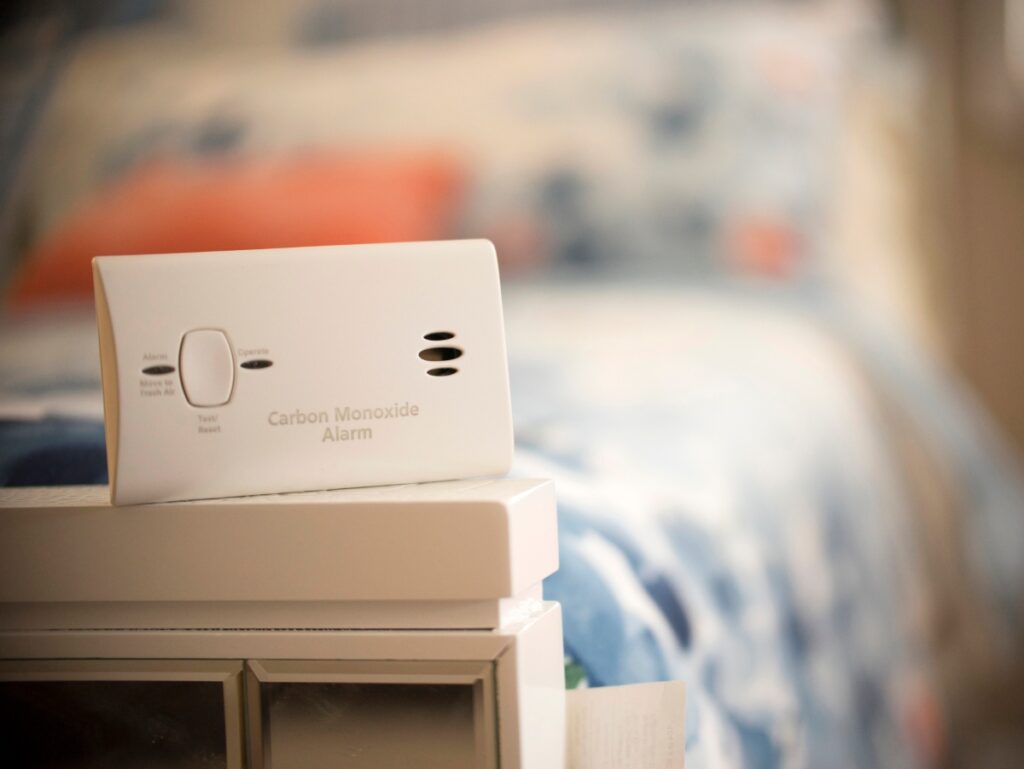
This is one of those surprisingly interesting facts that most people only learn the hard way – usually at 2 AM, while Googling "five beeps CO detector is it aliens." Unlike a smoke detector, which largely relies on optical or ionization chambers that can last a good long while, carbon monoxide detectors use an electrochemical sensor. Think of it as a tiny, highly sensitive chemical sniffer that’s constantly working to detect CO. And just like any tiny, highly sensitive chemical sniffer, it has a shelf life.
Most CO detectors are good for about five to seven years. Some might stretch to ten, but that's pushing it. After this period, the chemicals inside that sensor start to degrade. They become less reliable, less accurate, and eventually, completely useless. The five-beep warning is your detector’s final act of service, its swan song, its polite (or impolite, depending on the hour) way of saying, "Hey, boss, I’m clocking out. Time to get a replacement before I actually miss something important."

Don't Ignore the Old-Timer: What to Do Next
So, what’s your immediate course of action when your trusty (but now expired) detector starts its five-beep farewell tour?
- Don’t Panic (About CO): Reassure yourself that five beeps is not indicating an immediate CO presence. Take a deep breath.
- Replace It: This is the big one. You need to replace the entire unit immediately. Don't just change the batteries. Changing the batteries in an expired unit is like putting new tires on a car with a rusted-out engine – it might look okay for a minute, but it's not going anywhere useful.
- Check the Date: When you take down the old unit, look on the back. You'll almost always find a "replace by" date or a manufacture date. This will confirm your detector isn’t just being dramatic; it’s genuinely old.
- Get a New One (or two, or three): Head to your local hardware store or favorite online retailer. Consider upgrading to a combo smoke/CO detector for extra peace of mind. And remember, you should have CO detectors on every level of your home, especially near sleeping areas.
The Serious Bit (But Still Kinda Humorous)
While we can chuckle about the five-beep drama, it’s a crucial reminder that these little gadgets are our invisible guardians. Carbon monoxide truly is the "silent killer" – colorless, odorless, tasteless, and utterly deadly. It can quickly incapacitate and kill without any warning signs, which is why a working CO detector isn't just a suggestion; it’s a non-negotiable household hero.
So, the next time your peace and quiet are shattered by a series of five insistent beeps, remember it’s not an alien invasion, nor is it imminent CO poisoning. It’s just your old detector, bowing out gracefully (or perhaps dramatically) and reminding you that even our lifesavers have a lifespan. Give it a proper send-off, replace it promptly, and enjoy the blissful silence… until the next low-battery chirp, that is. Because some things never change!