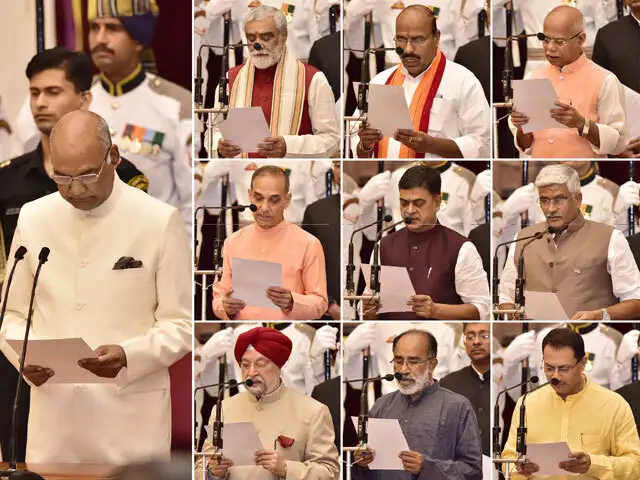
Brahmin Cabinet Minister In Modi Government

We all love a good story, a narrative that helps us understand the complexities of the world around us. Whether it's the latest political drama unfolding on our television screens, or the historical sagas documented in our textbooks, we are drawn to understanding power dynamics and the individuals who shape them. Today, let's delve into a specific, often talked about, and sometimes controversial aspect of Indian politics: the role of Brahmin cabinet ministers in the Modi government.
Understanding the composition of a government, particularly in a country as diverse as India, is crucial for grasping the nuances of policy-making and governance. Examining the social backgrounds of cabinet ministers, including their caste affiliations, provides insights into the representation of different communities and the potential influence of particular interests. While it's important to remember that individuals are complex and cannot be solely defined by their caste, acknowledging its presence as a factor in the political landscape is undeniable. This helps us analyze whether policies are inclusive and address the needs of all citizens, or if certain groups are disproportionately favored or disadvantaged.
Now, let's consider some common examples. When we talk about Brahmin cabinet ministers, we might be discussing individuals holding portfolios related to finance, education, or external affairs. Historically, Brahmins have often been associated with intellectual pursuits and administration, though this is a generalization and many hold diverse roles. Consider the implications when a Brahmin minister heads the Ministry of Education – what perspectives might they bring to curriculum development or the promotion of higher learning? Or, imagine a Brahmin minister responsible for economic policy – how might their understanding of financial systems shape budgetary decisions and resource allocation? These are crucial questions to ask to understand the potential impact of representation.
Must Read
It's crucial to remember that analyzing caste composition isn't about promoting casteism. Instead, it's about fostering a more informed and critical understanding of our political system. It encourages us to move beyond superficial narratives and delve into the underlying dynamics that shape our nation. By examining the representation of various social groups, including Brahmins, we can engage in more meaningful conversations about social justice, equality, and inclusive governance. We can ask crucial questions: are marginalized communities adequately represented? Are policies being implemented fairly across all segments of society?
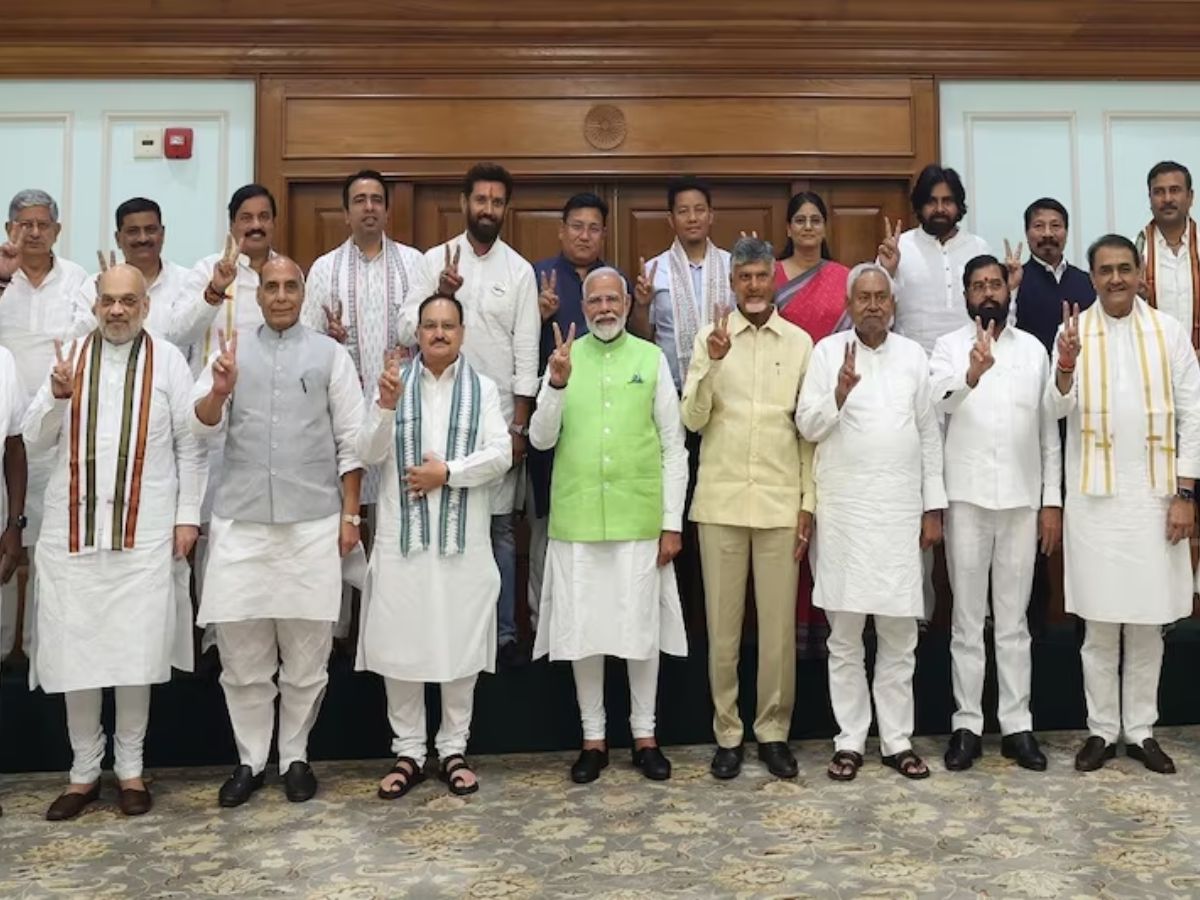
To engage with this topic more effectively, consider these practical tips:
- Diversify your sources: Don't rely solely on one media outlet or perspective. Read articles from different publications and consider opinions from diverse voices.
- Contextualize information: Understand the historical and social context of caste in India. This will help you interpret information more accurately.
- Be critical of generalizations: Remember that individuals are complex and cannot be reduced to their caste identity. Avoid making sweeping statements or stereotypes.
- Focus on policy impact: Rather than fixating solely on the caste of a minister, analyze the impact of their policies on different communities.
- Engage in respectful dialogue: Discuss your perspectives with others in a constructive and respectful manner. Listen to different viewpoints and be open to changing your own understanding.
Ultimately, understanding the role of Brahmin cabinet ministers, or any social group's representation in government, is a tool for promoting a more equitable and just society. It encourages us to hold our leaders accountable and advocate for policies that benefit all citizens, regardless of their background. By engaging with this topic thoughtfully and critically, we can contribute to a more inclusive and democratic India.