Ever feel like you're breathing in, breathing out, and not really sure why you're doing it beyond, you know, staying alive? Well, pull up a chair, grab a metaphorical coffee (or actual coffee, I'm not judging), because we're about to dive into the fascinating world of photosynthesis and cellular respiration. And we're doing it with a Venn diagram! Don't worry, it's less intimidating than it sounds, promise.
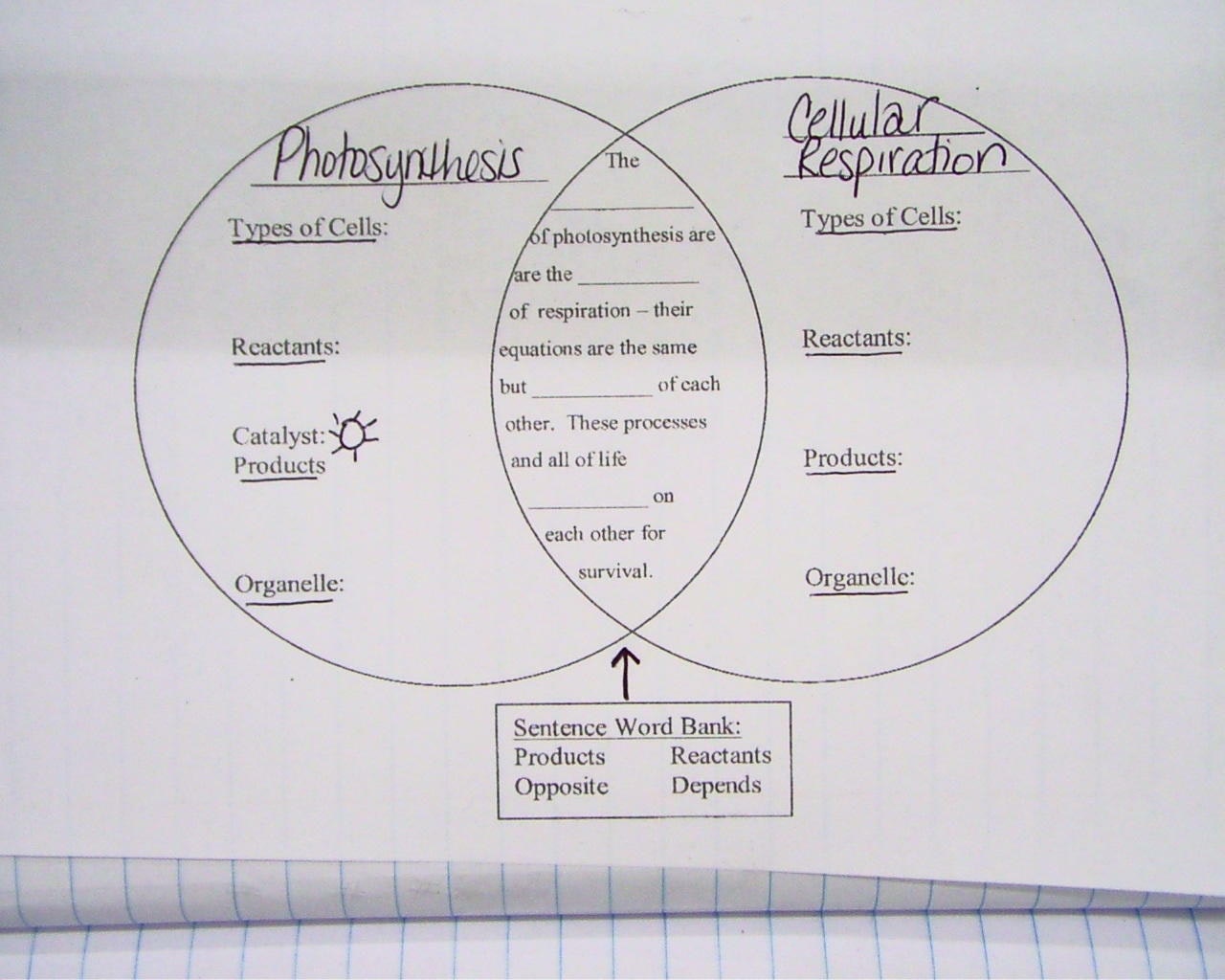
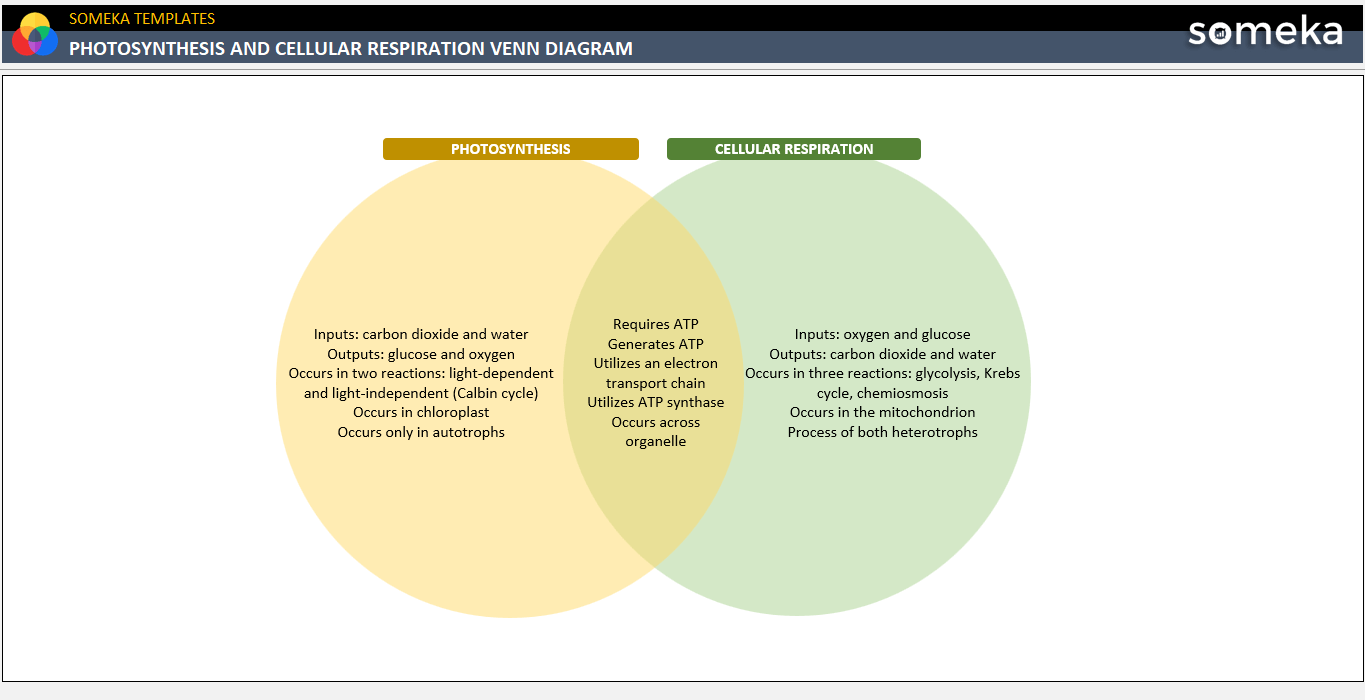
Think of a Venn diagram like two overlapping party circles. One circle represents photosynthesis, the process plants use to make their own food. The other is cellular respiration, which everyone does – plants, animals, even that weird mold growing in your shower (sorry!). The overlapping part? That's where the magic – and the shared stuff – happens.
Photosynthesis: The Plant's Personal Chef
Imagine plants as tiny chefs in a gourmet restaurant. Their main ingredient? Sunlight! They use this sunlight, along with water they soak up from the ground (like a thirsty sponge) and carbon dioxide they suck out of the air (the same stuff we breathe out), to create their own yummy energy – sugar, specifically glucose. It's like they're baking sunshine-flavored cookies! This process is called photosynthesis. The by-product? Oxygen! That's right, plants are basically our oxygen suppliers, the cool kids who let us breathe. We should send them thank you notes (or maybe just water them regularly).
So, that's one party circle: Photosynthesis. Needs sunlight, water, and CO2. Makes sugar (glucose) and releases oxygen. Simple, right?
Cellular Respiration: The Energy Converter
Now, let's talk about cellular respiration. This is where we come in (and the plants, too!). Think of cellular respiration as a tiny power plant inside every single cell in your body. What fuels this power plant? Sugar (glucose, the plant’s yummy cookie!) and oxygen. Remember those cookies the plants baked? Yeah, we're eating those (or indirectly eating things that ate those). We breathe in oxygen, our cells take that oxygen and the glucose, and BAM! They convert it into energy we can actually use to, you know, walk, talk, binge-watch Netflix, etc. The waste products? Carbon dioxide and water. We breathe out the CO2, and… well, you know where the water goes. (Hint: It involves a bathroom.)
This, my friends, is cellular respiration. It uses glucose and oxygen. It makes energy (ATP), carbon dioxide, and water.
The Overlap: The Circle of Life (Lion King Not Included…Mostly)
Okay, time for the overlap! This is where things get really interesting. The most important shared thing? The molecules involved! Photosynthesis produces glucose and oxygen, which are then used in cellular respiration. And cellular respiration produces carbon dioxide and water, which are then used in photosynthesis. See the cycle? It's like a perfectly choreographed dance! Plants make the food and oxygen, we eat the food and breathe the oxygen, we breathe out the waste, and plants use the waste to make more food and oxygen.
It’s a beautiful symbiotic relationship. We're basically exchanging gifts with the plants. They give us the gift of life (oxygen and food), and we give them… well, CO2, which they apparently love. Maybe we should send them thank you notes too, for liking our stinky breath.
In the overlapping zone: Glucose, Oxygen, Carbon Dioxide, and Water are all vital.
So, there you have it! Photosynthesis and cellular respiration, explained with a Venn diagram and a healthy dose of humor. Next time you take a deep breath, remember the amazing, intricate dance happening between you and the plants around you. And maybe, just maybe, water your plants. They'll appreciate it!
Hopefully, this has made photosynthesis and cellular respiration a little less intimidating and a little more… well, relatable. Now go forth and impress your friends with your newfound knowledge! And maybe bake some cookies. Because, why not?