Alright, gather 'round, folks, because we're about to unravel one of life's great, minor mysteries – right up there with "where did I leave my keys five seconds ago?" Today, we're tackling the enigma of the yellow garage door sensor. Yes, that little glowing eye on one side of your garage opening, staring back at you with what looks like a perpetual, mild jaundice. What's its deal?
You've probably noticed it. One sensor is usually a calm, reassuring green, like a well-tended garden gnome. The other? A vibrant, almost aggressive yellow or amber, blazing away like a miniature sun caught in a traffic jam. It's a color clash of sorts, and it's driven more than a few perfectly sane homeowners to Google at 3 AM. "Is my garage door sick? Is it sending me a secret message? Is it... dying?"
The Great Detective Story: Sensor Edition
Let's set the scene. Your garage door sensors are basically the unsung heroes of your daily commute, tirelessly preventing your car (or your pet squirrel, or your particularly clumsy neighbor) from getting smushed by a descending slab of steel. They're like tiny, vigilant bouncers at the door of your garage, ensuring no one gets past without permission – or, more accurately, without being *seen*.
These aren't just fancy light bulbs, mind you. We're talking about a photoelectric system. Think of it like a laser tripwire from a spy movie, only instead of setting off alarms, it just tells your garage door, "Hold on a sec, something's in the way!"
Meet the Dynamic Duo: Yellow vs. Green
So, why the color difference? It’s not some elaborate aesthetic choice by the garage door sensor fashion committee. It's all about roles, my friends, specific and vital roles in the grand opera of garage door safety.
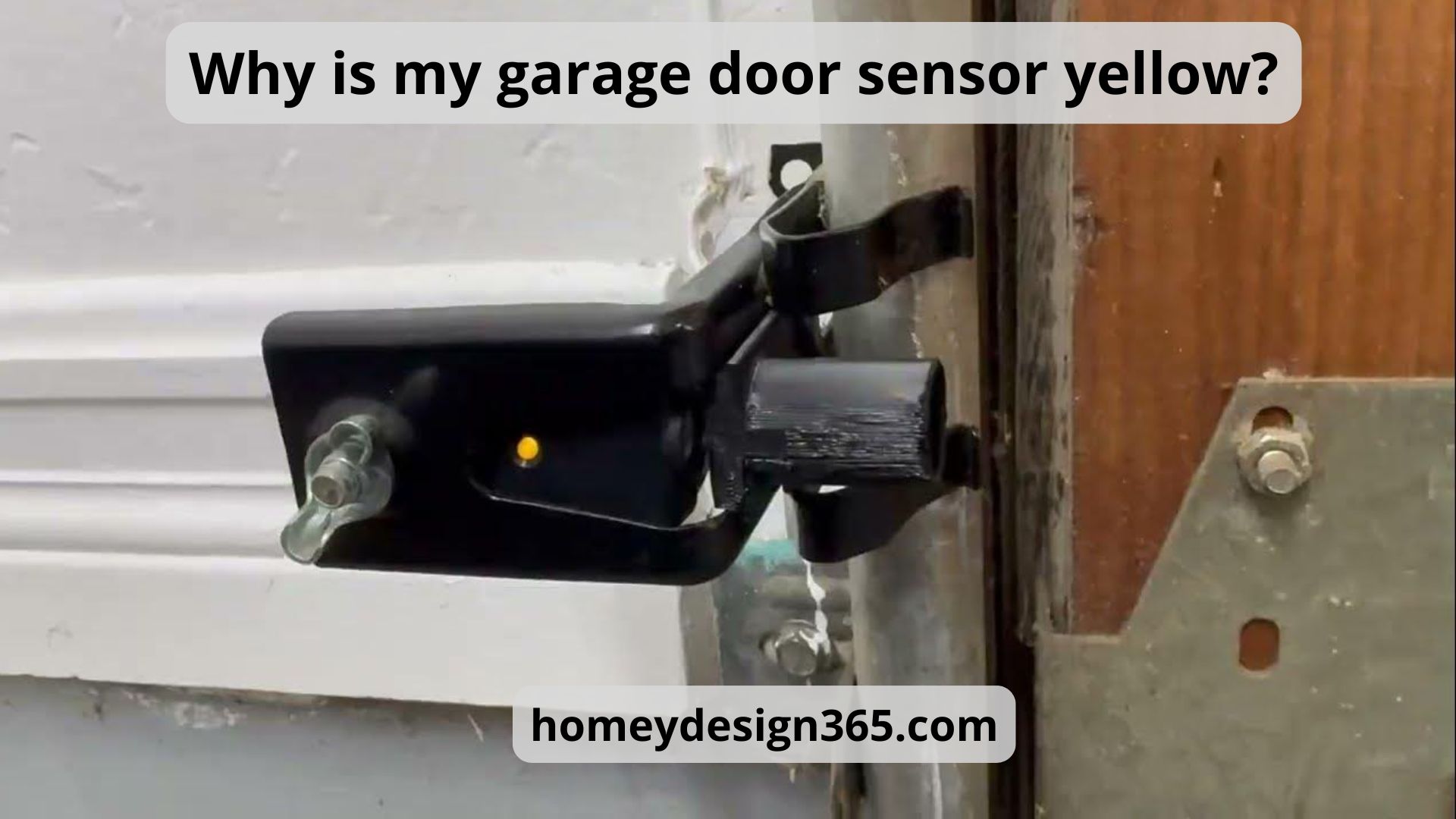
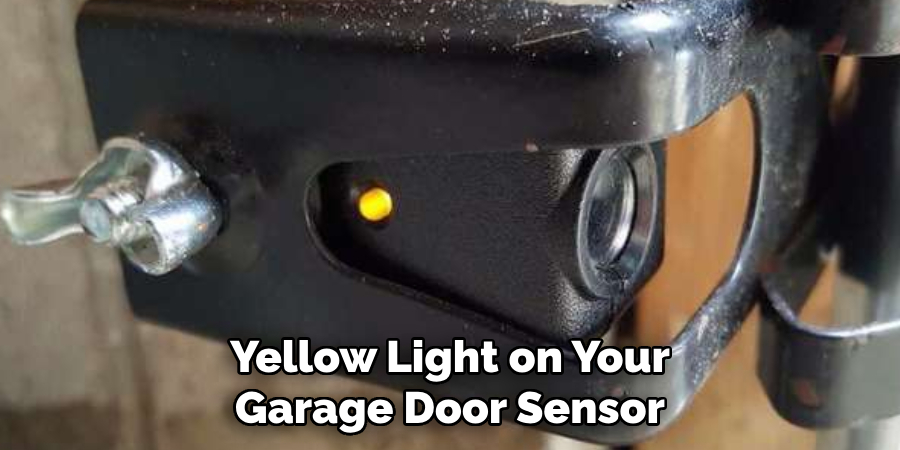
On one side, you typically have the yellow (or amber) sensor. This little beacon of sunshine is the transmitter. It's the active one, the go-getter, the one doing all the heavy lifting. Its job is to constantly send out an invisible infrared beam across the garage door opening. Think of it as the tireless broadcaster, perpetually shouting, "Beam! Beam!"
Why yellow, you ask? Because it's *working*! It's radiating, sending, doing its thing! It's not a warning light; it's a "I'm on duty!" light. Imagine a tiny construction worker in a safety vest, but instead of directing traffic, it's shooting invisible light. The yellow is like a little badge of honor, saying, "Yup, still firing photons across this gap like it's my job!"
And on the other side? That's where you'll find its quieter, calmer sibling: the green sensor. This is the receiver. Its job is much simpler, but equally crucial: it just has to *see* the beam sent by its yellow counterpart. It's the diligent listener, waiting for that invisible handshake of light.
The green light on the receiver typically means, "All clear! I'm seeing the beam, nothing's blocking our way!" It's like a peaceful green light at an intersection – go ahead, the path is clear. If that green light goes out, or starts blinking frantically, that's when you know you've got a problem. That's when the drama begins!
When Yellow is Good, and Green is The Boss
So, the next time you glance at your garage door sensors and see that glorious yellow glow, don't fret. Don't think your garage is about to spontaneously combust or that a rogue banana peel has achieved sentience and is sending distress signals. That yellow light is a sign of a healthy, active transmitter doing exactly what it's supposed to do.
It's like a car's engine running. You want to see the "on" light, right? The yellow sensor is flexing its optical muscles, constantly ensuring that invisible barrier is maintained. It's silently screaming, "Don't you dare close the door if anything is in my way!"
Now, if your green sensor is flashing like it's trying to win a disco dance-off, or worse, completely dark, that's your cue to investigate. A blinking green light usually means the receiver isn't seeing the beam. Maybe something's in the way (a rogue leaf, a misplaced broom, a bold spiderweb), or perhaps the sensors are slightly misaligned, doing a tragic rendition of "never the twain shall meet." A quick clean of the lenses or a gentle nudge to realign them often solves the mystery.
A Little Historical Tidbit (Because Why Not?)
Before these clever photoelectric eyes became standard, garage doors relied on other safety mechanisms, like pressure-sensitive edges. They'd hit something and then reverse. But those weren't always as quick or reliable. The photoelectric sensors, mandated in the U.S. for all automatic garage door openers manufactured after January 1, 1993, were a game-changer, significantly enhancing safety. So, next time you see those lights, give a silent nod of thanks to the engineers who made sure your garage door knows better than to pick a fight with your toddler's tricycle.
The Takeaway: Embrace the Yellow!
So there you have it. The secret life of your garage door sensors, revealed! The yellow light isn't a symptom of illness; it's a badge of diligent service. It’s your garage door's way of saying, "I'm here, I'm working, and I'm keeping things safe!"
Next time you're sipping your coffee, gazing out at your garage, and you spot that cheerful yellow glow, remember: it’s not an error. It’s a feature. It’s a silent guardian, a watchful protector, an ever-beaming sentinel. Perhaps, just perhaps, it's even a little proud of its bright, yellow personality. Now you can go back to worrying about why your Wi-Fi keeps dropping, a far more worthy mystery, wouldn't you agree?