
Biological Molecules You Are What You Eat Worksheet Answer Key

Okay, let's talk about something that might sound a little dry at first glance: the "Biological Molecules You Are What You Eat Worksheet Answer Key." Stick with me, though! Because honestly, understanding this stuff is like unlocking a secret superpower. Seriously!
Think about it. You're chowing down on your favorite snacks, building muscle at the gym, or even just thinking a coherent thought. All of that amazing stuff? It's powered by… wait for it… biological molecules! And where do these molecules come from? Yup, you guessed it – the food you eat!
The Fantastic Four: Our Molecular Building Blocks
Now, we're not going to dive into super dense chemistry here. But knowing the basics of the four major types of biological molecules – carbohydrates, lipids (fats), proteins, and nucleic acids – is like having a cheat sheet to life. It's the ultimate user manual for your body!
Must Read
Let's break it down, shall we?
Carbohydrates: These are your body's primary energy source. Think of them as the fuel that keeps you going. From the simple sugars in fruit to the complex starches in pasta and bread, carbs are your go-to for a quick energy boost. Ever wondered why you crave carbs when you're feeling tired? Now you know!

Lipids (Fats): Don't be scared of fats! They're not the enemy. Healthy fats are essential for everything from hormone production to cell structure. They also store energy for the long haul and help you absorb certain vitamins. Think avocados, nuts, and olive oil. (But maybe go easy on the deep-fried stuff. Just sayin’.)
Proteins: These are the workhorses of your cells. They do everything. They build and repair tissues, make enzymes (which speed up chemical reactions), and transport molecules around your body. Lean meats, beans, eggs – load up on protein to keep your body humming!
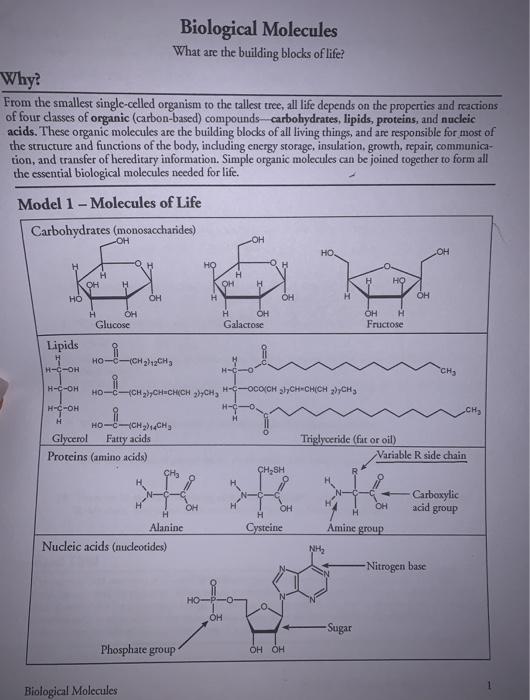
Nucleic Acids: Now we're talking about the big guns! These are your DNA and RNA, the blueprints for everything you are. They store and transmit genetic information, ensuring that your cells know what to do and when to do it. Pretty mind-blowing, right?
Why Bother with the Worksheet Answer Key?
Okay, so where does that worksheet answer key come in? Well, understanding how these molecules are put together, how they break down, and what they do in your body is fascinating. The answer key isn’t just about memorizing facts; it's about grasping the big picture of how food fuels your life.
Imagine being able to look at a nutrition label and instantly understand what those numbers mean for your body. That's empowerment, my friend! You can make more informed choices about what you eat, optimize your energy levels, and even improve your mood. Seriously, what you eat has a huge impact on how you feel!

Let's face it: nutrition information can be overwhelming. But armed with a basic understanding of biological molecules, you can cut through the noise and focus on what really matters. You'll be able to spot fad diets from a mile away and make choices that support your long-term health and well-being. Plus, you'll be the smartest person at the dinner table. (Okay, maybe don't brag too much.)
Unlocking Your Inner Bio-Wizard
So, next time you see a "Biological Molecules You Are What You Eat Worksheet," don't run away screaming! Embrace the challenge! Understanding this stuff isn't just about getting a good grade (although that's nice too!). It's about gaining a deeper appreciation for the incredible machine that is your body.
The beauty of biology is that it's constantly evolving. There's always something new to learn, something new to discover. And the more you understand about the science behind your food, the more you can take control of your health and live your best life.
Think of the "Biological Molecules You Are What You Eat Worksheet Answer Key" as your starting point. It's a key that unlocks a world of knowledge, a world of potential, a world where you're empowered to make smarter, healthier choices. So go forth, explore, and discover the amazing power of biological molecules! You might just be surprised at what you find.
Ready to dive deeper? There are tons of great resources online, in libraries, and even through free online courses. Don't be afraid to ask questions, experiment with new recipes, and explore the wonderful world of food science. Who knows, you might just become a bio-wizard in the making!