Battery For Remote Garage Door Opener
Okay, deep breaths everyone. We're about to dive into a topic so mundane, so everyday, you probably haven't given it a second thought. But trust me, by the end of this, you'll have a newfound respect, maybe even admiration, for this tiny titan: the battery in your remote garage door opener.
Yes, that little button-pusher, keyring ornament, pocket dweller. It holds a secret power, a hidden energy source that, frankly, runs a small but significant part of your modern life. Think about it: that tiny piece of plastic in your hand is the key to your kingdom. Or, at least, your garage.
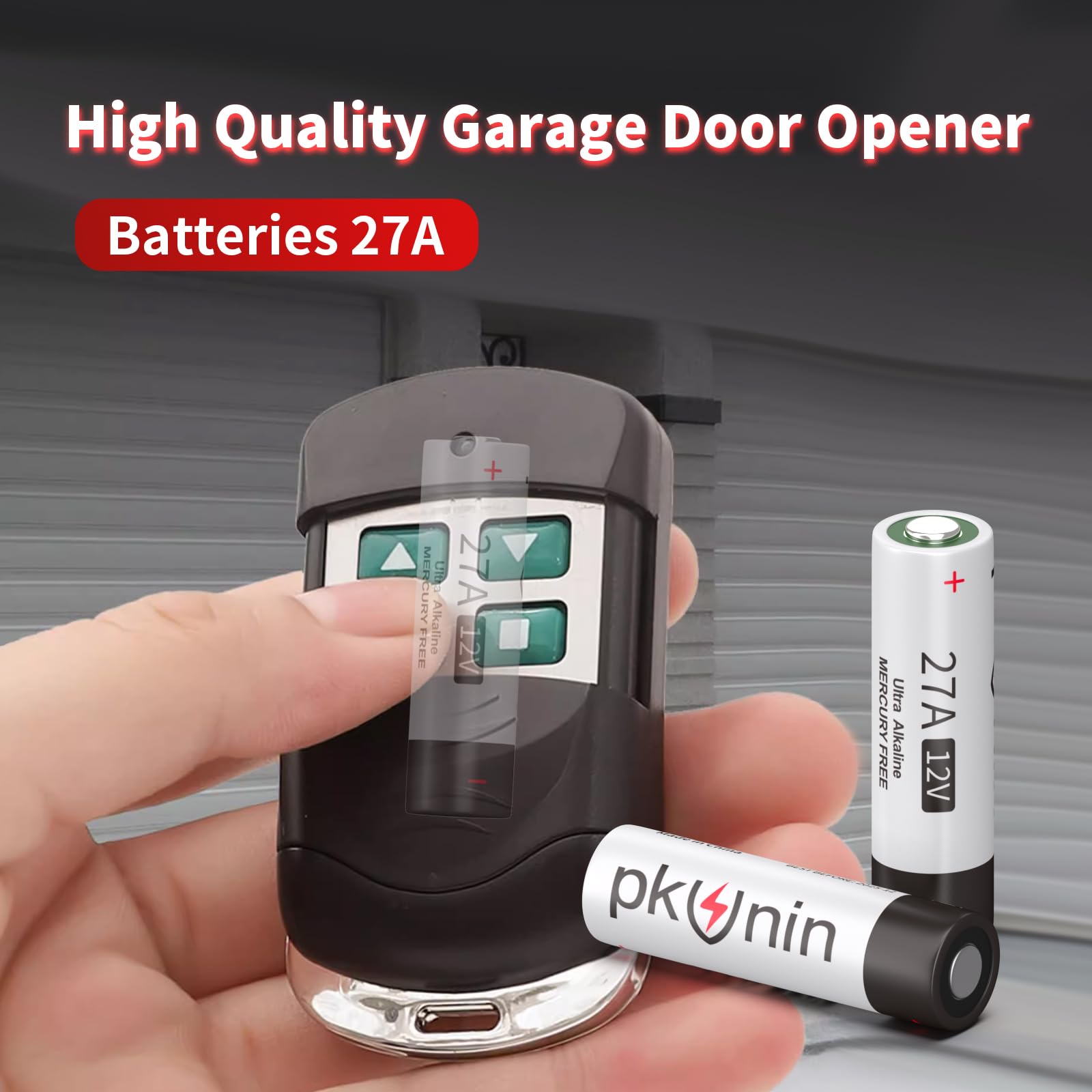
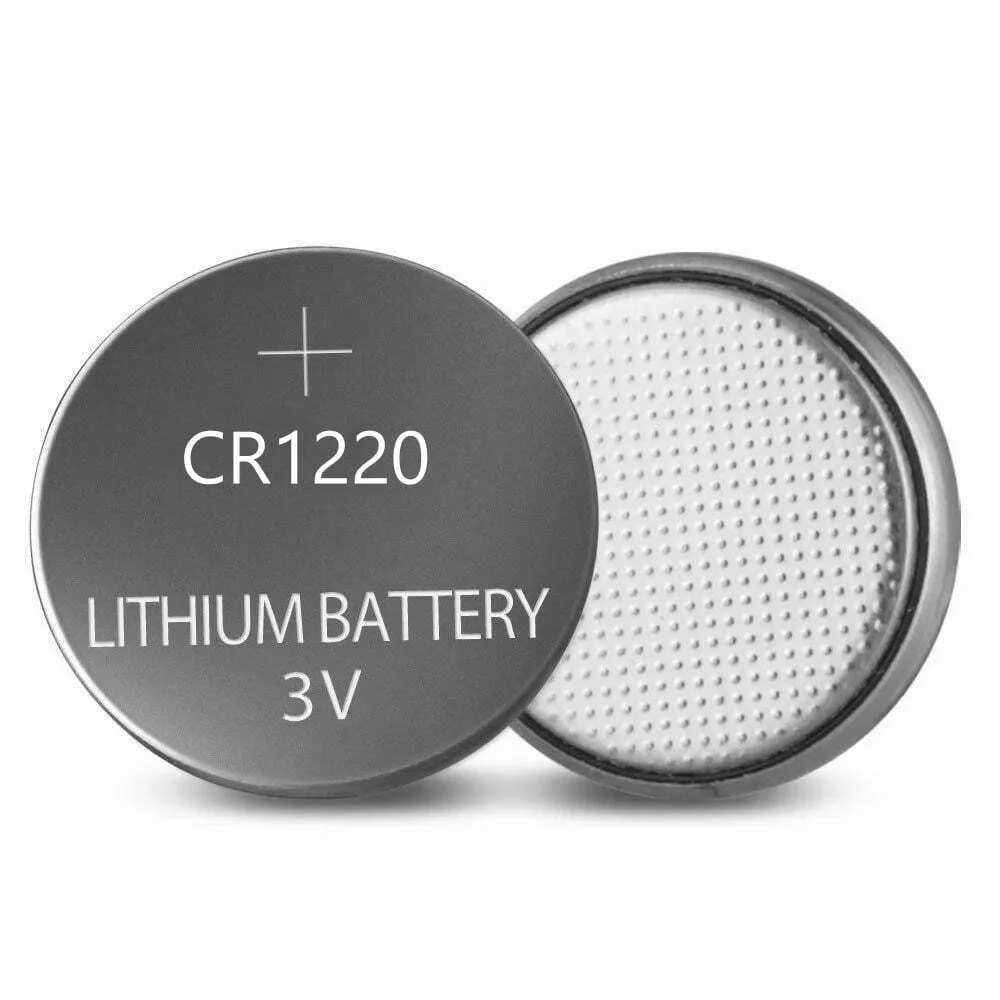
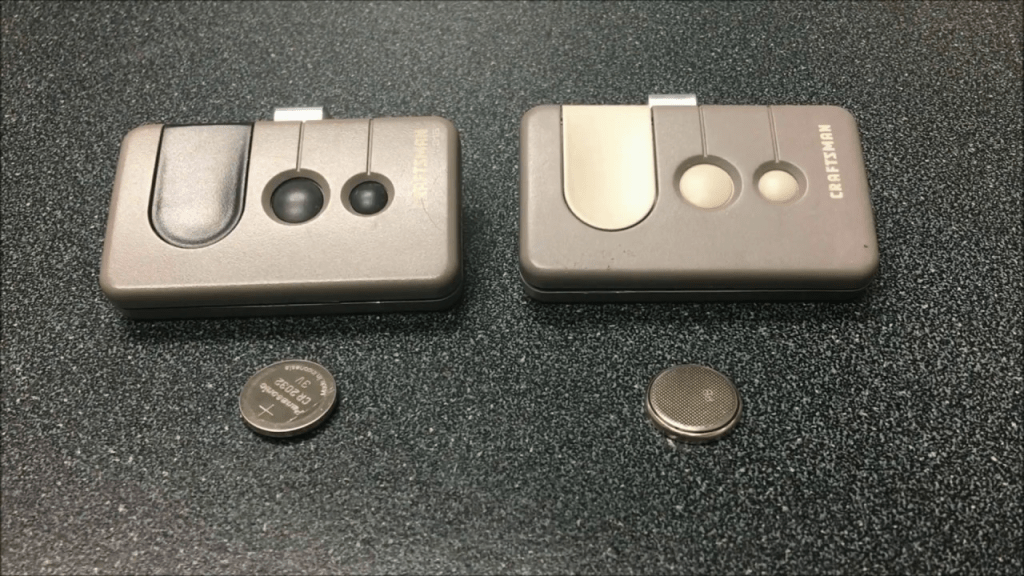
Have you ever actually looked at the battery inside? It’s rarely your standard AA or AAA. Oh no. That would be too... basic. We're often talking about the A23 battery, or maybe its slightly thinner sibling, the A27. And sometimes, for the sleeker remotes, a flat CR2032 coin cell. But the A23? That’s the real MVP for many of us.
Must Read
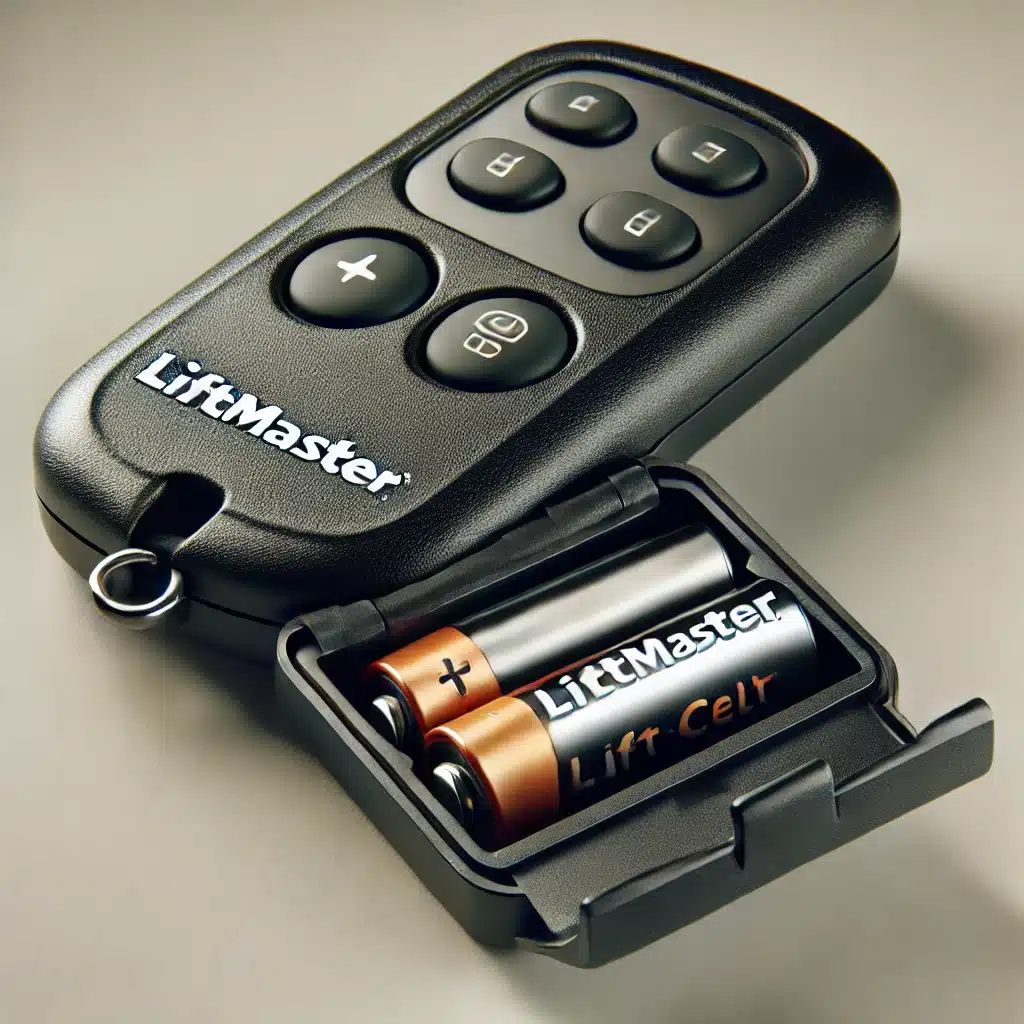
Here’s a quirky fact for you: an A23 isn't just one battery. It's actually eight smaller 1.5-volt button cells stacked inside that metal casing! That’s right, you’re basically carrying a miniature battery skyscraper around with you, delivering a respectable 12 volts of power. All this just to send a tiny radio signal across a few feet. It's like using a rocket engine to light a match. Overkill? Maybe. Awesome? Absolutely.
This little powerhouse performs a daily miracle. You pull into your driveway, hit a button, and poof! Your garage door glides open as if by magic. You barely register the physics, the radio frequency, the tiny motor whirring into action. It’s seamless. It's expected. It's convenience incarnate.
The Dreaded "Uh Oh" Moment
But then, the inevitable happens. You pull up, you press the button, and... nothing. You press it again, a little harder this time, as if more finger pressure will somehow coax extra juice from a dying cell. Still nothing. A flicker of panic sets in. You press it repeatedly, frantically, like you’re trying to revive a flatlining patient. You might even shake the remote vigorously, hoping to "rearrange" the electrons into working order. We’ve all been there, right?
That moment when you have to get out of your car, walk to the keypad (if you even have one!), and punch in the code. Or worse, dig out the emergency key and manually unlock the door. In the rain? With groceries? It’s a walk of shame, a momentary regression to a less technologically advanced era. And it all boils down to that tiny, forgotten battery.
The signs of a dying battery are subtle at first. Your remote range starts to shrink. You have to be practically nose-to-door before it responds. Then, it demands multiple presses, like a grumpy teenager. Finally, it gives up the ghost entirely, leaving you stranded. It’s a slow, agonizing demise, but often, we ignore the warning signs until it's too late. We live on the edge, pushing our luck.

The Quest for Replacement
So, you need a new one. But where do you find these peculiar little energy capsules? They aren't in every drawer like AAAs. You might have to make a special trip to the hardware store, or gasp, actually order them online. The suspense! The anticipation! And when you finally pop open that tiny compartment, slide in the fresh battery, and hit the button... the sheer joy! The door springs to life with newfound vigor, opening instantly from what feels like a mile away. It's a small victory, but it feels monumental.
Think about the sheer number of times you press that button over the lifetime of one of these batteries. Hundreds? Thousands? It's a workhorse! And for a few bucks, it grants you unfettered access to your abode. That's a pretty good return on investment, if you ask me.
These batteries are designed for longevity, providing a consistent, albeit low, current for extended periods. They might not power a flashlight for long, but for sending those quick bursts of radio signals, they’re perfect. It's a testament to minimalist efficiency. A single press, a short burst of energy, and your heavy garage door bows to your will.
More Fun Facts!
The radio signals these remotes send are often encrypted, or at least use rolling codes. This means the code it sends changes every time you use it. So, even if someone sniffs out one signal, it won't work the next time. Sneaky, clever batteries! They’re not just powering a signal; they’re powering a mini-security system too.
So, the next time you effortlessly open your garage door, take a moment. Appreciate the humble battery. The A23, the A27, the CR2032. Whatever its designation, it's quietly working, waiting, ready to respond to your command. It's the silent guardian, the unsung hero, the tiny but mighty core of convenience in your daily drive. Give it a little mental fist bump. It deserves it.