
Average Utilities Cost For Apartment
Alright, settle in, grab your imaginary latte, because we need to talk about something that haunts every renter's dreams: the dreaded utility bill. You thought you'd escaped the parental "turn off the lights!" mantra, didn't you? Surprise! Now it's the electric company doing the nagging, and they're not nearly as endearing. Figuring out the average utilities cost for an apartment is less like solving a math problem and more like consulting a very temperamental crystal ball.
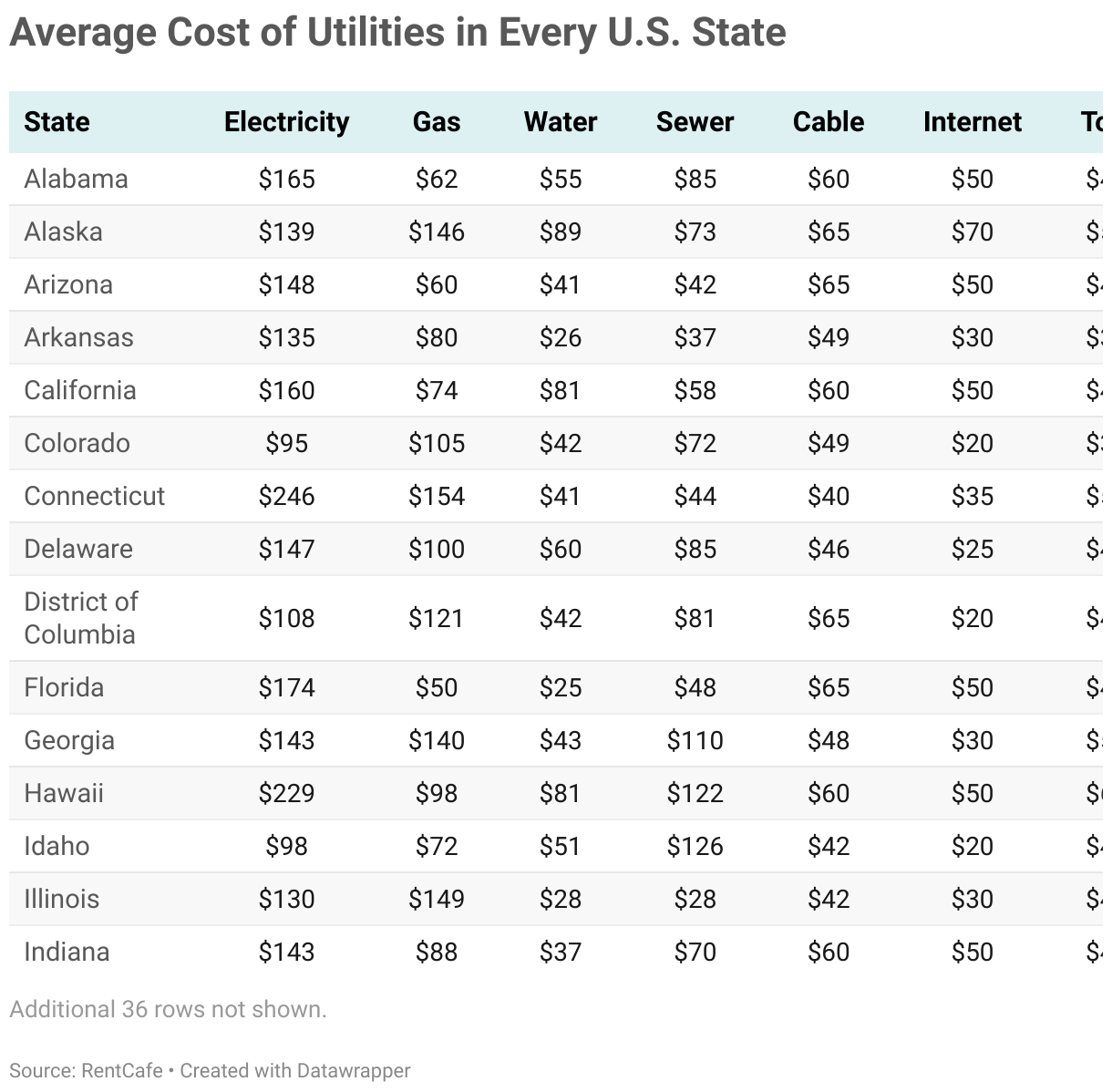
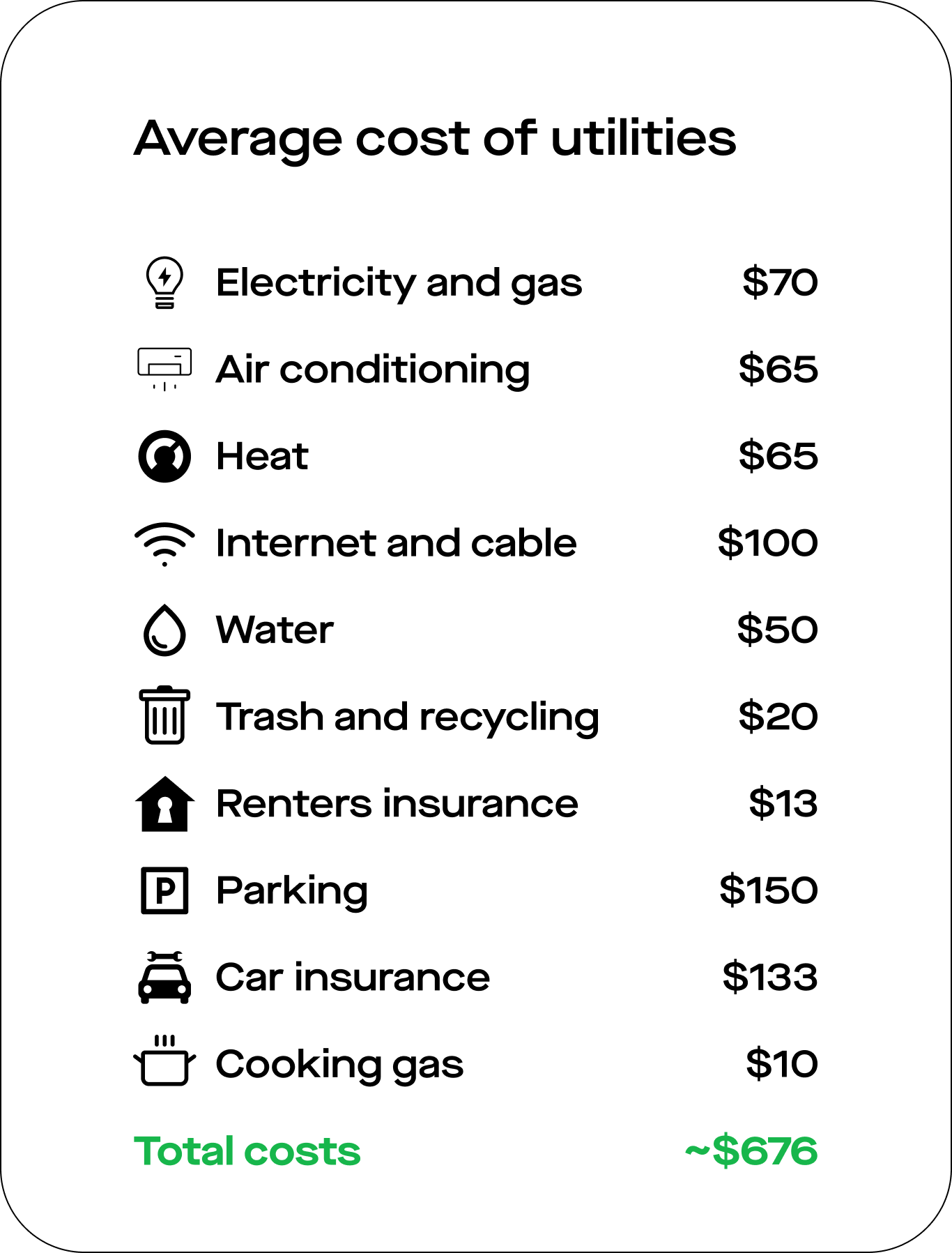
First off, let's get one thing straight: there's no single, magical number. Anyone who tells you there is is either a wizard or trying to sell you a bridge. But, for argument's sake and because you actually want some kind of answer, let's say a rough, nationwide average for a modest one-bedroom apartment often hovers somewhere between $150 and $300 a month. Yeah, that's a range wider than my emotional spectrum on a Monday morning. But don't despair! We're gonna break down what makes that number jump around like a caffeinated squirrel.
The Usual Suspects: Breaking Down Your Bills
Electricity: The Big Spender (Usually)
Ah, electricity. The lifeblood of our modern existence, and often the biggest chunk of your utility pie. This is where your love for blasting the AC in July, turning your apartment into a sauna in January, binge-watching Netflix for 12 hours straight, and forgetting to unplug your phone charger for a week all come home to roost. For a one-bedroom, you might be looking at anywhere from $50 to $150+ a month. It really depends on your climate, your insulation (or lack thereof!), and your personal tolerance for discomfort.
Must Read
Fun (and slightly alarming) Fact: Even when they're turned off, electronics plugged into an outlet can still suck up "phantom load" electricity. It's like they're ghost-eating your money! Unplugging chargers and devices you're not using can actually save you a few bucks. Who knew your toaster was secretly a vampire?
Gas: The Warm & Fuzzy Cost
If your apartment uses natural gas for heating, hot water, or cooking, this bill will usually be smaller than electricity but still mighty. Expect something in the range of $20 to $60 a month. If you live in a perpetually warm climate and only use gas for a stove burner, it might be even less. If you're in, say, Siberia, and your apartment is basically a giant gas-powered oven from October to April, well, bless your heart (and your wallet).
Water, Sewer & Trash: The "Hidden" Fees
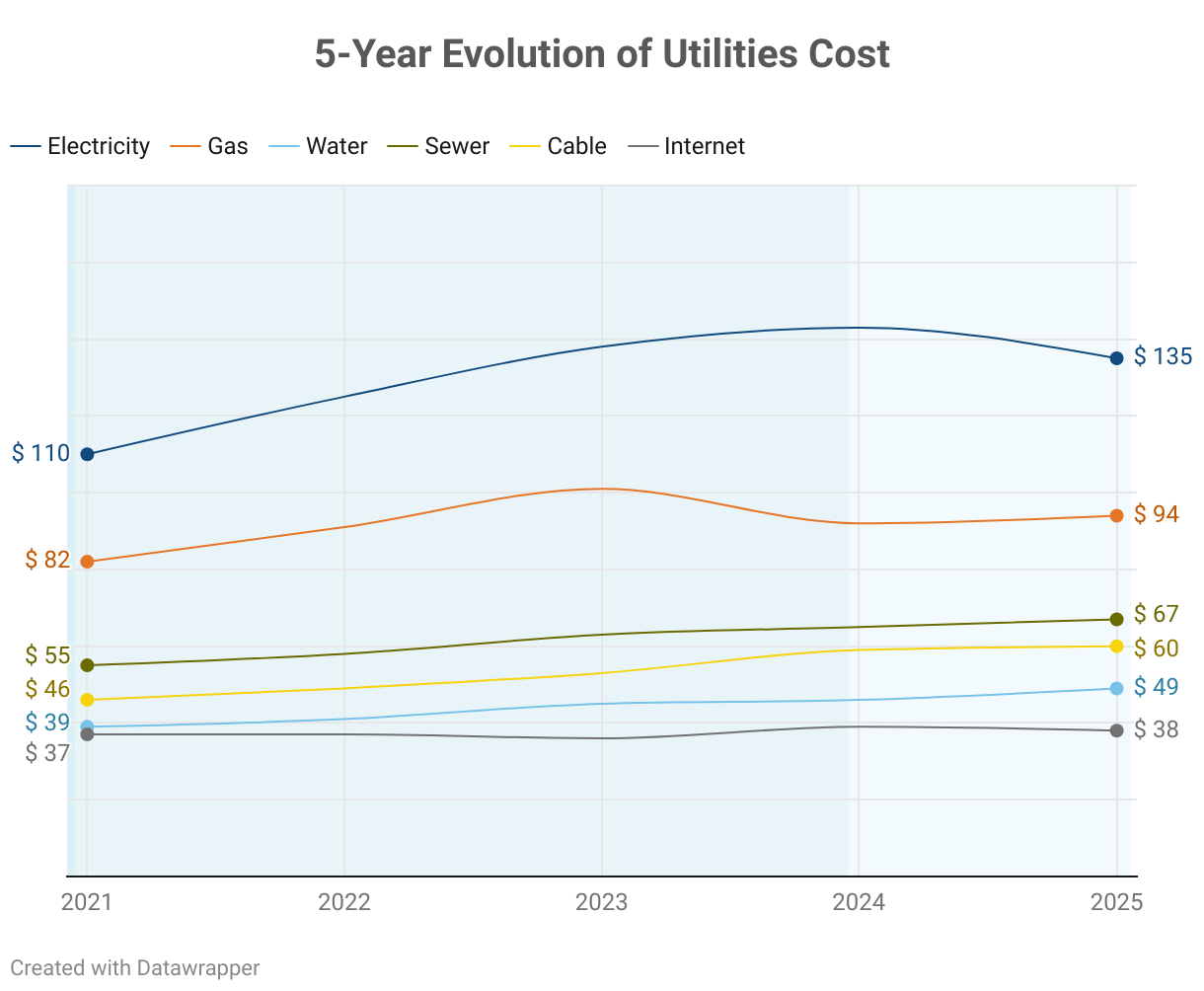
These are often bundled together and can be tricky. Sometimes your landlord covers them, sometimes they pass them directly to you, and sometimes they divide a building-wide bill amongst tenants (the least fun option, as you're paying for your neighbor's hour-long power showers). Individually, water might be $20-$50, sewer another $15-$40, and trash collection usually $10-$30. Together, they can quietly add up to a solid $50-$120+ that you didn't even notice until the bill landed.
Pro-Tip: Learn to love shorter showers. Your skin, the environment, and your bank account will thank you. Plus, it leaves more time for important things, like contemplating existential dread or scrolling TikTok.
Internet: The Non-Negotiable Necessity
Let's be real, this isn't a "utility" in the traditional sense, but in 2024, it's as essential as running water. Most people would rather give up an arm than their Wi-Fi. Internet plans usually run from $50 to $80 a month, depending on speed and provider. Don't skimp here; buffering is a special kind of torment no one deserves. Consider this your "digital oxygen" bill.
What Makes Your Utility Bill Act Like a Rebellious Teenager?
So, why such a massive range in costs? A few key players:

- Your Location, Location, Location: Living in Phoenix, Arizona? Your summer AC bill will make you weep. Living in Minnesota? Get ready for heating bills that could fund a small nation. Regional electricity and gas rates also vary wildly.
- Apartment Size & Age: A tiny studio in a brand-new, energy-efficient building will cost less to heat/cool than a sprawling, drafty, "charming" (read: old) two-bedroom with windows that leak air like a sieve.
- Your Lifestyle Choices: Are you a minimalist who barely uses electricity, or do you have enough gaming consoles and monitors to power a small data center? Do you do laundry every other day or once a month? Do you enjoy turning your apartment into a tropical rainforest or an arctic tundra? Your habits are the biggest variable here.
- Roommates: This is a double-edged sword. More people means more showers, more lights on, more devices plugged in. But it also means you're splitting those fixed costs. So, you might pay less individually but the overall bill goes up. Pick roommates who understand the concept of "lights out," or at least pay their share without complaint.
The Bottom Line: Don't Panic, Just Plan
Look, navigating utility costs is part of the glorious, terrifying adventure of adulting. While there's no precise answer, knowing these averages and understanding the factors at play can help you budget, choose a more energy-efficient apartment, or just make peace with that sweater you wear indoors. The best advice? When you're apartment hunting, always ask about average utility costs for that specific unit from previous tenants or the landlord. It might just save you from a shocking surprise later on!
Now, if you'll excuse me, I think I left my phone charger plugged in. Time to go fight some phantom load!
