Average Lifespan Of A Pitbull
Ever wondered how long your goofy, lovable Pitbull buddy will be around to shower you with slobbery kisses? It’s a question every Pitbull parent asks, and while we can't predict the future, understanding the average lifespan of a Pitbull can help you plan for their care and cherish every moment you have together. It's a popular topic because, let's face it, these dogs are family, and knowing what to expect allows us to be the best possible guardians for them.
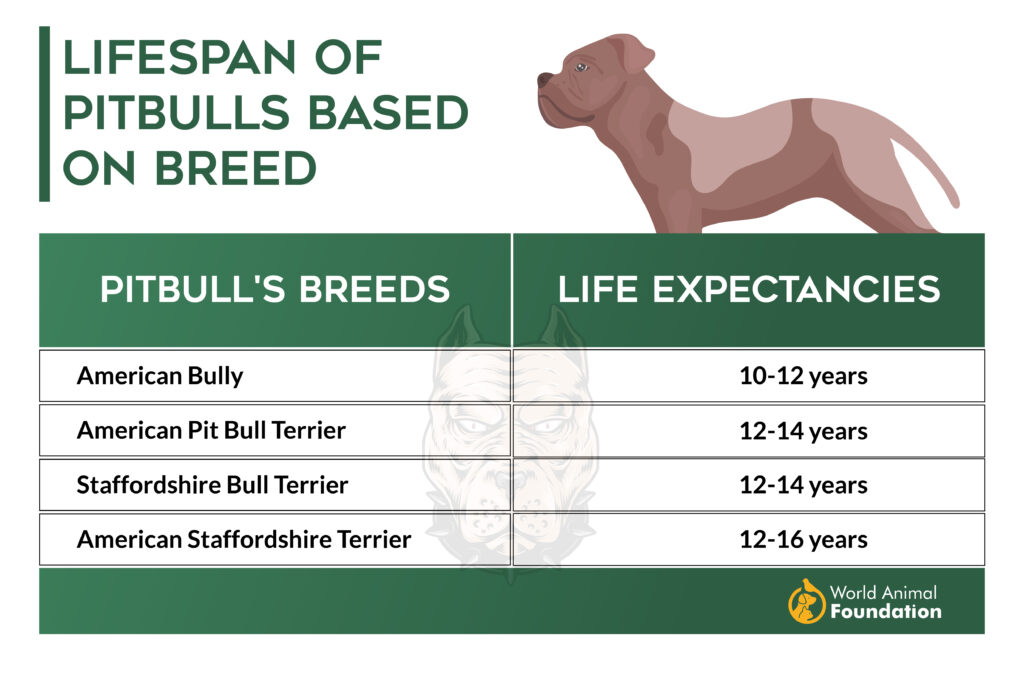
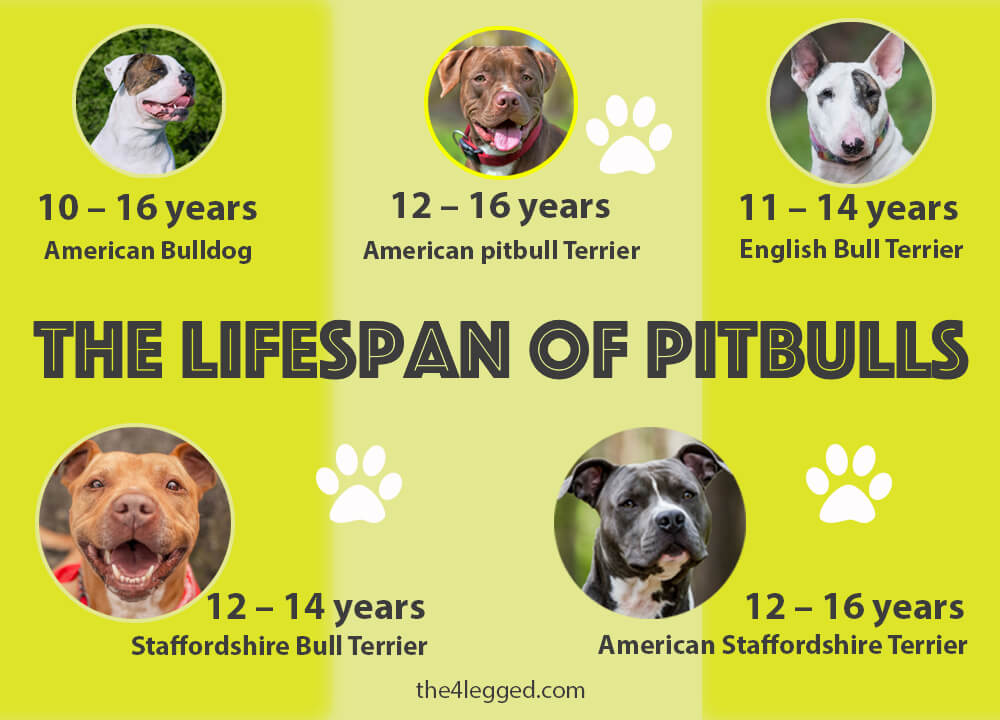
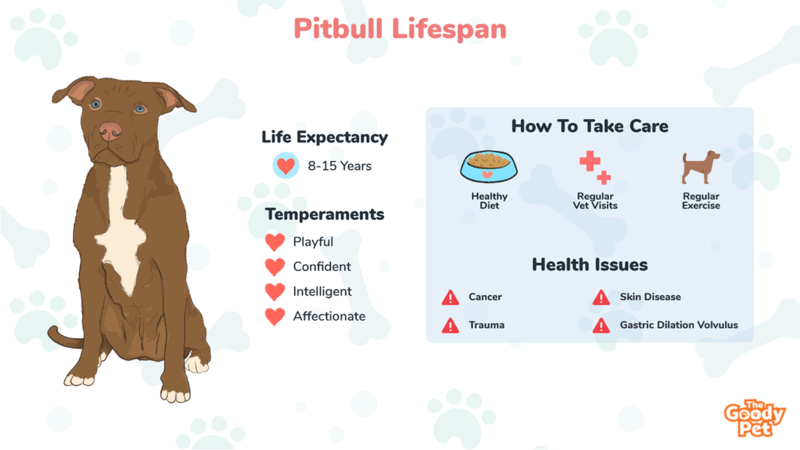
So, what’s the scoop? Generally speaking, a healthy Pitbull can live for 12 to 16 years. That's a pretty good chunk of time! But like all things, there are variations and factors that play a role. For beginners just entering the world of Pitbull ownership, this knowledge is crucial for understanding the long-term commitment involved. For families, knowing the potential lifespan helps with planning and ensuring the dog is a part of significant life events. And for hobbyists involved in breeding or dog sports, it provides valuable insight into the breed's overall health and longevity. The more knowledge you have, the better prepared you are to offer the best possible life for your Pitbull.
Now, let's talk about those factors. Genetics plays a significant role, just like with humans. A dog from a reputable breeder who prioritizes health testing is more likely to have a longer, healthier life. But genetics aren't everything! Diet and exercise are also incredibly important. A well-balanced diet appropriate for their age and activity level is key. Regular exercise keeps them physically and mentally stimulated, preventing obesity and related health problems. Finally, access to quality veterinary care makes a huge difference. Regular check-ups can catch potential problems early on, and preventative care like vaccinations and parasite control are essential for a long and happy life.
Must Read
Think of it this way: a Pitbull constantly fed table scraps and left to laze around all day is unlikely to reach the same lifespan as a Pitbull who eats high-quality dog food and enjoys daily walks or playtime. Or consider the differences between a Pitbull involved in agility training, requiring peak physical condition, and a more laid-back companion whose primary exercise is fetching in the yard. Both can live long and fulfilling lives, but their specific needs and potential health risks will differ.

So, how do you get started in ensuring your Pitbull has the best chance at a long and healthy life? Here are some simple tips:
- Choose a reputable breeder or rescue organization. Ask about the dog's history and any known health issues in their lineage.
- Feed a high-quality dog food specifically formulated for their age and activity level. Consult your veterinarian for recommendations.
- Provide regular exercise tailored to their physical abilities. Daily walks, playtime, and mental stimulation are all important.
- Schedule regular veterinary check-ups for vaccinations, parasite control, and early detection of any health problems.
- Keep them mentally stimulated. Puzzle toys, training sessions, and social interaction can prevent boredom and anxiety.
Ultimately, while the average lifespan provides a guideline, the quality of life you provide for your Pitbull is what truly matters. By prioritizing their health and well-being, you’ll not only potentially extend their lifespan but also ensure they live each day to the fullest. So, embrace the goofy smiles, the boundless energy, and the unwavering loyalty of your Pitbull. Enjoy the journey, because every moment with them is precious!