Ah, the world of TIG welding! It’s where metal turns into art, where precision reigns supreme, and where a tiny spark can create something truly beautiful. But before you can lay down those gorgeous, stacked-dime beads, there’s an invisible hero at play: argon gas.
Argon is like the bouncer at the coolest club in town, protecting your pristine weld puddle from all the bad stuff floating around in the air. Oxygen and nitrogen are the party crashers, ready to make your weld ugly and weak. Argon steps in, creating a shield that says, "Nope, not on my watch!"
The Great Argon Pressure Debate
Now, here's where things get interesting, and dare I say, a little bit silly. Everyone talks about argon pressure for TIG welding. Or rather, argon flow rate. That little dial on your regulator, usually measured in cubic feet per minute (CFM) or liters per minute (LPM), becomes a source of endless anxiety for many.
You hear it all: "You need 15 CFM for aluminum!" "No, no, it's 20 CFM for stainless, always!" "My buddy swears by 18.73 CFM – don't ask me why the .73!" It’s like everyone has a secret handshake and a magic number, and if you don't know it, your welds are doomed.
But what if I told you… it's really not that complicated? And maybe, just maybe, many people are actually using too much argon?
Yes, I said it! An almost unpopular opinion in the welding world, but one I'm sticking to. Let’s playfully explore why you might be blowing your precious gas (and money) away.
Think of a Gentle Breeze, Not a Hurricane
Imagine you're trying to keep a tiny, delicate flame from flickering in a gentle breeze. You wouldn't blast it with a leaf blower, would you? Of course not! That hurricane of air would just extinguish the flame and scatter everything.
Your argon shield is similar. Its job is to gently blanket the weld zone. A nice, smooth, laminar flow. Think of it like a perfectly still, clear bubble around your molten metal. It’s calm, protective, and effective.
When you crank up that flow rate to a ridiculously high number, what happens? You don't get a stronger, more protective shield. Instead, you create turbulence. It’s like a tiny, invisible vortex right where you need peace and quiet.
This turbulence can actually pull in ambient air from outside the shield! It’s counter-intuitive, right? You're trying to push contaminants away, but too much force starts to suck them right back into the party. And just like those unwelcome party crashers, they ruin everything.
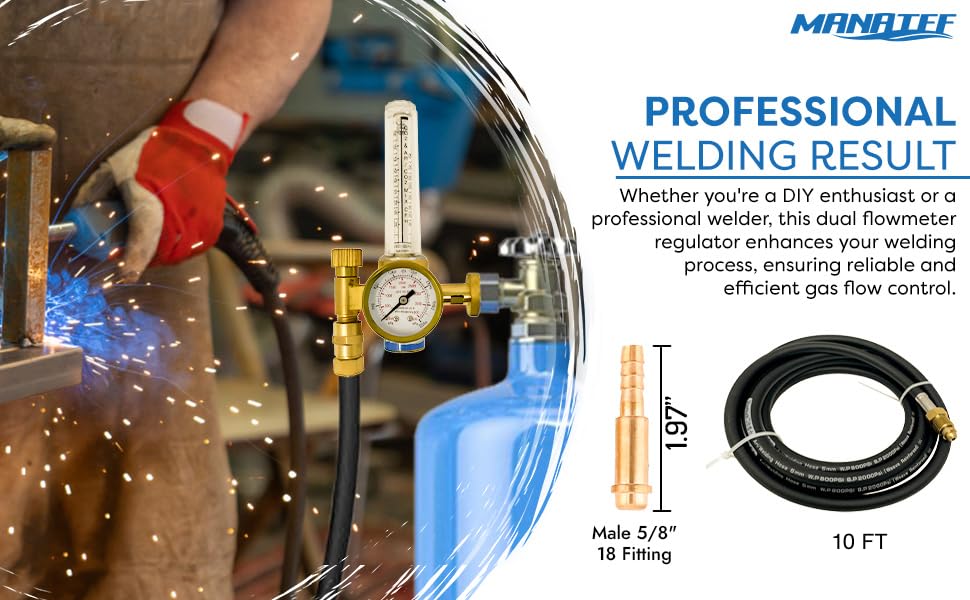
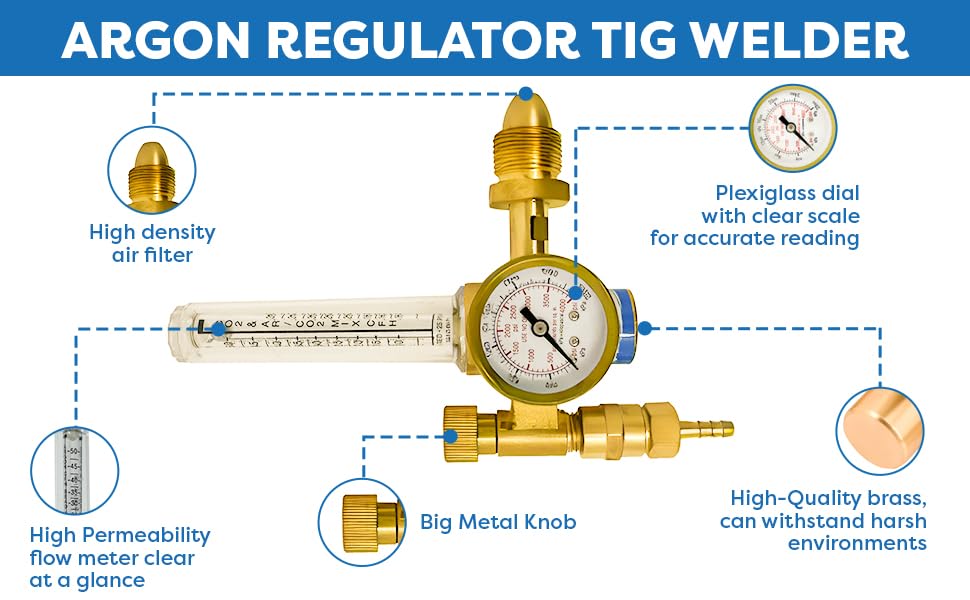
Buy Argon Regulator With Flowmeter TIG Welder MIG Welding CO2 Regulator
The Goldilocks Zone: Not Too Little, Not Too Much
Now, don’t get me wrong. Too little argon is definitely bad news. If your flow rate is too low, you'll see ugly, porous welds, lots of black soot, and a phenomenon welders affectionately call "sugaring" on the back of stainless steel. Your metal will look like it went through a bad day at the spa. That's a clear sign your invisible bouncer isn't doing his job.
But the sweet spot? It's often lower than you think. For most hobbyist and light industrial TIG welding, especially on steel and stainless, a flow rate somewhere between 10-20 CFM is usually perfectly adequate. For aluminum, maybe a little higher, 15-25 CFM, because it needs more heat and tends to oxidize quicker. But even then, going beyond that often brings more problems than solutions.
Think of it this way: your gas lens helps straighten out the flow, making it smoother and more efficient. So, if you're using a gas lens (and you totally should!), you can often get away with even slightly lower flow rates because the gas is being delivered more effectively.
TIG (GTAW) - What Is Welding?
Listen to Your Weld (and Your Wallet)
The best way to figure out your ideal argon flow isn't by obsessing over a number someone else told you. It's by looking at your weld! Is it clean? Is it shiny? Are you seeing any discoloration or porosity? Adjust your flow up or down until you get that beautiful, clean result.
You can often hear the difference too. Too much gas sounds like a forceful hiss, a wasted sigh of expensive air. Just enough sounds like a gentle, consistent whisper. And let's not forget your wallet! Argon isn't free. Wasting it with excessive flow rates means more trips to the gas supplier and less money for, well, more welding projects!
So, next time you're setting up your TIG rig, take a deep breath. Don't let the pressure (pun intended!) get to you. Start with a sensible flow rate, maybe on the lower end of common recommendations, and adjust from there. You might just find that your welds look better, your gas lasts longer, and you've embraced a slightly unconventional, yet perfectly sensible, approach to argon pressure for TIG welding. Happy welding, everyone!