Alexander The Great Afghanistan Quote

Okay, so picture this: I'm sipping my latte, minding my own business, when my friend bursts in, all flustered. He's like, "Dude, did you KNOW what Alexander the Great said about Afghanistan?" I'm like, "Alexander the who now, and what's Afghanistan got to do with anything?" Turns out, it's a pretty wild story, and it involves a quote that's been haunting world leaders for, oh, about 2,300 years. Buckle up, buttercups, because we're diving in!
The quote, often attributed to Alexander the Great, goes something like, “I pity the commanders who will have to maintain armies in these lands." Dramatic, right? Sounds like something out of a Shakespearean play… except with more sand and fewer doublets.
Now, the thing is, finding the exact quote, verbatim, is like searching for a decent parking spot downtown on a Saturday. It’s tough! Historians have debated the exact wording for ages. Some argue it's a paraphrase, others that it’s lost to time, mangled through translations and retellings. But the sentiment? Crystal clear. This guy, Alexander, had a feeling that Afghanistan was going to be a headache. A serious, migraine-inducing, "why did I even conquer this place?" kind of headache.
Must Read
Alexander’s Afghan Adventure: A Whirlwind Romance Gone Wrong
So, who was this Alexander fellow anyway? Only one of history's biggest badasses! We're talking a Macedonian king who, by the age of 32, had conquered pretty much the entire known world. Think Genghis Khan, but with better PR and slightly more philosophy. He carved out an empire stretching from Greece all the way to India. Afghanistan? That was on the way. Sort of like a really inconvenient layover.
He marched his army through what’s now Afghanistan around 330 BC. And let me tell you, it wasn't a pleasant stroll through a rose garden. Afghanistan is… well, it's Afghanistan. Rugged mountains, scorching deserts, and fiercely independent tribes who weren’t exactly thrilled to have a bunch of heavily armed Macedonians show up uninvited. Picture inviting your mother-in-law to stay for a week, and then she decides to redecorate your house… using only burlap sacks and rusty nails. Yeah, that's the vibe.

Alexander’s campaign in the region was a slog. He founded cities – some still exist today! – battled local warlords, and generally had a tough time establishing any real control. It was less a glorious conquest, more a prolonged wrestling match with a particularly stubborn badger.
Why That Quote Rings So True
Fast forward a few millennia, and that quote about "commanders maintaining armies" suddenly sounds a lot less like ancient history and a lot more like… well, recent history. Think about it. The British in the 19th century? The Soviets in the 20th? The Americans in the 21st? Afghanistan has earned its nickname as the "Graveyard of Empires" for a reason. It's like that one level in a video game that’s designed to be impossible to beat. You keep throwing yourself at it, hoping for a different outcome, but you just end up rage-quitting and ordering pizza.
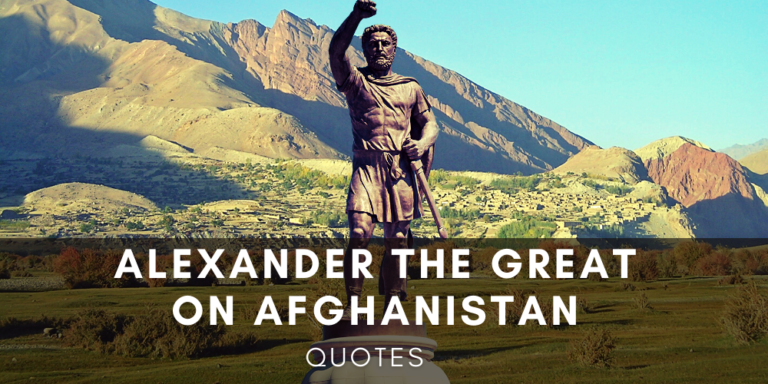
Why is it so tough? A few reasons. The terrain is brutal. It's a logistical nightmare just to get supplies in and out. And the local culture? Fiercely independent, deeply religious, and generally not keen on being told what to do by outsiders. Imagine trying to convince a room full of cats that they should all wear tiny hats… and that the hats are mandatory. Good luck with that.
Some historians dispute the importance of the terrain and local customs. "It's not the land that's difficult. It's the people", they say. Maybe, maybe not. But it's hard to argue with the historical record. From Alexander to the present day, Afghanistan has been a challenge for anyone trying to impose their will on it.
So, next time you hear someone mention Alexander the Great and Afghanistan, remember that quote. It's a reminder that some challenges are timeless, and that even the greatest conquerors can run into a buzzsaw of geographical and cultural resistance. And maybe, just maybe, it's a cautionary tale about the limits of power and the enduring strength of local resistance. Now, where's my latte refill?