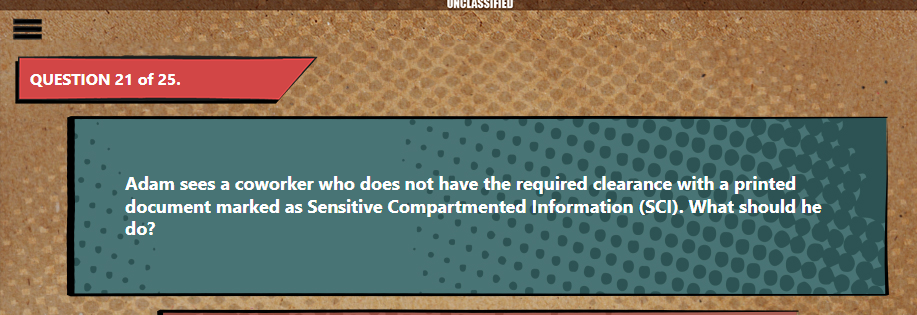
Adam Sees A Coworker Who Does Not

Have you ever been absolutely sure you recognized someone, only to have them completely fail to acknowledge you? It's a universally awkward experience, a tiny social glitch that can leave you wondering, "Did they see me? Did they just not want to say hello?" This little social mystery highlights the fascinating, and sometimes frustrating, reality that we don't all perceive the world, and each other, in the same way. Let's dive into a scenario where Adam sees a coworker who does not, exploring the potential reasons behind this common occurrence and why understanding it is more insightful than you might think.
The purpose of understanding why someone might not acknowledge you, even when you're certain they've seen you, boils down to empathy and social intelligence. It allows us to move beyond immediate assumptions of rudeness or dislike and consider other possibilities. The benefits are significant: reduced anxiety in social situations, improved communication, and a more nuanced understanding of human behavior. It's about recognizing that perception is subjective and that people are complex.
So, Adam sees a coworker across the coffee shop. He makes eye contact, offers a small wave, but gets no response. What's going on? Here are a few possibilities, going beyond the obvious "they dislike me" conclusion:
Must Read
- Focus and Concentration: The coworker might be deeply engrossed in thought, a phone call, or a project. Their attention is completely consumed, effectively filtering out external stimuli. Think of it like being in a flow state; everything else fades away.
- Vision Limitations: Perhaps the coworker has poor eyesight and didn't actually see Adam clearly. Maybe they saw someone but couldn't distinguish who it was at a distance.
- Misinterpretation of Signals: Adam might believe he made clear eye contact, but the coworker may have perceived it differently. Perhaps it was too brief, or their attention was divided. Social cues are subtle and easily misinterpreted.
- Social Anxiety or Introversion: The coworker might have seen Adam but felt overwhelmed by the prospect of an interaction. Social anxiety can lead people to avoid encounters, even with familiar faces.
- Preoccupation or Stress: Something significant might be weighing on the coworker's mind. They might be dealing with a personal issue or a work-related crisis, making them less aware of their surroundings.
In education, this concept can be used to teach students about social perception and the importance of not jumping to conclusions. Role-playing scenarios can help them understand different perspectives. In daily life, it encourages us to be more patient and understanding in our interactions. If someone doesn't acknowledge you, consider the context and potential reasons before taking it personally.

How can you explore this further? Try observing people's behavior in public places. Notice how their attention shifts and what seems to capture their focus. Engage in active listening when someone is speaking, truly focusing on what they're saying and how they're saying it. This will help you become more attuned to subtle social cues. Finally, when you're in a similar situation to Adam, take a deep breath and consider the possibilities. Instead of feeling rejected, practice empathy and remind yourself that there are often reasons beyond your immediate perception. You could even, later, casually ask the coworker if they saw you – without accusation, just out of curiosity.
Understanding that not everyone perceives the world in the same way is a key to fostering stronger relationships and navigating social interactions with grace and understanding. It's about recognizing the complexity of human experience and choosing empathy over assumption.