
Aami Standards For Storage Of Sterile Supplies

So, picture this: You're a tiny, microscopic germ, right? You're chilling in a hospital, looking for a good time (and by "good time" I mean infecting someone, naturally). Suddenly, you see it: a gleaming tray of surgical instruments! "Jackpot!" you think. But wait… something's amiss. They're not just lying around like party snacks. They're meticulously stored, following some mysterious, almost ritualistic rules. This, my friends, is the magic of AAMI standards for sterile storage.
AAMI, or the Association for the Advancement of Medical Instrumentation, is basically the superhero organization fighting against germ warfare in hospitals. They create the rules that keep those nasty little buggers away from our precious, surgically-clean supplies. Think of them as the Navy SEALs of sterilization. They're serious about keeping things clean!
Now, let's talk storage. We're not talking about just shoving sterilized stuff in a closet. Oh no, honey. This is an art form, a science, a delicate dance between cleanliness and common sense. It's more complicated than assembling IKEA furniture, and arguably more important. (Though, sometimes I wonder if assembling that bookshelf really was more risky...)
Must Read
Temperature & Humidity: Goldilocks Would Be Proud
First, the environment. Imagine a sterile supply closet as Goldilocks' dream home. It can't be too hot, it can't be too cold, it has to be just right. AAMI recommends a temperature between 64 and 75 degrees Fahrenheit (18 to 24 degrees Celsius). Why? Because temperature fluctuations can mess with the packaging and allow moisture to sneak in, creating a germy spa day. Think of it as the perfect temperature for storing your favorite chocolate...except you can't eat these supplies.
And don't even get me started on humidity! We're aiming for 30-60% relative humidity. Too much moisture? Cue the microbial dance party. Too little? Static electricity, which can attract dust and other unsavory characters. Nobody wants dust bunnies on their surgical instruments!
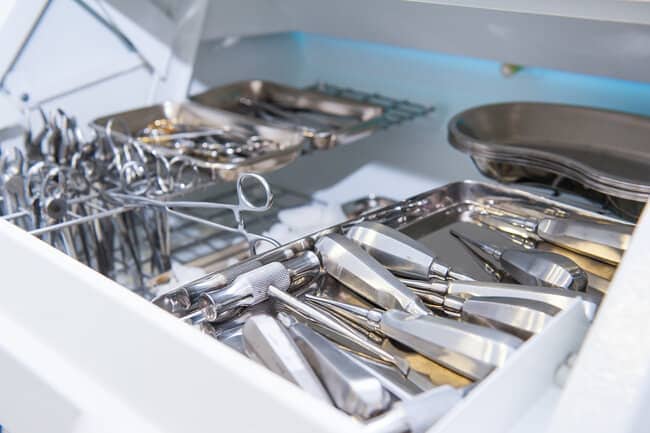
Fun Fact: Did you know that high humidity can also cause paper packaging to degrade? That's like giving germs a VIP pass straight to the instruments! No bueno.
Shelving Shenanigans: Up, Up, and Away (From the Floor!)
Next up: shelving. Are we talking about stacking things precariously like a game of Jenga? Nope. AAMI dictates that sterile supplies should be stored on shelves that are at least 8-10 inches (20-25 cm) off the floor. Why? Because the floor is basically a germ buffet. Keeping supplies elevated prevents them from catching floor grime and makes cleaning easier.

Also, keep everything at least 18 inches (46 cm) from the ceiling and 2 inches (5 cm) from exterior walls. This allows for proper air circulation and prevents condensation. Imagine your sterile supplies suffocating in a damp corner. Horrifying, right?
Pro Tip: Avoid storing sterile supplies under sprinkler heads or pipes. Leaks are the enemy! Nobody wants a surprise shower of potentially contaminated water. Trust me, the germs will thank you, but your patients won't.
Handling with Care: Treat Them Like Eggs (But Don't Drop Them!)
So, you've got the perfect temperature, humidity, and shelving situation. Now what? Well, you have to handle those sterile packages with care! We're talking about gentle handling. No throwing, kicking, or using them as stress balls (tempting as that may be after a long shift). Always check the packaging for any tears, punctures, or signs of moisture. If it's compromised, toss it! Better safe than sorry.

Think of it this way: Each sterile package is like a tiny, germ-free astronaut, protected by its spacesuit (the packaging). You wouldn't want to rip their suit, would you? (Okay, maybe you would if you're writing a sci-fi thriller, but not in a hospital!)
Expiration Dates: When "Best By" Really Means "Best Not to Use"
And finally, the dreaded expiration date. This isn't like that yogurt in your fridge that you think is still good after a week. With sterile supplies, the expiration date is a hard stop. Using expired supplies is like playing Russian roulette with infection. Don't do it!

Surprising Fact: Some facilities use a "first in, first out" (FIFO) system to ensure that supplies are used before their expiration dates. It's like a sterile supply supermarket, where the freshest items are always at the front. Clever, right?
So, there you have it. The AAMI standards for sterile storage, demystified and hopefully made a little more entertaining. Remember, these rules aren't just arbitrary guidelines. They're the invisible shield protecting patients from harm. Following them isn't just a good idea; it's essential. And who knows, maybe you'll even impress your friends at your next dinner party with your newfound knowledge of sterile supply storage. "Hey, did you know the ideal humidity for storing sterile supplies is between 30 and 60%?" Instant party hit! (Okay, maybe not, but at least you'll be informed.)
Now, if you'll excuse me, I have a sudden urge to rearrange my spice rack using FIFO principles...