
A Competitive Market Is One In Which

Alright, gather 'round, folks! Let’s talk about competitive markets. Now, I know what you’re thinking: "Economics? Sounds about as exciting as watching paint dry." But trust me, I'm going to make this so entertaining, you’ll forget you're actually learning something.
Imagine you're at a bake sale. A real bake sale. Not one of those sad, lonely affairs with a single box of stale cookies. I'm talking a bake sale where every grandma in a five-mile radius has brought their A-game.
That, my friends, is where the fun begins. Because, fundamentally, that’s kinda what a competitive market is like!
Must Read
So, What Exactly IS a Competitive Market?
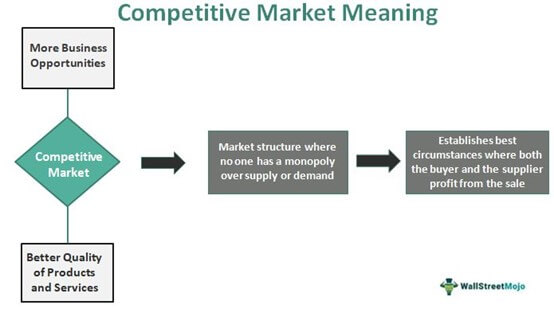
Okay, fine, let’s get technical-ish for a sec. A competitive market is basically a situation where a whole bunch of businesses are selling the same or similar products or services. Think about it: cupcake shops. Coffee stands. Auto repair shops. Plumbers (bless their hardworking souls!). The more businesses offering the same thing, the more competitive the market becomes.
The key thing? No single business has enough power to single-handedly set the price. It's like trying to convince everyone that your slightly burnt cookies are worth $50 each. Good luck with that!
Think of it like this: if only one person was selling water in the desert, they could charge whatever they wanted. But if suddenly ten more people show up with bottles of H2O, you bet that price is going to plummet faster than a politician’s approval rating after a scandal!
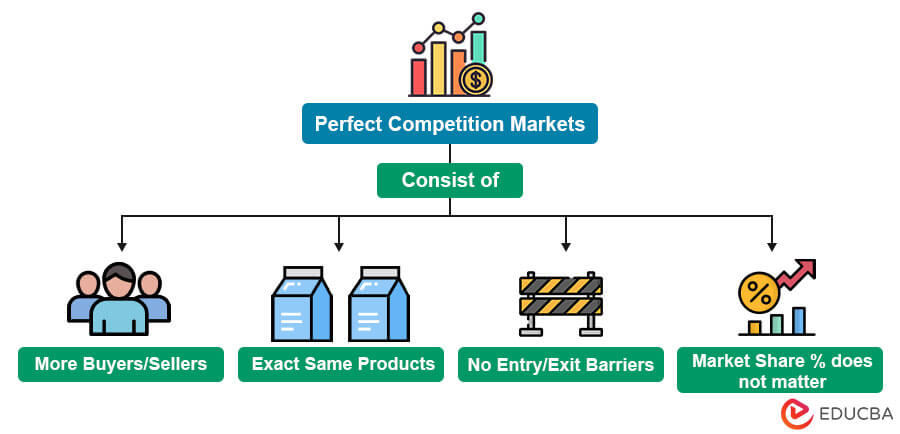
The Four (and a Half!) Commandments of Competition
For a market to truly be competitive, it usually needs a few things going for it. I call them the "Four (and a Half!) Commandments of Competition." (The half commandment is more of a guideline, really.)
Commandment #1: Many Buyers and Sellers. Think that bake sale we talked about earlier. If you only had one buyer and one seller, that's a negotiation, not a market! You need lots of people wanting stuff, and lots of people offering stuff.
Commandment #2: Homogeneous Products (Mostly). Okay, this doesn't mean everything has to be exactly identical. Your cookies don't need to be perfect clones! But the closer the products are, the more competition there is. We’re talking similar enough that people might realistically choose between them based on price or some minor differences. Think about it: Would you compare a cookie to, say, a motorcycle? Probably not. (Unless it's a really good cookie.)
Commandment #3: Free Entry and Exit. This is super important. Anyone should be able to start selling cookies (or, you know, providing whatever service), and anyone should be able to stop without facing crazy barriers. Imagine having to fill out 500 pages of paperwork just to sell a single cupcake. Nobody's got time for that! It’s like trying to quit a gym membership – deceptively hard!
Commandment #4: Perfect Information. This one’s a bit of a unicorn, but ideally, everyone knows everything. Buyers know all the prices and qualities, and sellers know what everyone else is up to. In reality, this rarely happens perfectly, but the closer you get, the better.
The Half-Commandment: No Collusion. No secret deals between sellers to fix prices. No backroom agreements to divide up the market. That's a big no-no! It's like all the grandmas getting together and deciding to charge $10 per cookie, even the ones that are clearly burnt. Seriously uncool, and often illegal.
Why is Competition a Good Thing?
So, why do economists (and hopefully you now!) love competitive markets? Because they’re awesome for consumers, that's why! And when consumers are happy, economies tend to be happier, too!
Lower Prices: When everyone's fighting for your business, they have to offer you the best deal. Cheaper cookies? Yes, please!
Higher Quality: Competition forces businesses to up their game. If your cookies are mediocre, someone else will bake better ones. It's survival of the tastiest!

More Choices: A competitive market means more variety. Chocolate chip, oatmeal raisin, peanut butter... the possibilities are endless! Your taste buds will thank you.
In Conclusion: Bake Sales, Economics, and World Peace (Maybe)
So there you have it. A competitive market: lots of buyers, lots of sellers, similar products, easy entry and exit, good information, and no sneaky collusion. It's the economic equivalent of a well-run bake sale, and it's good for everyone involved (except maybe the dentists).
Now, if you'll excuse me, I'm suddenly craving a cookie. And maybe a job as a bake sale economist. It seems like a pretty sweet gig (pun intended!).