304 Stainless Steel Ultimate Tensile Strength
Ever wonder what makes that shiny kitchen sink so... un-sinkable? Or why your favorite reusable water bottle can survive a tumble down a hiking trail? Chances are, 304 stainless steel is playing a starring role, and its ultimate tensile strength (UTS) is the unsung hero of the story. Forget boring textbooks; understanding UTS is like unlocking a secret code to knowing just how tough and reliable everyday things are!
So, what exactly is this "ultimate tensile strength" we're raving about? Simply put, it's the maximum stress a material can withstand while being stretched or pulled before it starts to permanently deform or, even worse, break. Think of it like this: imagine you're stretching a rubber band. At first, it bounces back to its original shape. But if you stretch it too far, it either stays stretched out or snaps completely. The UTS is that point right before the snap.
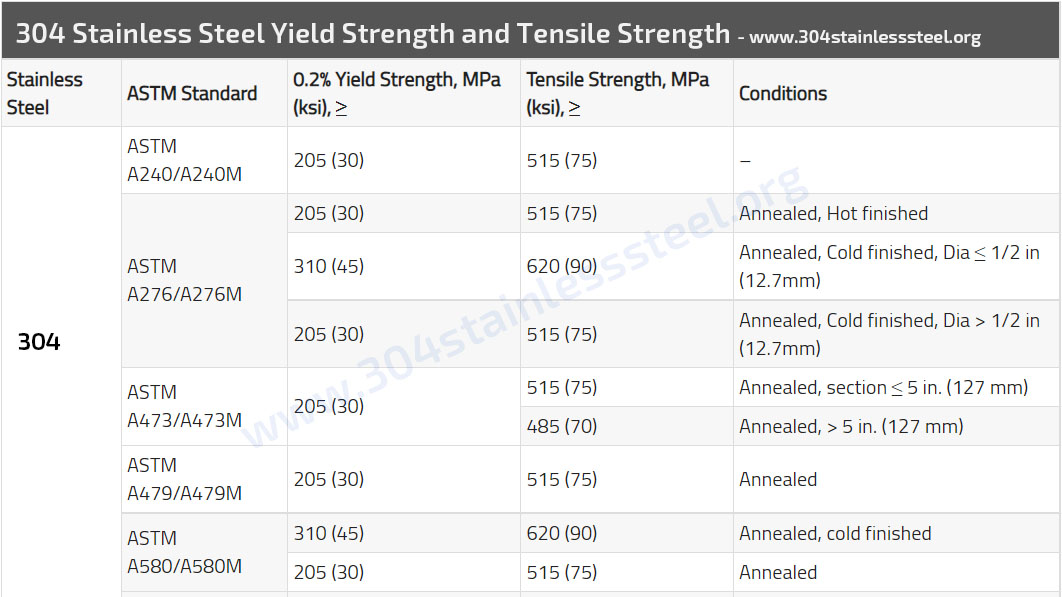
Now, let's bring it back to 304 stainless steel. This grade is incredibly popular because of its excellent corrosion resistance, formability, and, of course, its respectable UTS. For 304 stainless steel, the UTS typically falls in the range of 515 to 620 MPa (Megapascals), or around 75,000 to 90,000 psi (pounds per square inch). This means it can withstand a tremendous amount of pulling force before giving way.
Must Read
Why is this important? Well, understanding the UTS of 304 stainless steel is crucial for engineers and designers. It allows them to select the right material for the job and ensure structures and products are safe and durable. Imagine building a bridge; you absolutely need to know how much stress the steel can handle! Similarly, knowing the UTS helps determine the appropriate thickness of stainless steel sheets used in manufacturing appliances or even surgical instruments.

The benefits of a high UTS extend far beyond just structural integrity. A higher UTS often translates to a longer lifespan for the product. It means the material is less likely to deform under stress, which in turn reduces the risk of failure due to fatigue or wear and tear. This is why 304 stainless steel is a go-to choice for applications where reliability and longevity are paramount.
In essence, the ultimate tensile strength of 304 stainless steel is more than just a technical specification. It's a testament to the material's robustness and dependability. It's the reason why your stainless steel appliances can handle the daily grind, and why critical infrastructure can withstand the forces of nature. So, the next time you admire the gleam of your stainless steel fridge, remember the unseen strength hidden within – the UTS, working tirelessly to keep things strong and reliable!