
2 Digit By 1 Digit Subtraction With Regrouping

Okay, let's talk about something we all know and maybe, just maybe, secretly dread: 2-digit by 1-digit subtraction with regrouping. Sounds fancy, right? But trust me, it's not as scary as that time you accidentally wore mismatched socks to a job interview (we've all been there!).
Think of it like this: you're at the bakery, craving cookies. You have 32 cents, and each cookie costs 5 cents. The burning question: how many cents will you have left after you treat yourself? That, my friend, is where regrouping (also known as "borrowing," "trading," or my personal favorite, "robbing Peter to pay Paul") comes in.
Why Regrouping Isn't Just Math Class Nonsense
Seriously, where else do you see this stuff in real life? Everywhere! Imagine you're organizing your prized comic book collection. You have 41 comics, and your little cousin, notorious for his sticky fingers, "borrows" 8 (without asking, naturally). To figure out how many you have left, you're basically doing 2-digit by 1-digit subtraction with regrouping! See? You're a math whiz and didn't even know it.
Must Read
It’s like when you’re trying to split a pizza with your friends. You have 23 slices, and 5 ravenous buddies are eyeing them. Can you give each of them a slice? This is subtraction, baby!
The Nitty-Gritty (But Still Fun!)
Let’s break down the process, nice and easy. Let's say we're solving 42 - 7.
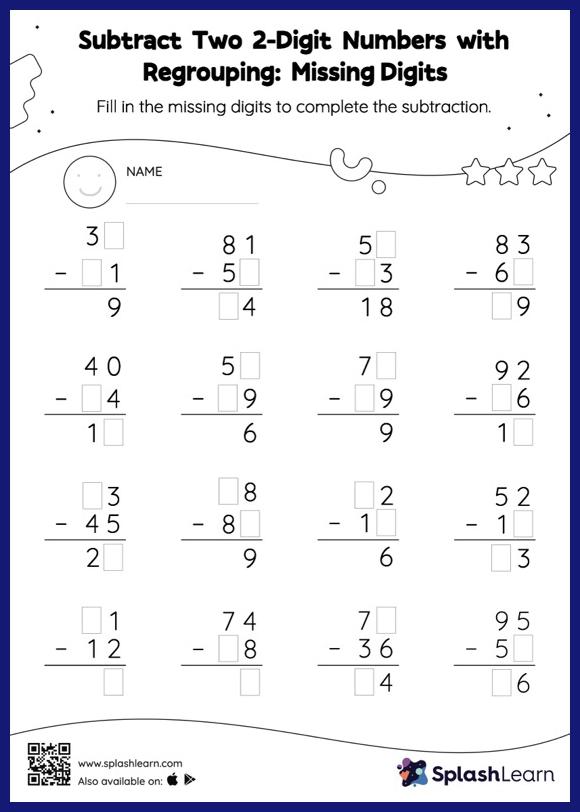
- First, line up the numbers like good little soldiers:
42 - 7 ---- - Now, look at the right-hand side, the "ones" column. Can we subtract 7 from 2? Nope! 2 is too small. This is where the magic happens.
- We need to regroup. We "borrow" 10 from the "tens" column. So, the 4 in the tens column becomes a 3, and the 2 in the ones column becomes a 12 (because we added that borrowed 10).
- Rewrite the problem:
3 12 - 7 ---- - Now we can subtract! 12 - 7 = 5. And 3 (from the tens column) minus nothing is still 3.
- So, 42 - 7 = 35! You did it! Go you!
Think of it like having 4 ten-dollar bills and 2 one-dollar bills. You need to pay someone 7 dollars, but you only have 2 singles. So, you break one of those ten-dollar bills into ten singles. Now you have 3 ten-dollar bills and 12 one-dollar bills. You can easily pay the 7 dollars!
Common Mistakes (and How to Avoid Them Like the Plague)
Everyone messes up sometimes! One common blunder is forgetting to actually reduce the number in the tens column after you've borrowed. So, if you borrow from a 5, make sure you change it to a 4! It’s easy to get caught up in the moment, like when you're singing karaoke and forget the words to your favorite song (embarrassing, but survivable).

Another pitfall is subtracting the bigger number from the smaller number in the ones column, even without regrouping. Remember, we always subtract the bottom number from the top number (after regrouping, if needed). Think of it like this: you can't give away more cookies than you actually have, right?
Practice Makes... Slightly Less Imperfect!
The best way to conquer 2-digit by 1-digit subtraction with regrouping is to practice. Grab a worksheet, make up your own problems, or even find an online game. The more you do it, the easier it becomes. And who knows, maybe you'll even start enjoying it (okay, maybe not enjoying it, but at least tolerating it).
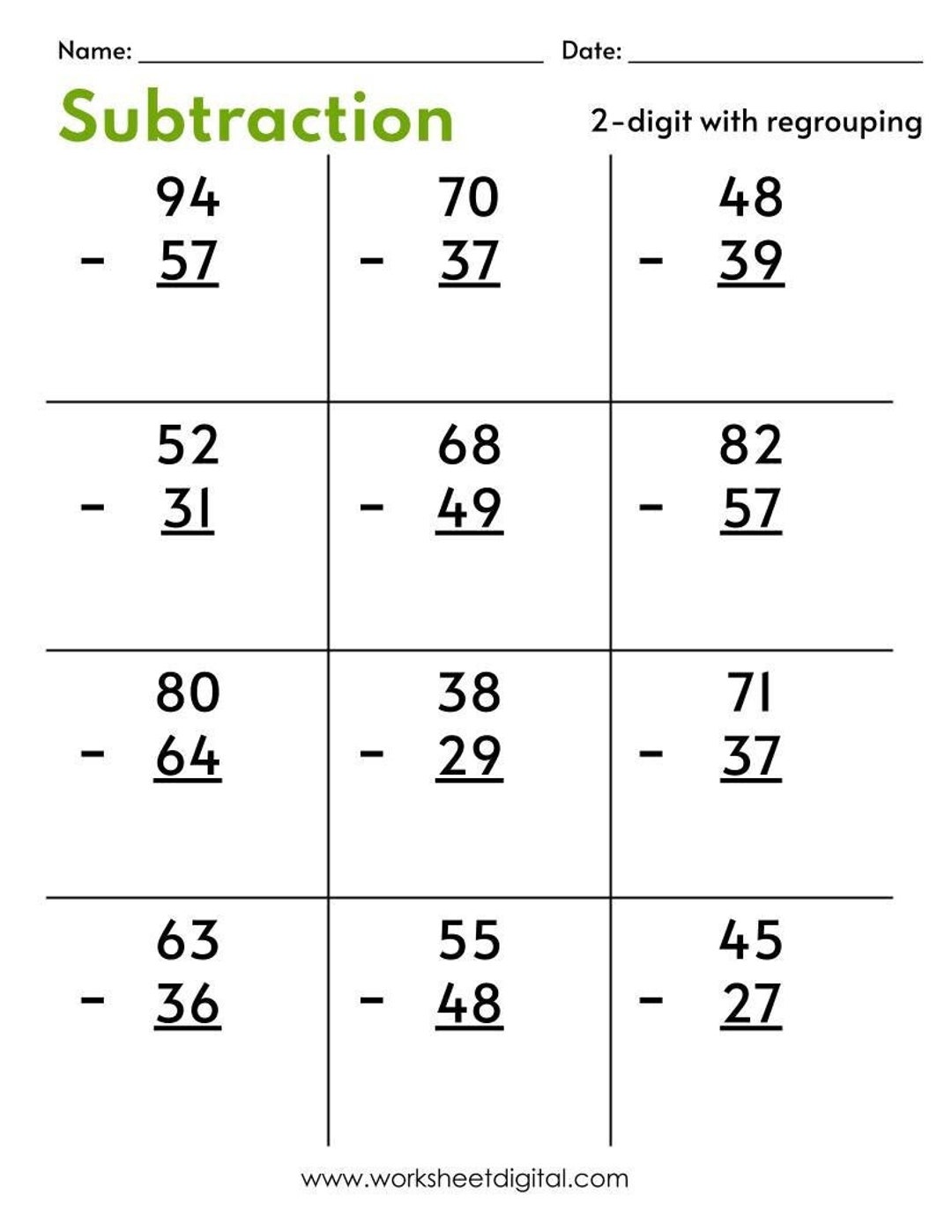
Remember, math isn't about being perfect; it's about learning and growing. So, embrace the challenge, laugh at your mistakes, and keep practicing! You got this!
And hey, next time you're splitting a bill with your friends, you can confidently calculate the tip and impress everyone with your mad math skills! Now, go forth and conquer those subtraction problems! You are a subtraction superstar! Go forth and conquer!
![FREE 2 Digit Subtraction With Regrouping Worksheets [PDFs]](https://brighterly.com/wp-content/uploads/2022/11/2-digit-subtraction-with-regrouping-worksheets-images-2.jpg)