
Words With Q As The Second Letter
Okay, so picture this: I'm playing Scrabble with my grandma. Now, Grandma isn't messing around. She's got the Scrabble dictionary memorized, probably even sleeps with it under her pillow. I’m feeling pretty good, laid down a sweet "QUOTA" across a triple word score. Boom! Then she stares at me, slowly shakes her head, and says, "Are you sure about that 'Q' there, sweetie? You know those words are tricky."
And that's when it hit me. She was right. Words with a "Q" that isn't immediately followed by a "U" are kinda like that weird cousin you only see at Thanksgiving. You know they exist, but you always forget exactly how they exist. So, that got me thinking… let's dive into this linguistic rabbit hole, shall we?
We’re talking about words where the second letter is a glorious, somewhat rebellious "Q." (Think "Are there any?"... the answer is, surprisingly, yes!) They're rarer than hen's teeth, sure, but they are out there. Prepare to be amazed!
Must Read
The Usual Suspects (And Why They're NOT Invited)
First, let's get the obvious out of the way. You're probably thinking, "Okay, 'QUAIL', 'QUERY', 'QUALITY'... easy peasy!" Hold your horses, friend. Those all have a "U" right after the "Q." We're looking for the rogue "Q," the one that parties without its "U" buddy. (Grandma would be so disappointed if we just listed the usual suspects.)
So, what are we left with? Let's face it, you won't find many mainstream words rocking the Q-as-the-second-letter look. This is where things get interesting. Prepare for some proper nouns and loanwords!
The Star of the Show: QWERTY
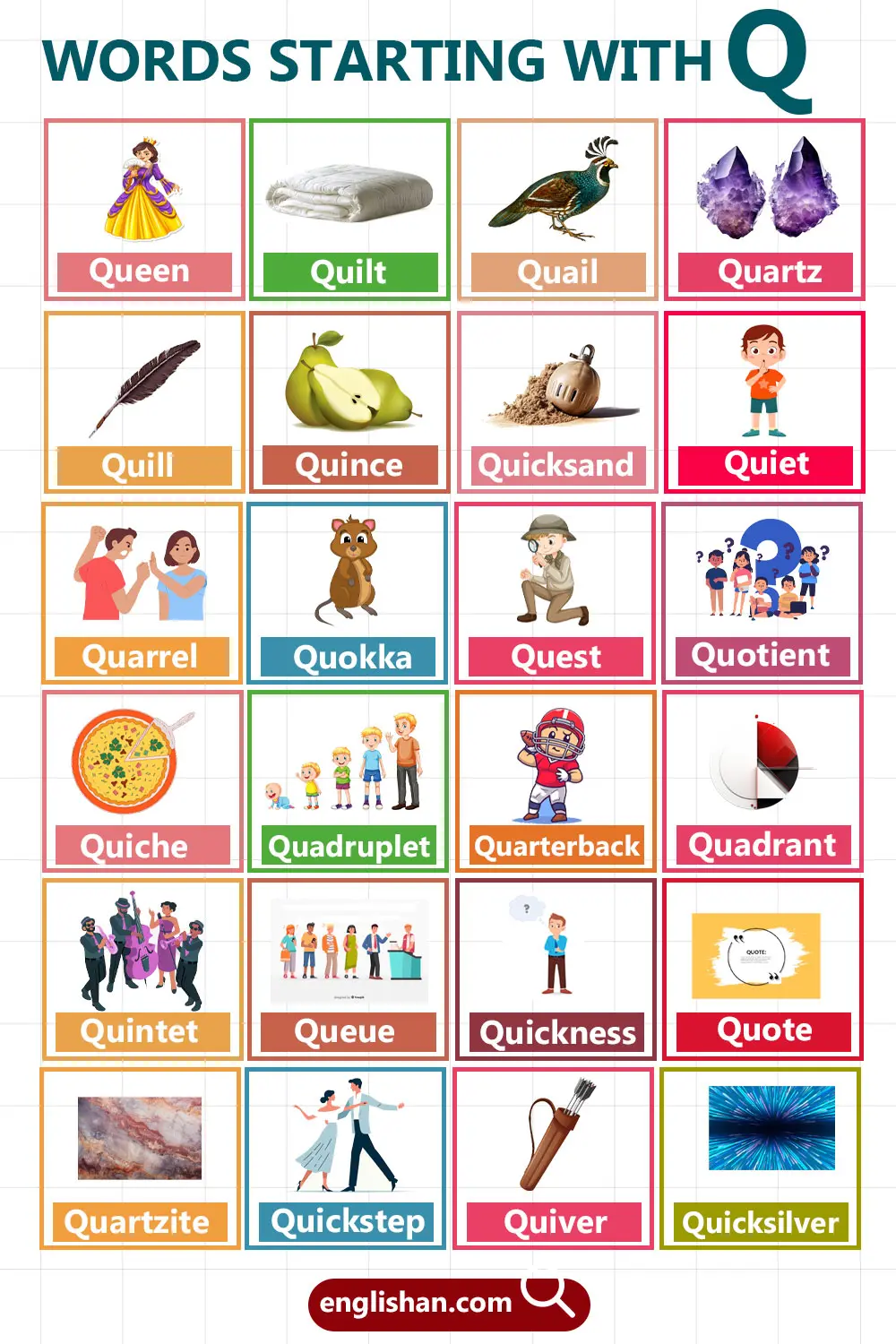
Let's be honest, this is probably the only word most of us can think of immediately. Yep, QWERTY. The layout of our keyboards. The bane of touch-typists who try to avoid repetitive strain injuries. It's a perfectly cromulent word (Simpsons reference, anyone?), and it fits our criteria. Give it up for QWERTY!
Proper Nouns to the Rescue!
Okay, things get a little…specialized… from here on out. We’re wading into proper noun territory, which, frankly, feels a bit like cheating. (But hey, rules are meant to be bent, right?) Think geographical names, brands, and people's names.

For instance, you might stumble upon places or names beginning with “Qfar-” in various languages. (I can't give specific examples for every possible instance – research is your friend!) These sometimes pop up in crosswords, so keep an eye out!
Now, I'm not saying you’ll be using these in everyday conversation. (Unless you're REALLY into obscure geography or have a penchant for naming your kids with uncommon prefixes.) But they do technically fit the bill.

A Bit of Loanword Linguistics
Sometimes, you'll find words adopted from other languages that flaunt the Q-not-followed-by-U rule. These are usually pretty niche, often related to specific cultural or scientific contexts. You might find them in academic texts or specialist publications. (But, again, don't expect to use them to order a coffee.)
Think of terms related to specific regions or research areas; they might exist. (And by "might," I mean "you'd have to do some serious digging.") This illustrates how languages borrow and adapt, which is pretty darn cool if you ask me!

Why So Rare? The Linguistic Lowdown
So why are these words so uncommon? Well, in English (and many other languages), the letter "Q" nearly always requires a "U" to make the /kw/ sound. It's just how our linguistic system evolved. (Think of it as a co-dependent relationship... a Q that's forever clinging to its U.)
Therefore, when a "Q" shows up without a "U," it's usually a sign that the word has a foreign origin or is a specialized term. (Or, you know, that someone made a typo.)
But hey, that's what makes them so interesting! They're the outliers, the rebels, the linguistic unicorns. (And they certainly give Scrabble a whole new level of difficulty, don't they? Good luck explaining those words to your grandma!) I’m already looking forward to finding some myself to challenge my grandma next time! (I'm kidding...mostly).