
Why Is Water Considered To Be A Renewable Resource
Have you ever thought about where your glass of water comes from? Probably the tap, right? But where does the tap get it? It's a journey, my friends, a wild and watery ride!
The Amazing Water Cycle: Nature's Recycling Machine!
Water is often called a renewable resource, which basically means it can be used again and again. It’s like that one awesome t-shirt you love so much – you wash it, wear it, wash it again, and repeat! Water does something similar, but on a planetary scale.
This "washing and wearing" is the water cycle, a fantastic, never-ending process. Think of it as nature's own built-in recycling program, way cooler than anything you see at your local recycling center.
Must Read
Evaporation: Up, Up, and Away!
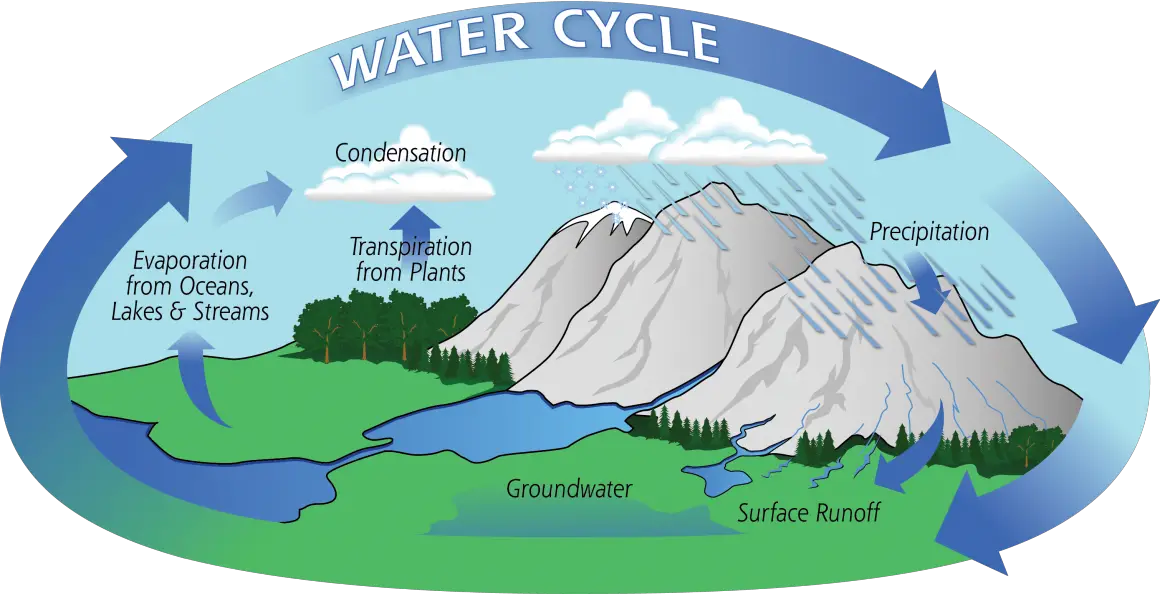
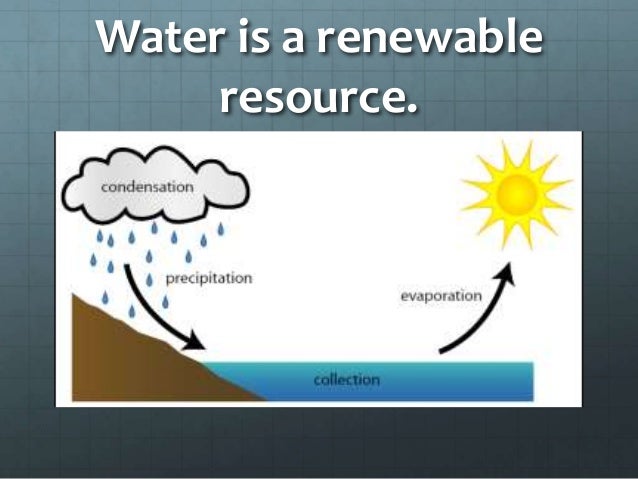
First up, we have evaporation. Picture the sun, that big, friendly ball of fire, giving a warm hug to all the water on Earth. Oceans, lakes, rivers, even puddles – they're all getting warmed up.
This warmth turns the water into a gas called water vapor, which then floats up into the sky. It's like water is taking a vacation, escaping the surface for a bit!
Even plants get in on the action through a process called transpiration. Imagine them as tiny water pumps, sucking water from the ground and releasing it into the air. Talk about teamwork!
Condensation: Cloud City!
As the water vapor rises higher, it gets colder. This causes it to condense, meaning it turns back into liquid water, forming tiny droplets.
These droplets gather together, forming clouds. Think of clouds as giant, fluffy water balloons floating in the sky, ready to burst!
It's like a giant water party happening way up high. And who doesn’t love a good party?
Precipitation: Water's Grand Return!
Eventually, the clouds get so full of water droplets that they can't hold any more. Then, precipitation happens. This is when the water falls back to Earth in the form of rain, snow, sleet, or hail.
It’s water’s grand return! The water is coming home after its little vacation in the atmosphere.
This falling water replenishes our lakes, rivers, and oceans. It soaks into the ground, becoming groundwater, which we can then use for drinking and irrigation. The cycle starts anew!
Why is this Renewable? It's All About the Cycle!
So, why does this crazy cycle make water renewable? Because it's constantly being replenished! Water isn't "used up" in the traditional sense.
It might change form – from liquid to vapor to solid – but it's always there, circulating around our planet. The total amount of water on Earth stays relatively constant.
Imagine filling a glass with water and pouring it back into the pitcher. You haven't lost any water, just moved it around! The water cycle is like that, but on a planetary scale.

The Sun: The Unsung Hero!
We can thank the sun for all of this! The sun’s energy is the engine that drives the entire water cycle. Without the sun, we would have no evaporation, no clouds, and no rain.
The sun is the ultimate water cycle cheerleader. It is out there constantly encouraging and motivating the water to keep moving.
So, next time you see the sun shining, remember it's not just providing warmth and light. It’s also powering the incredible water cycle, making sure we have the water we need.
Groundwater: The Hidden Reservoir
A significant portion of precipitation soaks into the ground, becoming groundwater. This underground water is stored in aquifers, which are like natural reservoirs.
We tap into these aquifers for drinking water, irrigation, and other uses. Groundwater is a vital part of the water cycle, ensuring a steady supply of fresh water.
Think of aquifers as the Earth's secret stash of water, carefully stored and waiting to be used. But we need to be careful not to overuse them!
Important Considerations: It's Not Unlimited!
While water is renewable, it's not unlimited. The water cycle is a delicate system, and human activities can disrupt it. Things like pollution, deforestation, and excessive water usage can strain the cycle.
Pollution can contaminate water sources, making them unusable. Imagine pouring dirt into your pitcher of water – you wouldn't want to drink that, would you?
Deforestation reduces the amount of water that is absorbed by the ground, leading to increased runoff and flooding. Trees are like giant sponges, soaking up water and slowly releasing it back into the environment.
Water Conservation: Our Responsibility
Water conservation is crucial to ensure that we have enough water for everyone, now and in the future. We need to use water wisely and avoid wasting it.
Simple things like taking shorter showers, fixing leaky faucets, and watering our lawns efficiently can make a big difference. It's all about being mindful of our water usage.
Every drop counts! Small changes in our daily habits can have a significant impact on the health of the water cycle.
Climate Change: A Major Threat
Climate change is also impacting the water cycle. Changes in temperature and precipitation patterns can lead to droughts, floods, and other extreme weather events.
Melting glaciers and ice sheets are also contributing to sea-level rise, which can contaminate freshwater sources with saltwater. It’s like adding salt to your favorite drink – not a pleasant surprise!
Addressing climate change is essential to protect the water cycle and ensure a sustainable water future for all.
So, next time you take a sip of water...
Remember the incredible journey that water has taken to get to your glass! From the oceans to the clouds, and back again, the water cycle is a marvel of nature.
Appreciate this precious resource and do your part to conserve it. Because while water is renewable, it's not invincible. Let's work together to protect it for generations to come.
Cheers to the amazing, ever-flowing, life-giving power of water!