Why Is A Gas Easy To Compress
We interact with gases all day, every day, often without even realizing it. They fill our lungs, make our bikes go, and even power our hairspray. But have you ever stopped to wonder about one of their most amazing superpowers? Gases are incredibly easy to squish! Like a giant, invisible sponge, they can be squeezed into much smaller spaces, and then, given half a chance, they'll puff right back out again. It's a property that makes our lives easier, safer, and sometimes, a whole lot more fun.
The Great Social Distancers of the Universe
Imagine a bustling party, but instead of people packed shoulder-to-shoulder, there are just a handful of guests scattered across a massive ballroom. They've got acres of personal space, right? They could dance a jig without bumping into anyone, stretch out on the floor, or even roller skate from one corner to the other. Now, imagine someone gently nudging the walls of that ballroom inwards. Those few guests would simply float a little closer to each other, barely noticing the change, still with plenty of room to breathe.
This, in a nutshell, is how gas molecules behave. They are the ultimate social distancers of the atomic world.
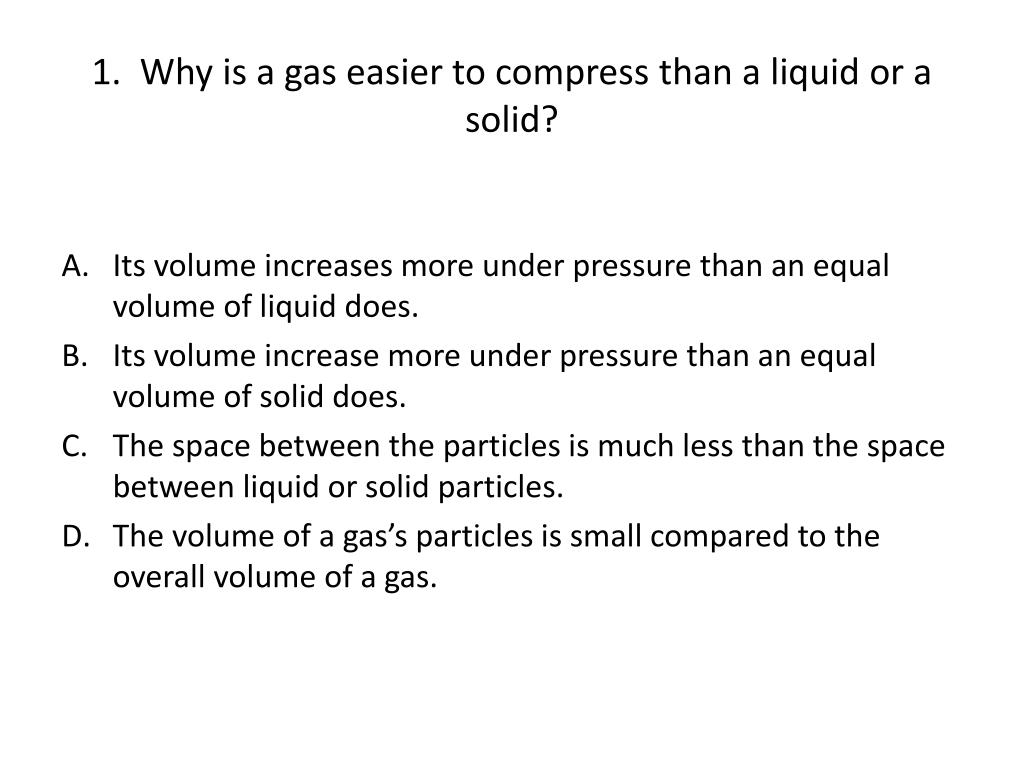
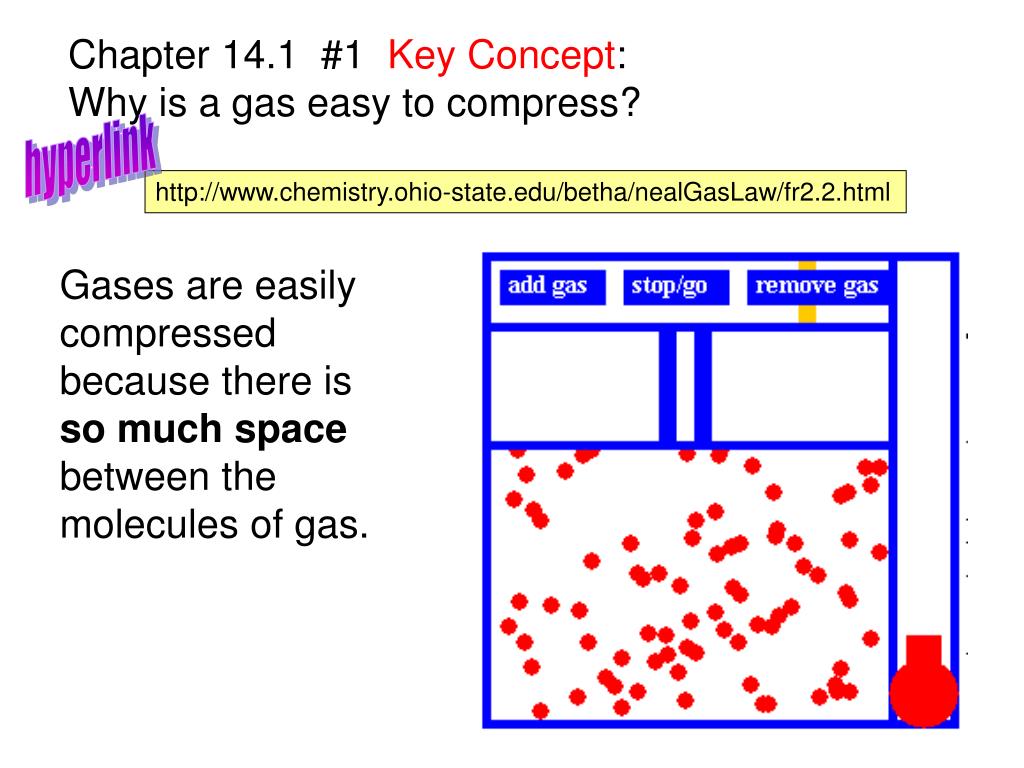
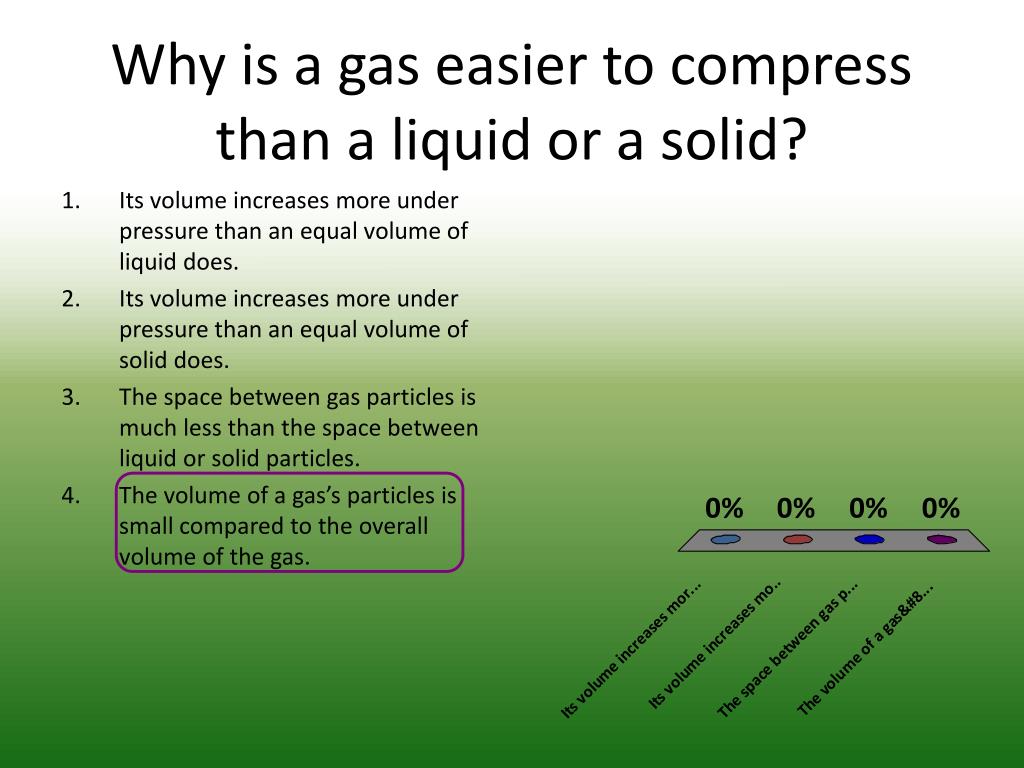
Unlike liquids, where molecules are like a friendly crowd holding hands, or solids, where they're packed tight like bricks in a wall, gas molecules are tiny individuals zipping around with vast, empty expanses between them. When you see a balloon, most of what you're seeing isn't actual air molecules; it's mostly the empty space those molecules are occupying!
Must Read
The Magic of the Invisible Squeeze
So, when you try to compress a gas, you're not actually squishing the individual molecules themselves – they're pretty tough little things. What you're doing is forcing those widely scattered molecules to give up some of their beloved personal space. You're reducing the enormous distances between them, making them occupy a smaller volume. It's like telling our party guests, "Hey folks, the ballroom just got a little cozier, but you're still cool."
Think about a bicycle pump. With each downward stroke, you're taking a volume of air from outside and forcing it into the much smaller space inside your tire. The air molecules don't disappear; they just get closer together, bouncing off the tire's inner walls with more force, making your tire firm. Or consider an aerosol spray can. Inside, a gas is compressed to such an extent that it helps push out the liquid contents, whether it's delicious whipped cream or your favorite hairspray, with satisfying force.
From Life-Savers to Party Poppers
This simple property of gases has profound implications. For instance, think of scuba divers exploring the ocean depths. They carry tanks filled with air that's been compressed to an incredible degree – hundreds of times its normal volume! Without this amazing ability to pack so much breathable gas into a relatively small container, underwater exploration as we know it simply wouldn't be possible. It's a heartwarming thought, how something as simple as empty space allows us to venture into new worlds.
And it's not just for adventurers. Hospitals rely on compressed oxygen for patients, and firefighters use breathing apparatus with compressed air. On a lighter note, think of inflatable bouncy castles, party balloons, or even the cushioning in your favorite running shoes. All these everyday joys and necessities depend on the humble, invisible gas and its cheerful willingness to be squished and then expand again.
Next time you pump up a ball, use a spray can, or even just take a deep breath, take a moment to appreciate the incredible, invisible world of gases. Their ability to give up their personal space, to be compressed and then spring back, isn't just a scientific fact; it's a fundamental property that adds convenience, safety, and a touch of surprising wonder to our lives, making the seemingly empty spaces around us incredibly important.