
Why Does My Smoke Alarm Keep Beeping
Ah, the familiar, insistent chirp! That little beep that cuts through the quiet of your home, often at the most inconvenient times. We’ve all been there, right? You’re cozying up with a book, deep into a movie, or maybe even mid-snooze, when suddenly—BEEP!—your smoke alarm decides it's time for its personal concert. It's easy to get frustrated, but have you ever paused to think, "Why are you doing this, little box? What’s your story?"
Let's peel back the mystery, not with annoyance, but with a dash of curiosity. Because, honestly, there’s some pretty cool science and a whole lot of guardian angel vibes packed into that noisy little gadget.
The Usual Suspects: More Than Just Annoyance
Most of the time, when your smoke alarm starts its intermittent serenade, it's actually trying to tell you something super important. Think of it as a tiny, persistent messenger, and you're just learning its language.
Must Read
1. The Low Battery Blues
This is, hands down, the most common culprit. Your smoke alarm isn't just randomly beeping; it's giving you a polite (or not-so-polite, depending on the hour) heads-up. It’s like your phone giving you that "10% battery remaining" warning, but with a bit more urgency. The beep pattern is usually a single chirp every 30 to 60 seconds. It's not trying to scare you with smoke; it's letting you know its own power source is dwindling. It’s a plea for fresh juice!
2. A Dusty Dilemma
Believe it or not, these sensitive devices can sometimes get a bit... congested. Dust, cobwebs, even tiny insects can sneak into the detection chamber. Imagine a delicate sensor, constantly watching for smoke, suddenly getting a speck of dust in its "eye." It might mistake that interference for a smoke particle, or simply get confused and beep to signal a potential blockage. A quick, gentle vacuum or a blast of compressed air can often solve this. It's like giving your alarm a little nose-blowing session!
3. The End of a Long Life
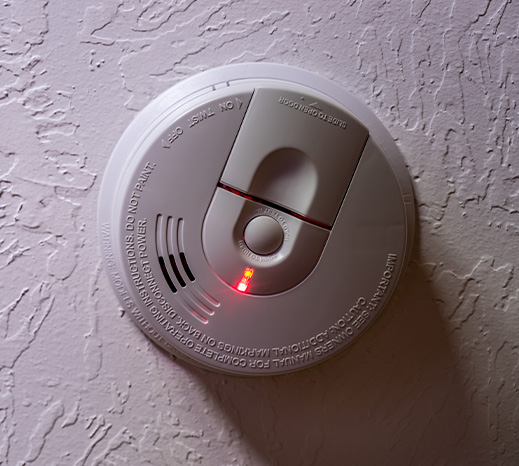
Here’s a fact many people don’t realize: smoke alarms don’t last forever. They have a lifespan, typically around 8-10 years. Over time, their internal components can degrade, making them less reliable. Some models are even programmed to start chirping to tell you, "Hey, I've served my time! It's time for retirement and a shiny new replacement!" This end-of-life signal is usually a distinct, regular beep, different from a low battery. It's a testament to how far technology has come that it can even signal its own obsolescence!
4. Nuisance Alarms: Overly Eager Protectors
Sometimes, your smoke alarm is just doing its job really well, perhaps a little too enthusiastically. Cooking fumes (especially from a slightly burnt toast situation), steam from a hot shower, or even humidity can sometimes trigger an alarm. These are generally full, continuous alarms, rather than chirps. While annoying in the moment, it just goes to show how diligently these devices are trying to protect you. They’re like an overly protective friend who yells "LOOK OUT!" when you just trip on your own feet.
The Inner Workings: Tiny Tech Heroes
So, how do these little guardians even know when there's smoke? It’s pretty fascinating! Most residential smoke alarms use one of two main technologies:
Photoelectric Alarms
These alarms are like tiny light detectives. They contain a chamber with a light source and a sensor that typically doesn't "see" the light. When smoke particles enter the chamber, they scatter the light beam, reflecting it onto the sensor. It’s like a laser tripwire for smoke! The moment the sensor detects that scattered light, BEEP BEEP BEEP!—it springs into action. These are great at detecting large, slow-moving smoke particles, often associated with smoldering fires.
Ionization Alarms
These are a bit more high-tech and involve a tiny, harmless radioactive source (don't worry, it's sealed and safe!) that ionizes the air between two electrically charged plates, creating a small, continuous electric current. When smoke particles enter this chamber, they disrupt that current. Think of it like tiny atoms playing musical chairs, and smoke is the disruptive party crasher! The disruption in the current triggers the alarm. Ionization alarms are generally quicker to respond to fast-flaming fires with smaller, less visible smoke particles.
Why It's Actually Kinda Cool (and Crucial!)
The next time that insistent beep starts, instead of groaning, take a moment to appreciate what's happening. That little box, often overlooked, is a testament to clever engineering designed for one primary purpose: your safety. It's constantly vigilant, standing guard, listening, and waiting. Even its "annoying" beeps are just its way of communicating, ensuring it's ready for the real deal.
These little gadgets have literally saved countless lives, giving people those precious extra moments to escape a fire. So, whether it's telling you its battery is low, it needs a clean, or it's simply nearing its retirement, that beep is a message from a tiny hero doing its best to keep you safe.
So, next time you hear that chirp, approach it with curiosity, replace that battery, give it a clean, or even upgrade it if it's past its prime. Your little guardian deserves it, and your peace of mind (and life!) might just depend on it. What a cool, albeit sometimes noisy, piece of household tech!
