
Why Does Macbeth Want Banquo And Fleance Dead
Okay, picture this: you've just won the lottery. Like, the lottery. You're suddenly living the high life, sipping coconut water on a beach in Bali. But then, your best friend casually reminds you about that fortune cookie you both cracked open years ago. The one that predicted they would actually be the ones rolling in dough. Not directly, but their kids? Oh boy, their kids are destined for massive wealth!
Suddenly, that coconut water tastes a little less sweet, doesn't it? That's pretty much where Macbeth is at with Banquo and his son, Fleance. He’s got this shiny new crown, but there's a prophecy hanging over his head like a dark, gloomy Scottish raincloud.
The Prophecy Problem
So, the deal is this: some spooky witches (think Halloween gone wild!) told Macbeth he'd be king. Check! But they also dropped a bombshell on Banquo. They said Banquo wouldn't be king himself, but his descendants would be a long line of rulers. Imagine being told you'd get all the glory, then finding out your buddy's kids are actually the ones destined for greatness. Talk about a buzzkill!
Must Read
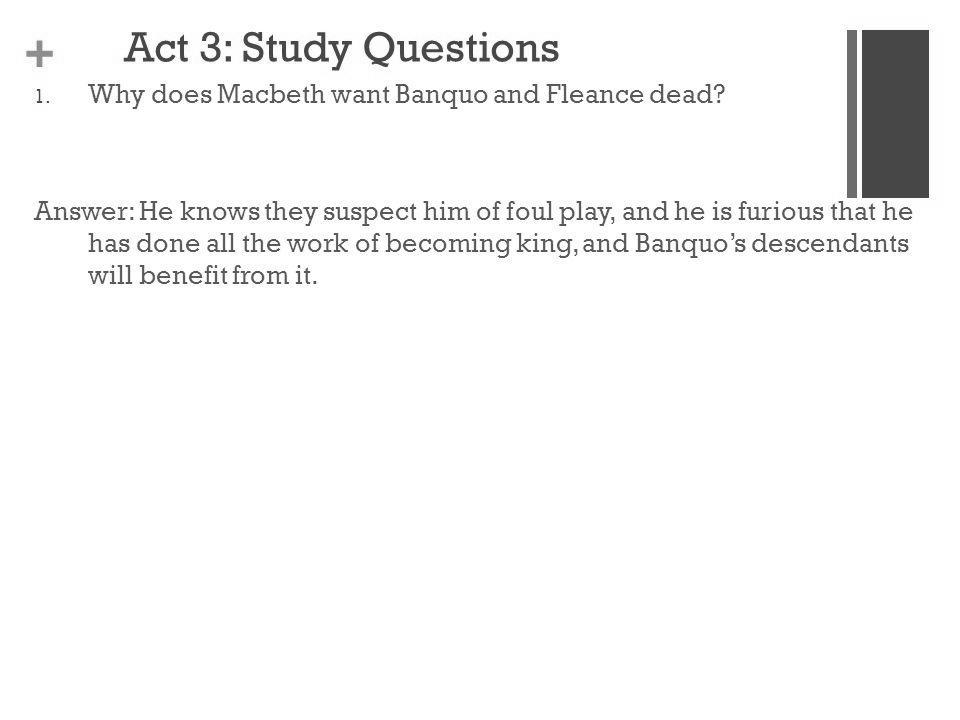
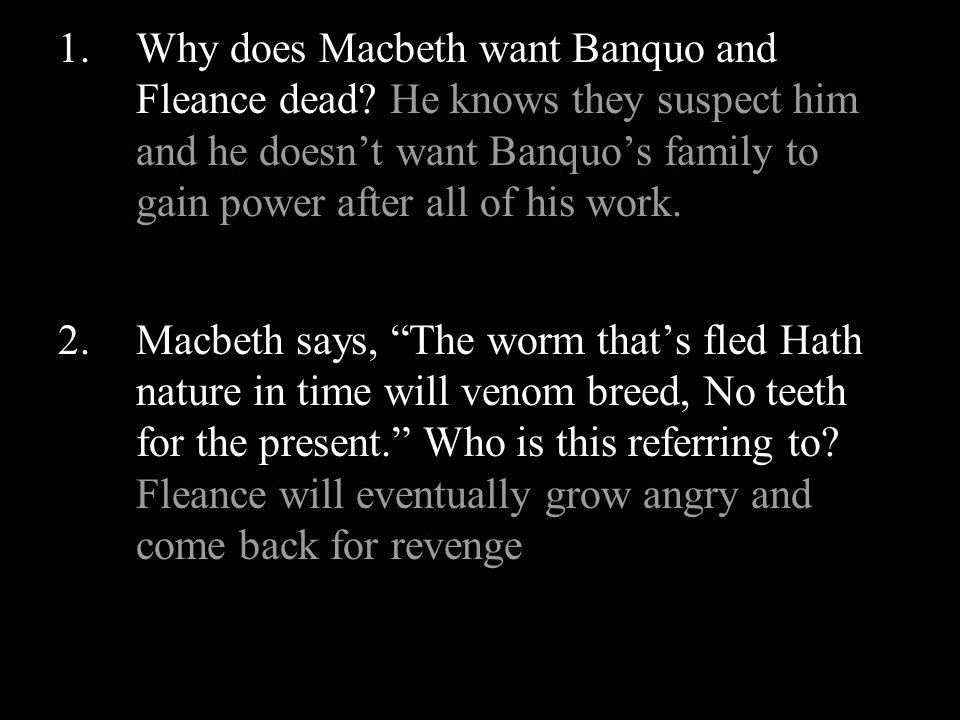
Macbeth, freshly crowned and loving the power, is not thrilled. Not one bit. He’s basically thinking, “Wait a minute! I went through all this trouble, I schemed, I… well, you know… and now I find out this whole thing is just a stepping stone for Banquo's family? Absolutely not!” It's like winning that lottery, only to discover it's a lifetime supply of broccoli instead of cash.
He sees Banquo and Fleance as major threats to his reign. They're not actively plotting against him, but that darn prophecy has planted a seed of paranoia in Macbeth's mind. He believes that as long as Banquo and Fleance are alive, his throne is wobbly.
Fear, Paranoia, and a Whole Lotta Ambition
Think of it like this: Macbeth is playing a super intense game of Monopoly. He’s just landed on Park Place and built a hotel. He's feeling pretty smug, until he remembers that his opponent, Banquo, has a "Get Out of Jail Free" card and is about to roll the dice. Macbeth's feeling a little...anxious.

That anxiety festers into fear, and fear leads to desperate measures. He figures, if he eliminates Banquo and Fleance, he can rewrite the future. He can control his own destiny. He can secure the crown for himself and his descendants.
It's a classic case of ambition gone wild, fueled by a potent cocktail of fear and paranoia. Macbeth is so desperate to hold onto power that he's willing to commit even more heinous acts. He's basically traded his soul for a crown, and now he's trying to secure his investment with blood.
The "Why" Breaks Down
Let’s break down exactly why Macbeth sees Banquo and Fleance as such big problems.
The Threat to His Legacy
Macbeth doesn't just want to be king for a day. He wants to start a dynasty! He wants his kids (or at least someone connected to him) to inherit the throne and continue his legacy. Banquo's line threatens all of that.

If Banquo's descendants are destined to rule, then Macbeth's reign is just a temporary blip on the radar. A placeholder. A footnote in history. And nobody wants to be a footnote, especially not a guy who just murdered his way to the top.
The Paranoia Factor
Macbeth is constantly looking over his shoulder. He’s jumpy, suspicious, and sees enemies everywhere. He trusts no one, especially not Banquo, who now represents a direct threat to his power.
Even though Banquo hasn’t actually done anything wrong, Macbeth is convinced he’s secretly plotting something. It's like that feeling you get when you haven't studied for a test. You know you're probably going to fail, and every time the teacher looks at you, you think, "They know! They know I'm doomed!"
The Guilt Trip
Okay, this one’s a little sneaky. Macbeth feels incredibly guilty about murdering King Duncan. He knows he's done something terrible, and the guilt is eating away at him.
Seeing Banquo, who is a good and honorable man, is a constant reminder of Macbeth's own wickedness. It's like having a halo-wearing angel following you around after you've just robbed a bank. You just want them to go away so you don't have to feel so bad about yourself!
The Ill-Fated Decision
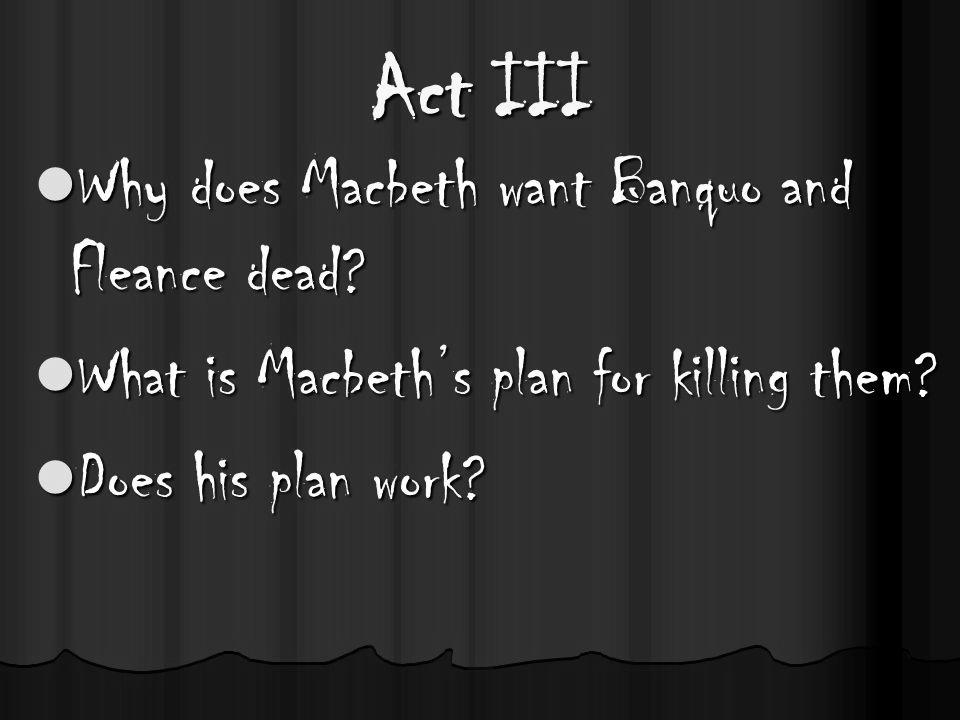
So, Macbeth hires some murderers to take care of Banquo and Fleance. He figures, problem solved! Except… things don't exactly go according to plan.
Banquo is killed, but Fleance escapes. This is a huge blow to Macbeth. He's only half-successful. It’s like baking a cake and forgetting the frosting. Sure, it's technically a cake, but it’s missing that crucial element that makes it truly satisfying.
The fact that Fleance survives just fuels Macbeth's paranoia even more. He knows the prophecy is still in play. The threat hasn't been eliminated, it's just been delayed. Fleance is out there, somewhere, waiting to fulfill his destiny.
In Conclusion: It's All About the Crown
Ultimately, Macbeth's desire to kill Banquo and Fleance boils down to one thing: his insatiable hunger for power. He’s so desperate to keep the crown that he's willing to sacrifice everything – his morality, his sanity, and ultimately, his life.
He’s a cautionary tale about the dangers of unchecked ambition and the corrosive effects of fear. So next time you find yourself craving something a little too much, remember Macbeth and maybe take a deep breath and have a cup of tea instead. It's a lot less messy than hiring murderers!
And remember, it's just a play! No need to start suspecting your own friends of plotting against you. Unless, of course, they start talking about spooky witches and long lines of royalty... Then maybe keep an eye on them.