Why Does Fusion Release More Energy Than Fission
Okay, so we're chilling, right? Sipping on our lattes, and somehow we've stumbled into a conversation about nuclear reactions. Bear with me, it's cooler than it sounds! Specifically, let's talk about why fusion, the thing powering the sun, releases way more energy than fission, which is what happens in nuclear power plants. Ready for some brain fireworks?
First things first: What are these "fission" and "fusion" things anyway? In a nutshell:
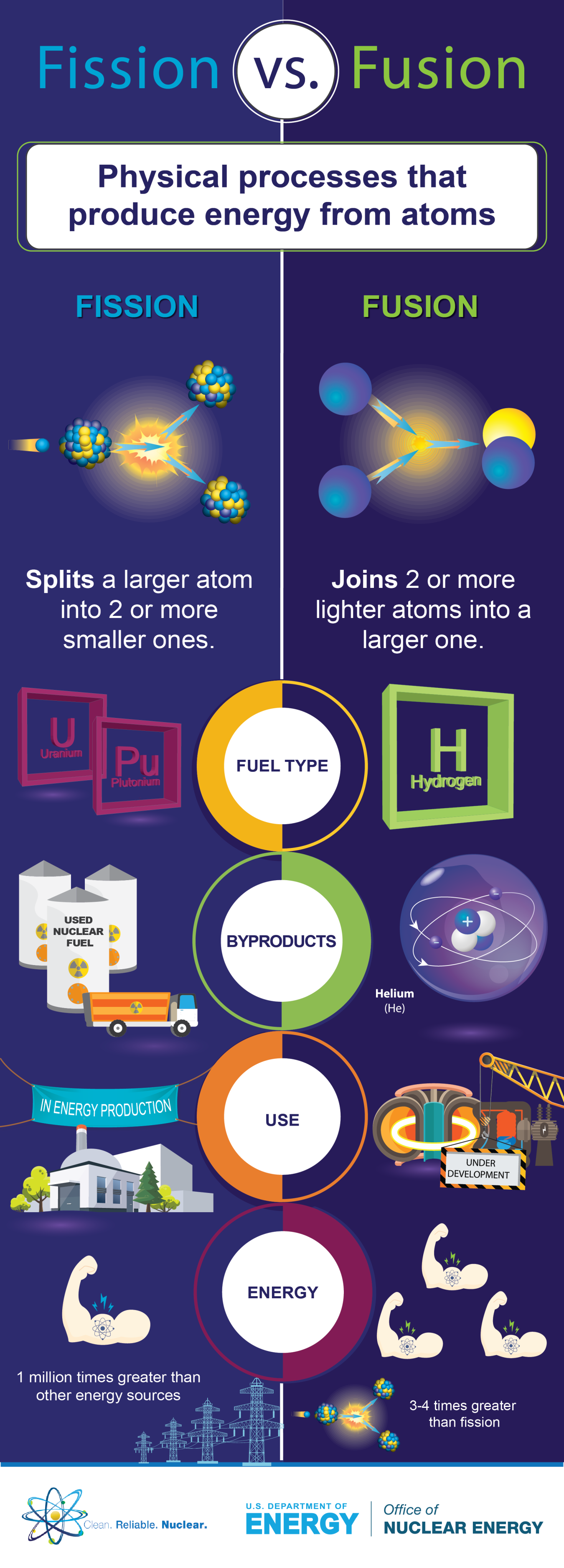
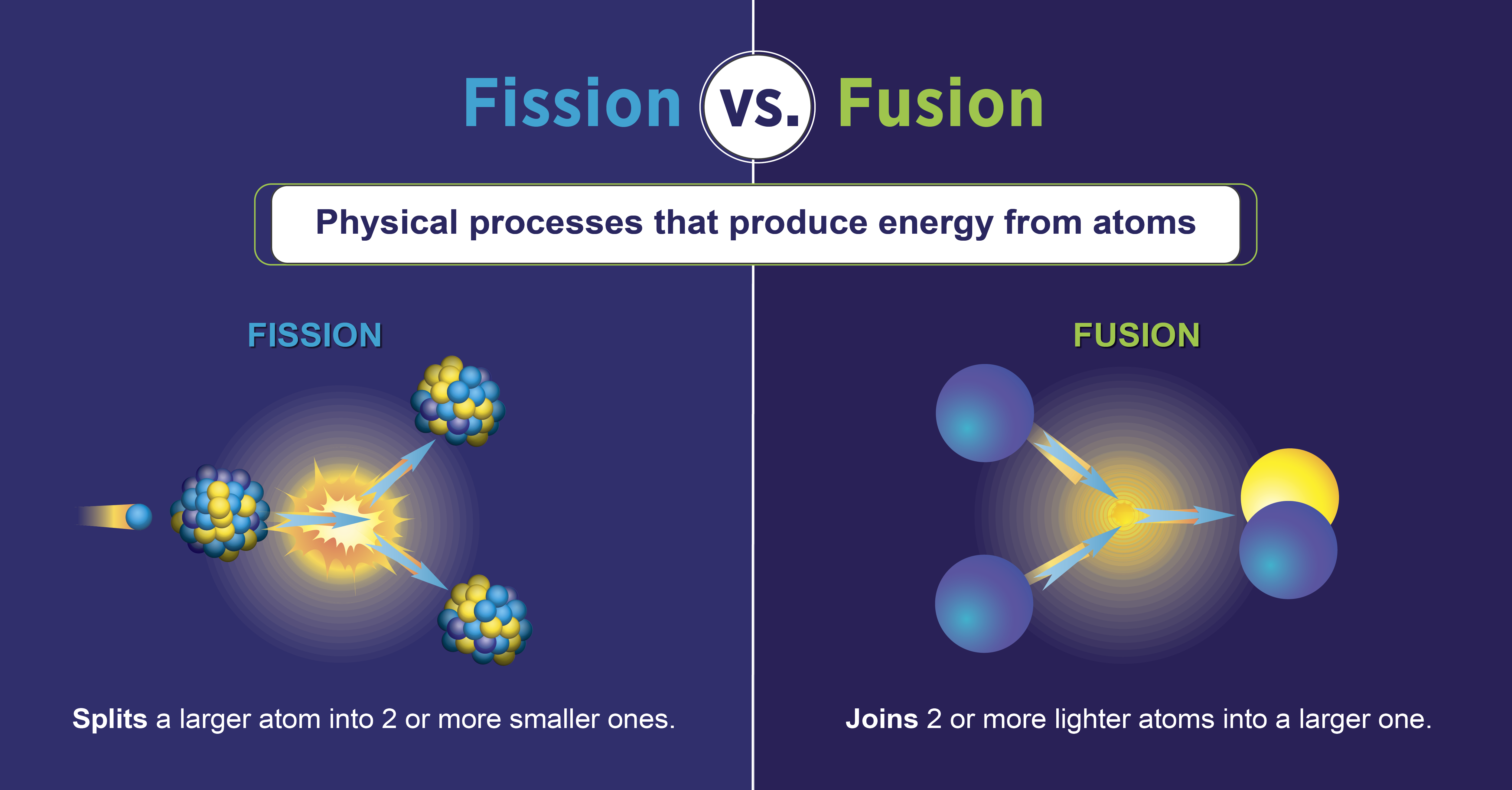
Fission: Think of it like splitting a really heavy, unstable atom (usually uranium or plutonium) into smaller, more stable ones. It's kinda like smashing a delicate vase – you get smaller pieces (and some energy, duh!).
Must Read
Fusion: Imagine taking two tiny atoms (usually isotopes of hydrogen, like deuterium and tritium) and forcing them to smash together to form a slightly heavier atom (helium). It's like squishing two marshmallows together to make one bigger marshmallow... but with a bazillion times more energy released. Whoa!
So, why the massive energy difference? Well, buckle up, because here comes the really fun part (okay, fun might be a strong word, but stay with me!). It's all about Einstein's famous equation: E=mc². You've heard of it, right? Even if you don't understand it, you've seen it on a t-shirt.
Basically, this equation says that energy (E) and mass (m) are interchangeable, and the 'c²' part just means the speed of light squared (a ridiculously huge number). In simpler terms: a tiny bit of mass can be converted into a lot of energy. Seriously, a LOT.
Now, here’s the kicker. In both fission and fusion, the total mass of the products (the stuff you end up with) is slightly less than the total mass of the reactants (the stuff you started with). Where did that missing mass go? You guessed it! It got converted into energy, thanks to our buddy Albert Einstein.
But here’s where fusion pulls ahead in the energy race. In fusion, a larger proportion of the mass gets converted into energy than in fission. Think of it this way: imagine you're baking cookies. In fission, maybe 1% of your ingredients vanishes into pure deliciousness energy. But in fusion? BAM! Maybe 3% disappears! That extra 2% makes a huge difference because of that c² term in E=mc². It's like adding a turbo boost to your cookie oven. (Okay, maybe not really like that, but you get the idea!)

Why does fusion convert a bigger percentage of mass? It's complicated (quantum mechanics and all that jazz), but essentially, the nuclear forces involved in holding those tiny atoms together are just ridiculously strong. The energy needed to overcome those forces and fuse the atoms is immense, but the energy released when they fuse is even greater. It’s a high-risk, high-reward kind of situation.
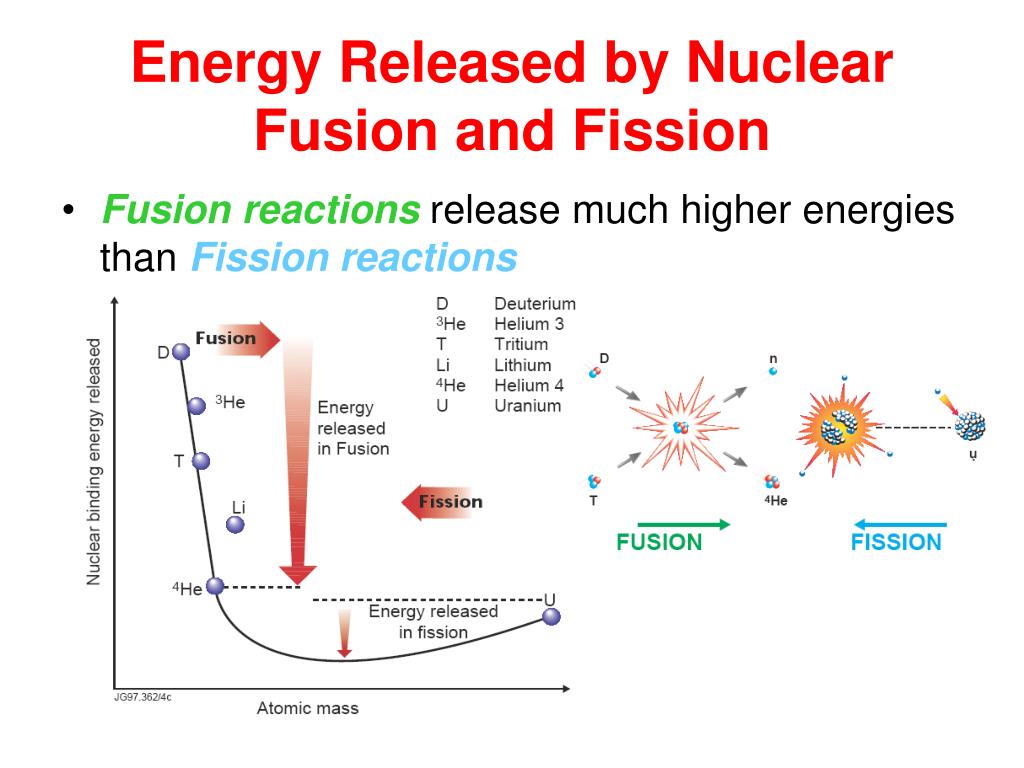
Another important factor is the binding energy per nucleon. Nucleons are just protons and neutrons, the building blocks of atomic nuclei. Iron has the highest binding energy per nucleon, which means it’s the most stable element. Fusion involves combining elements lighter than iron, moving towards that more stable state and releasing energy. Fission, on the other hand, involves splitting elements heavier than iron, also moving towards more stable states, but the energy difference (and therefore the energy released) is smaller.
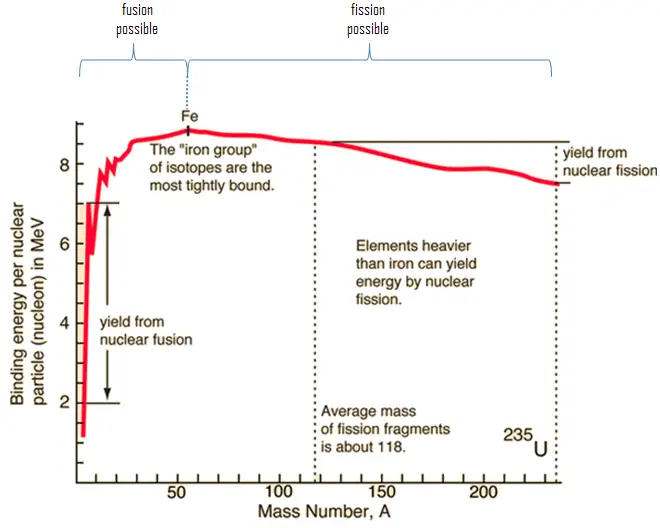
Think of it like this: Imagine a valley. Iron is at the very bottom. Fusion is like rolling downhill to iron from one side of the valley, while fission is like rolling downhill from the other side. The drop to the bottom is steeper from the fusion side, so you get more kinetic energy (aka, energy released!).
So, there you have it. Fusion wins the energy prize because it converts a greater percentage of mass into energy during the reaction. And that's all thanks to the crazy strong nuclear forces, the quest for nuclear stability, and of course, Einstein's mind-bending equation. Pretty neat, huh?
Now, who wants another latte?