
Why Did My Carbon Monoxide Detector Beep
Alright, deep breaths, friend! We've all been there. That sudden, piercing, "what-the-heck-was-that?!" sound. Your carbon monoxide (CO) detector, bless its little electronic heart, has decided to throw a party of beeps. And trust me, your first thought probably wasn't "Oh, how delightful, a musical interlude!" More like, "Is this it? Am I about to become a statistic?!"
Take a beat. Seriously. Because while a CO detector beep is never something to ignore, it's also not always a five-alarm, panic-stricken emergency. Sometimes, it's just... well, a bit dramatic. Like that friend who overreacts to a spider. You know the one.
So, let's grab that metaphorical coffee, kick back, and decode this beeping mystery together, shall we?
Must Read
The Big, Scary, Real Deal Beep
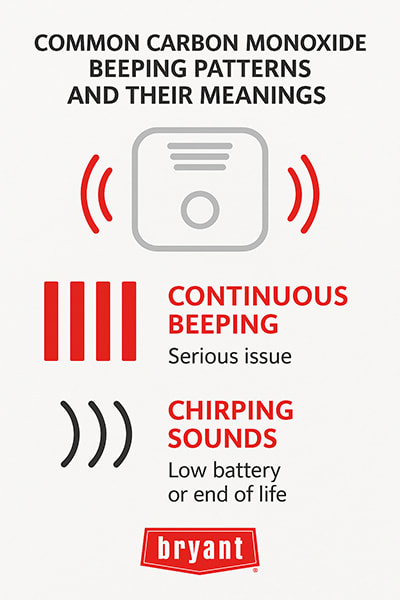
Okay, let's get the most important one out of the way first. If your CO detector is going off with a continuous, loud, frantic series of beeps – usually four quick beeps followed by a pause, repeated – that's its way of screaming, "HEY! I DETECT CARBON MONOXIDE! GET OUT! NOW!"
This isn't a drill. This isn't a low battery warning. This is go-time. CO, remember, is that sneaky, invisible, odorless, tasteless gas that literally steals oxygen from your blood. Not a fun party trick. If you hear this specific alarm:
- GET EVERYONE OUTSIDE IMMEDIATELY. Kids, pets, your grumpy neighbor if they're visiting.
- CALL 911 or your local fire department from a safe location. Do NOT go back inside until they tell you it's safe. They have the fancy equipment to measure CO levels properly.
Seriously, don't mess with this one. Better to have them come out for nothing than to risk it. Your life, and the lives of those you love, are absolutely worth the "oops, false alarm" embarrassment.
The Annoying Little "Chirp, Chirp" Beep
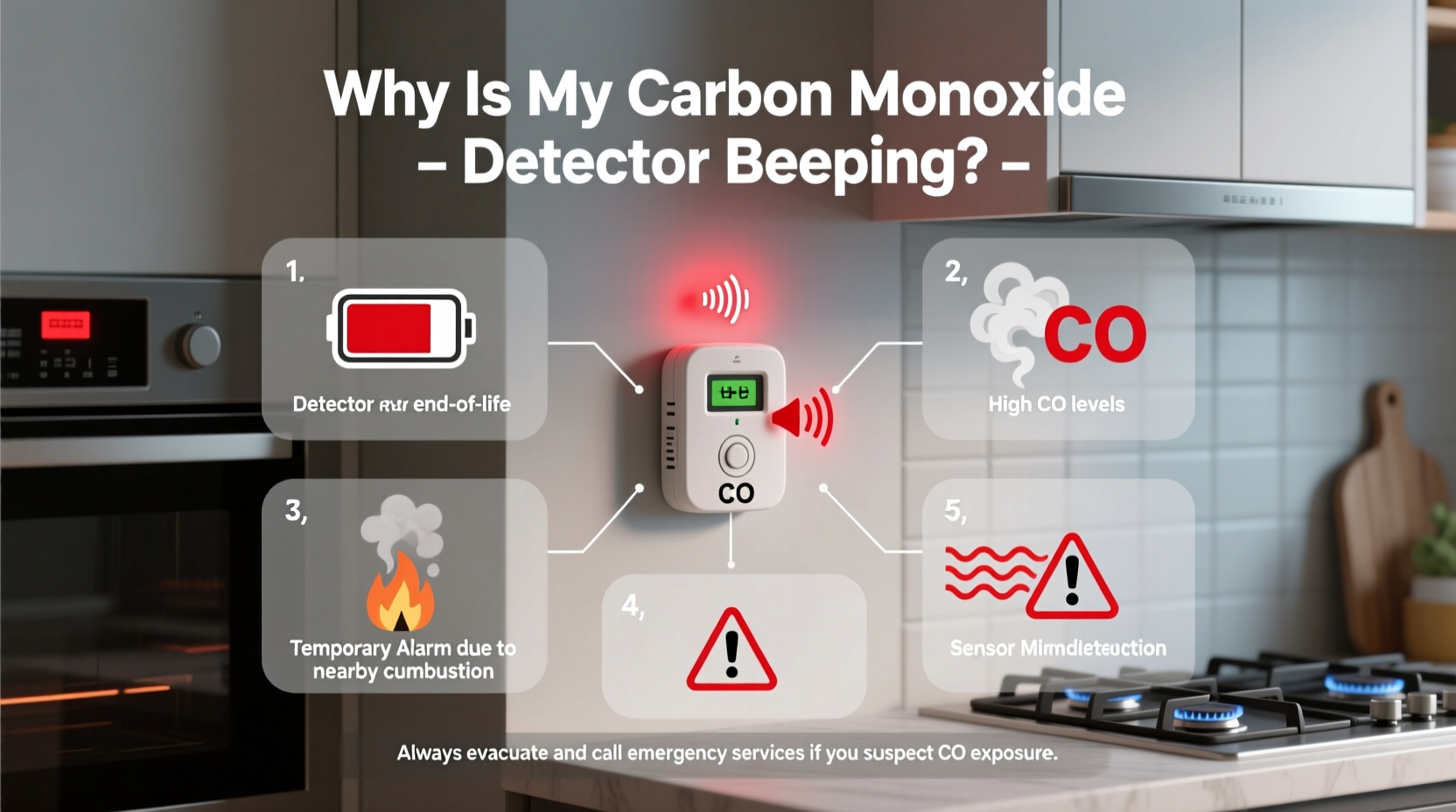
Now, let's talk about the other kind of beep. The one that usually starts around 3 AM. The one that makes you want to throw the detector out the window. Yep, I'm talking about the low battery warning.
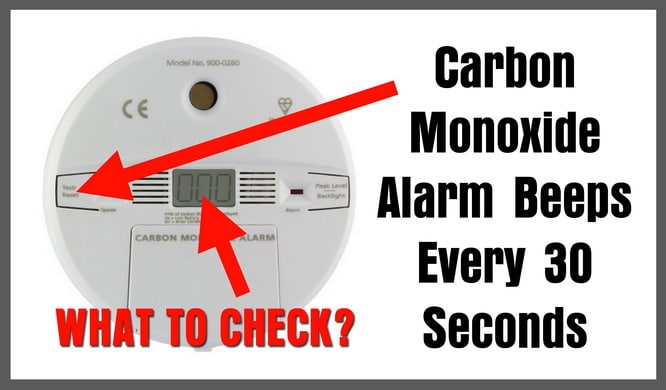
This is probably the most common reason your CO detector is making noise. It's usually a single, quick chirp every 30 to 60 seconds. A rhythmic, nagging little sound that slowly drives you to madness. Your detector is basically saying, "Hey! My juice is running low! Help a detector out!"
The fix? Pretty straightforward: change the batteries! Make sure you're using the correct type, usually AA or 9V, depending on your model. And pro tip: change them in all your smoke and CO detectors at the same time, usually twice a year (daylight saving time is a great reminder!). It saves you future 3 AM wake-up calls.

The "I'm Over It" End-of-Life Beep
Did you know your CO detector has an expiration date? Yep, it's not like a fine wine that gets better with age. These little guardians of your home typically last about 5 to 7 years. After that, their sensors can become less effective, like me trying to remember what I had for breakfast yesterday.
When they're ready to retire, many detectors will emit a specific "end-of-life" signal. This might be a triple chirp, a specific beep pattern, or a flashing light combined with a beep. It's their gentle, or not-so-gentle, way of saying, "My watch has ended. Time for a new hero!"
To check if this is the case, look on the back or side of your detector. There should be a "replace by" date or a manufacturing date. If it's passed, or getting close, it's time to replace the entire unit. Don't try to extend its life; it's a safety device, not a clingy ex.
The "Oops, I Broke Myself" Malfunction Beep
Ah, electronics. Sometimes, they just decide to be difficult. Your CO detector might be beeping because it's experienced a malfunction or fault. This could be anything from a sensor error to an internal component failure. Think of it like your computer throwing up a weird error code – you know something's wrong, but you're not quite sure what.
The beep pattern for a fault can vary wildly between brands, so this is where your trusty owner's manual becomes your best friend. Seriously, dig it out! Or, if you're like me and lost it on day one, a quick Google search for "[your detector brand and model] malfunction beep" will usually get you answers. If it's indeed a fault, the usual recommendation is to replace the unit. Better safe than sorry, right?
The "Wait, What Was That?" Temporary Spike Beep
This one's a bit trickier. Sometimes, your detector might beep with an actual CO alarm (the frantic four-beeps-and-a-pause) but then seem to calm down after a while. This could indicate a temporary CO spike that has since dissipated. Maybe your furnace had a momentary hiccup, or there was a brief backdraft from your chimney because of weird wind patterns. Perhaps someone idled their car too close to an open window. Yes, it happens!

Even if the alarm stops, don't just shrug it off. Any actual CO alarm warrants investigation. It means something produced CO. It could be a sign of an appliance that's about to fail catastrophically, or a ventilation issue that needs fixing. Call your HVAC technician or local utility company to have your combustion appliances checked out. They're the pros at sniffing out these hidden dangers.
So, What's the Game Plan?
Okay, so your CO detector is doing its thing. What's your first move, after that initial adrenaline spike?
- Listen carefully: Is it a continuous, urgent alarm (four beeps, pause) or a persistent, single chirp? This is your biggest clue!
- Check the unit: Look for indicator lights (green for normal, red/yellow for warning), and definitely check that "replace by" date.
- Consult the manual: Seriously, it holds the secrets to its specific beep patterns.
- When in doubt, get out: If it's any kind of CO alarm (the urgent one), prioritize safety above all else.
- Don't ignore it: Even if it's "just" a battery, a silent detector is a useless detector.
Your carbon monoxide detector isn't just some random gadget; it's a vital guardian in your home. It's there to warn you about an unseen danger. So, while its beeps might occasionally send a jolt through you, remember it's ultimately doing its job – trying to keep you safe and sound. A little peace of mind, right? Now, go enjoy that coffee (and maybe check your detector's batteries!).