
Who Was Pseudo-dionysius Quizlet

Alright, let's talk about someone super fascinating, even if their name sounds like a character from a slightly-too-niche sci-fi series: Pseudo-Dionysius. Now, before you start yawning, trust me, this person's story is way more interesting than it sounds. We're going to dive in with all the enthusiasm of a puppy chasing a squirrel!
Who in the World Was Pseudo-Dionysius?
Okay, so first things first: that "Pseudo" bit. It's Greek for "false" or "fake." Think of it like "pseudonym," which is a fake name writers use. In this case, someone decided to write using the name of a very important Christian figure, Dionysius the Areopagite, who was converted by Paul the Apostle himself!
Talk about identity theft! But like, ancient theological identity theft. The real Dionysius is mentioned in the Bible, in the Book of Acts. This sneaky writer wanted to borrow his credibility, like borrowing your cooler friend's reputation to get into a party.
Must Read
So, when did this happen? Around the late 5th or early 6th century AD. Basically, a long, long time ago. It's so far back in time that their coffee was probably just ground-up rocks and rainwater.
Why Did He Do It?!
Good question! Why go through all the trouble of pretending to be someone else? Well, it gave his writings instant clout. Imagine publishing a blog post and signing it "Shakespeare"—people would probably pay more attention, right?
Back then, associating yourself with an Apostle guaranteed people would take you seriously. It's like name-dropping the CEO of a major company to impress someone. Sneaky, but effective!
He was trying to blend Neoplatonism with Christian theology. Neoplatonism was a Greek philosophy that loved talking about "The One," a source of all existence. Basically, he was trying to marry Greek philosophy and Christian ideas together!
What Did He Write About, Anyway?
This is where things get really interesting, and a little mind-bendy. Our Pseudo-Dionysius wrote about all sorts of heavenly things. Angels, hierarchies, mystical experiences…the whole cosmic enchilada.
He wrote these books and everyone went wild because his writing seemed so brilliant and wise. He had these ideas about angels and how they're all organized, like a giant celestial office building.

His most famous works are "The Celestial Hierarchy," "The Divine Names," "The Mystical Theology," and "The Symbolic Theology." All very straightforward, easy-to-understand titles, right? (Just kidding!)
The Celestial Hierarchy
Picture this: A cosmic org chart, but instead of middle managers, you've got angels. He described nine orders of angels, divided into three triads. It's like a heavenly pyramid scheme, but with good intentions!
Think of it like organizing your sock drawer, but instead of socks, it's powerful spiritual beings. He believed each level of angels had a specific job, from being close to God to helping humans.
These angels were more than just winged guys with harps, they are the intermediaries between humans and God.
The Divine Names
This book explores all the different names we give to God. Good, Truth, Beauty, Love – the whole shebang! Think of it like a cosmic thesaurus entry for the word "God."
He wanted to show how God is beyond all human understanding. He argued that God's essence is ultimately unknowable. Trying to define God, according to Pseudo-Dionysius, is like trying to catch the wind in a butterfly net.
It’s all about appreciating the awesome, incomprehensible nature of the divine. The whole thing is quite beautiful and awe-inspiring.
The Mystical Theology
Okay, things are about to get really, really mystical. This book talks about how to experience God directly. It’s all about transcending your senses and mind to reach a state of union with the divine.
He called it "unknowing." Basically, forgetting everything you think you know to make space for the divine. It’s like emptying your cup to fill it with something new.
Imagine trying to describe the taste of a strawberry to someone who's never eaten one. That's kind of the challenge Pseudo-Dionysius was facing when he tried to describe union with God.
The Symbolic Theology
Unfortunately, only fragments of this work survive, but we know it dealt with interpreting the symbolism found in the Bible. He explored the ways in which earthly things can point to heavenly realities.
He believed that everything in the world is a symbol of something greater. It’s like reading between the lines of reality itself.

Think of the world as one big metaphor just waiting to be decoded! And he was trying to decode it.
Why Should We Care Today?
So, why should you care about some anonymous writer from the 6th century? Well, his ideas had a HUGE impact on Western thought. He influenced countless theologians, mystics, and artists. He’s like the philosophical grandfather you never knew you had!
His writings became super popular during the Middle Ages and were thought to be written by a companion of Saint Paul. Imagine the impact of discovering "new" books of the Bible today; it would be huge!
His influence spread everywhere, from the writings of Thomas Aquinas to the art of the Renaissance. Seriously, you can find echoes of his ideas all over the place if you know where to look.
His writings are also incredibly relevant to modern-day spirituality. If you're interested in mystical experiences, contemplation, or just trying to understand the nature of God, Pseudo-Dionysius has got some thought-provoking stuff to offer.
Pseudo-Dionysius on Quizlet: A Match Made in Heaven (Almost)
Now, let's talk about Quizlet. Can you learn about Pseudo-Dionysius on Quizlet? Absolutely! It's a great way to drill vocabulary, names, and key concepts. Think of it as flashcards for your brain!
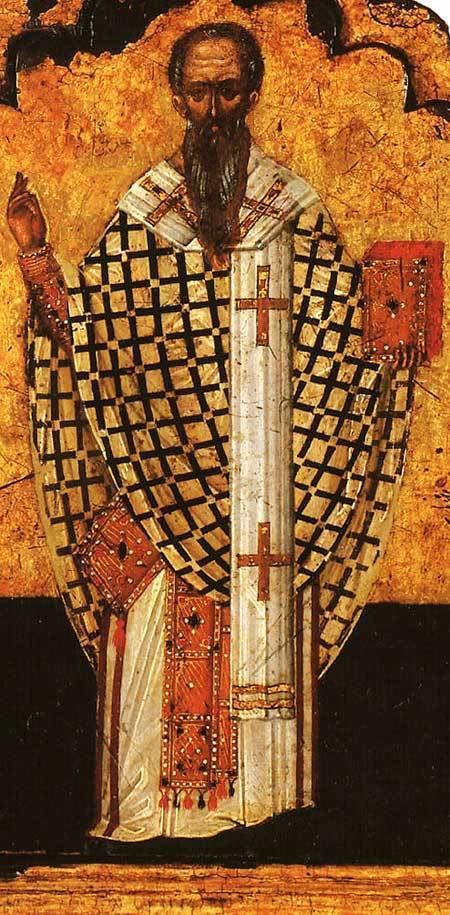
Quizlet can help you remember the nine orders of angels, or the different names for God. It's like training wheels for your theological explorations!
So, if you're feeling brave, jump onto Quizlet and search for "Pseudo-Dionysius." You might be surprised at what you find. And who knows, maybe you'll become the next great Pseudo-Dionysius expert!
The Takeaway: Don't Be Afraid to Question Everything
The story of Pseudo-Dionysius is a reminder that things aren't always what they seem. He was a faker, yes, but he was also a profound thinker. He challenged people to think differently about God and the universe, and that's something worth celebrating.
Sometimes, the most profound insights come from unexpected places, even from someone hiding behind a borrowed name. So, keep an open mind, and never be afraid to question everything!
So, next time you hear the name Pseudo-Dionysius, don't run away screaming. Embrace the mystery, explore the ideas, and maybe even create your own Quizlet study set. Who knows what you might discover?
And that concludes our whirlwind tour of Pseudo-Dionysius. I hope it was enjoyable! Now, go forth and ponder the celestial hierarchies! You are now ready to win the next intellectual dinner conversation on the topic.