
Which Way Should The Fan Turn To Cool A Room
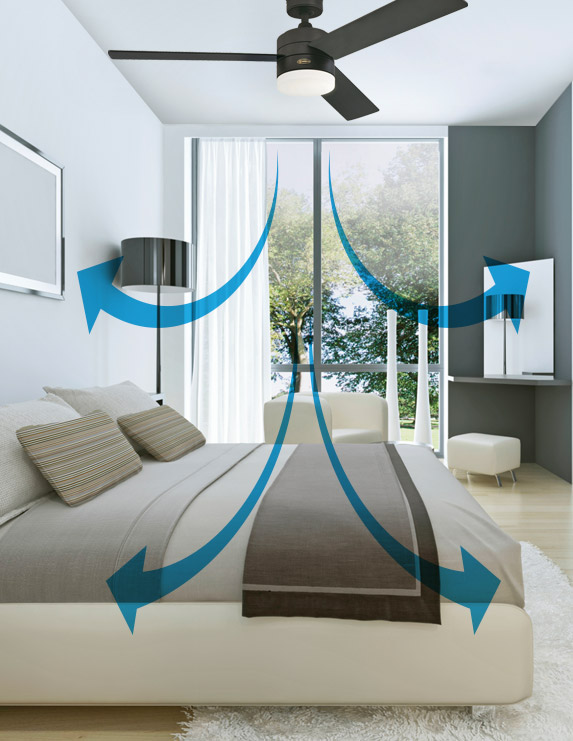
Okay, let's talk fans. Not the screaming, sign-waving kind (though those are fun too!), but the kind that keeps you from melting into a puddle during those sweltering summer months. Specifically, which way should that ceiling fan be spinning to actually, you know, cool you down?
It's a question that's probably crossed your mind at least once, right? You stare up at that whirling dervish of blades, wondering if it's truly your ally in the fight against heat, or just mocking you with its breezy promises.
Summer Mode: Feeling the Breeze
The answer, like many things in life, isn't quite as straightforward as you might think. But let's start with the basics: Summer mode means turning the fan counterclockwise. Why? Because you want to feel the breeze. Think of it like this:
Must Read
Imagine you're on a swing set. To get that exhilarating feeling of wind in your hair, you swing forward, into the air, right? A ceiling fan on counterclockwise in summer does the same thing. It pushes the air down, creating a direct breeze that evaporates sweat from your skin. And evaporation, my friends, is the key to feeling cooler.
That's Newton's third law, isn't it? For every action, there is an equal and opposite reaction.
It's like having your own personal little wind tunnel right there in your living room! A tiny tornado of relief. Well, maybe not a tornado, but you get the idea.
![Ceiling Fan Directions for Summer vs Winter [Infographic]](https://airflowacademy.com/wp-content/uploads/2021/06/Ceiling-fan-direction.jpg)
But why is this breeze important? Think of it this way: your body is constantly radiating heat. And just like a pot of hot soup that cools down faster when you blow on it, a breeze helps your body release that heat more efficiently. So, counterclockwise = direct breeze = happy, cooler you!
Cooling Effect: Evaporation, direct breeze, air circulation.
Winter Mode: Gentle Warmth Redistribution
Now, here's where things get interesting. What about when the weather turns chilly? Should you just abandon your ceiling fan altogether? Absolutely not! In fact, it can actually help you stay warmer in the winter, if you adjust its direction.

During the colder months, you'll want to switch your fan to rotate clockwise (usually a switch on the fan motor itself). This is where it can get a little unintuitive.
But why clockwise? The goal here isn't to create a direct breeze. In fact, you don't want a breeze in the winter. Instead, you want to redistribute the warm air that naturally rises and gets trapped near the ceiling. Clockwise rotation gently pulls that warm air down, circulating it throughout the room. This makes your heater more efficient since it does not have to work so hard to heat the entire room.
Think of it like this: imagine a hot air balloon. The heat rises to the top, right? Your ceiling fan, spinning clockwise, gently pushes that heat back down, preventing it from just hanging out up near the ceiling and doing nothing for you. It's like giving that warm air a gentle nudge in the right direction.

It is important to run the fan on a low setting to create a gentle air circulation.
Think of it as evening out the temperature in the room. It's less about feeling a direct breeze and more about making your existing heat source work more effectively. This can help you save money on your heating bill and feel more comfortable overall.
Warming Effect: Distributing warm air trapped at the ceiling, reducing heating costs.

The Exceptions to the Rule
Of course, there are always exceptions! Some fans are designed differently, so it's always a good idea to check your fan's manual to be sure. Also, personal preference plays a big role. If you find a counterclockwise breeze too strong in the summer, try adjusting the fan speed or even experimenting with the direction to see what feels best for you.
You might have a fan with funky blade angles, or maybe your room has weird air currents. Don't be afraid to experiment a little! After all, the goal is to be comfortable.
Ultimately, figuring out which way your fan should turn is about understanding how it interacts with the air around you. It's a simple concept, but it can make a big difference in your comfort level, and potentially your energy bill. So, go ahead, experiment with your fan. See what direction makes you feel most comfortable. And remember, the right direction can turn your fan from a simple appliance into a powerful ally in the fight against heat and cold!
Isn’t it cool how a simple thing like the direction of your ceiling fan can have such a big impact on how you feel? It’s just another example of how science is all around us, even in the most unexpected places.